


The Fourth-Term Hat
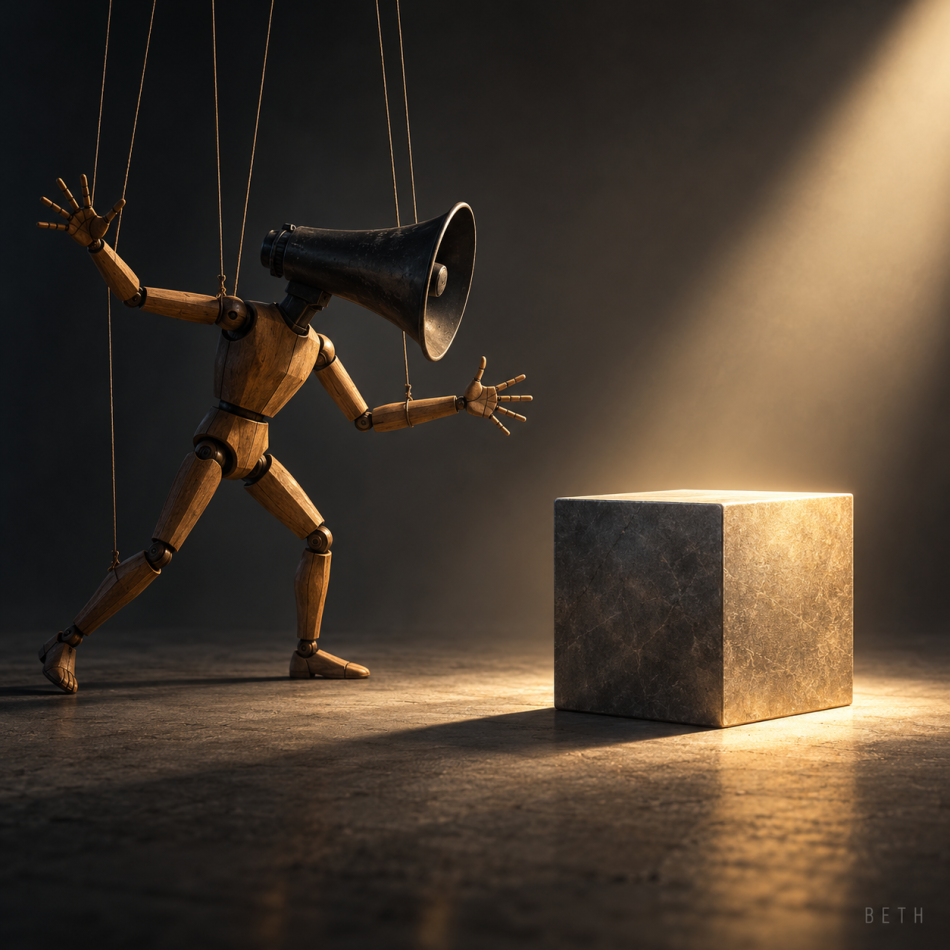
Trump returns triumphantly to the White House Correspondents’ Dinner, turning the press evening into a display of survival and power—and an early test for the 2028 battle
Washington | BETH
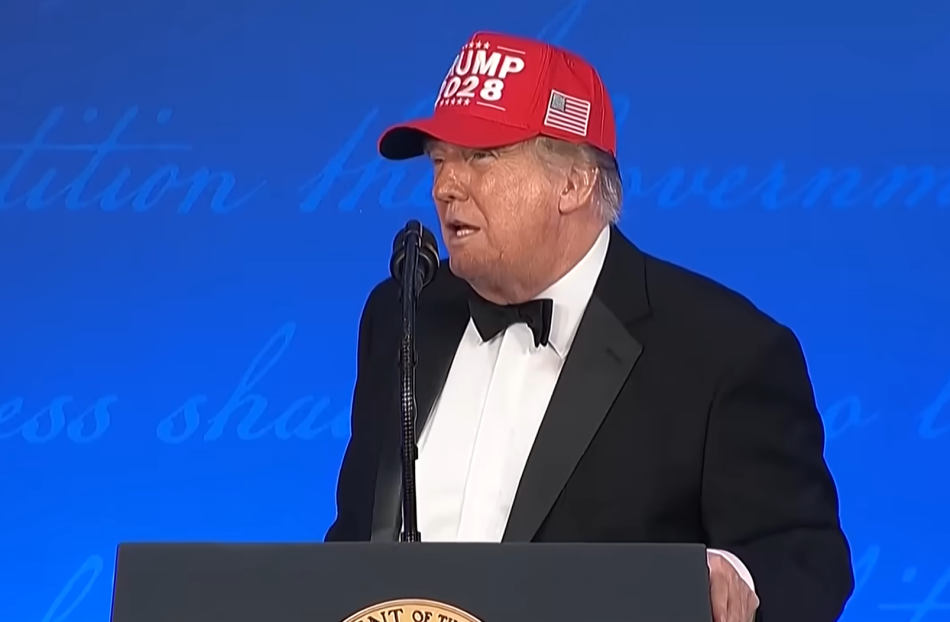
Three months after an assassination attempt brought the White House Correspondents’ Dinner to a halt, U.S. President Donald Trump returned to the rescheduled evening—not merely as a guest who had survived danger, but as a president intent on turning his return into a complete political spectacle.
Trump entered the ballroom of the Waldorf Astoria in Washington to the sound of his usual campaign song, appearing triumphant as he returned to the event he had been forced to leave under Secret Service protection last April.
The scene carried a clear message:
The assassination attempt stopped the dinner, but it did not remove Trump from the stage.
“As I said three months ago, the show must go on,” he said at the beginning of his remarks, before praising the Secret Service and law enforcement agencies and paying special tribute to Officer Victor Gonzales, who was injured while confronting the gunman who attempted to breach the previous event.
The White House Correspondents’ Association presented Gonzales with an award in recognition of his bravery, as the audience gave him a standing ovation.
An Evening Tasting of Victory
Trump’s insistence on attending the rescheduled dinner was not merely a ceremonial appearance.
The president, who boycotted the White House Correspondents’ Dinner throughout his first term, returned this time to a ballroom representing the media establishment with which he has fought one of his longest political battles.
Trump appeared determined to bring together two images in a single scene:
The image of the president who survived an assassination attempt.
And the image of the politician entering the heart of the media establishment to attack it from its own platform.
That is why his speech, which lasted more than an hour, moved from talk of unity and honoring law enforcement officers to mocking his opponents, attacking journalists by name, and once again describing media outlets as purveyors of “fake news.”
The “Trump 2028” Hat
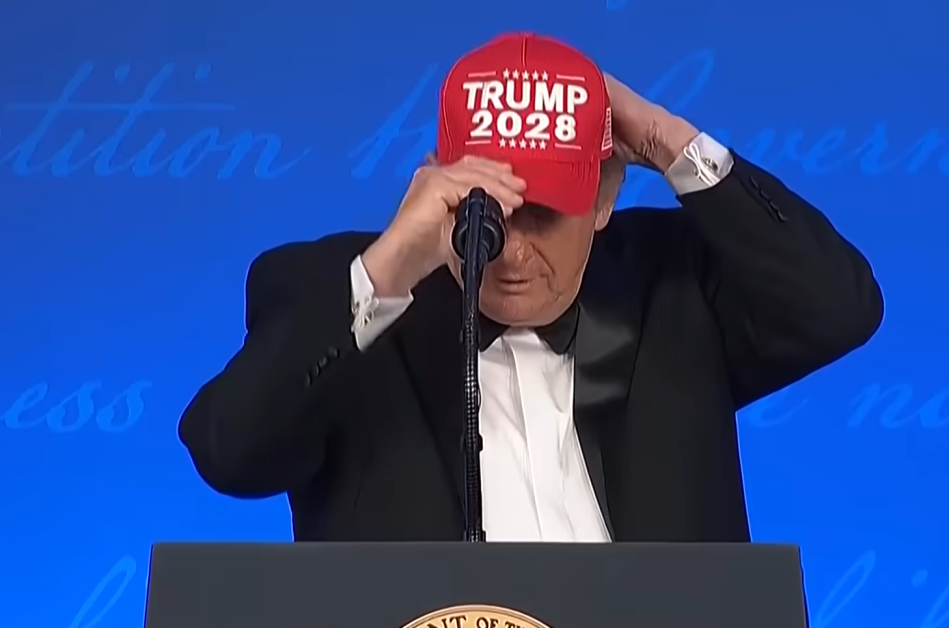
The most provocative moment came when Trump jokingly announced his intention to seek what he described as a “fourth term” as president of the United States.
Addressing the journalists, he said he wanted to save their ratings, then put on a red hat bearing the words “Trump 2028,” adding that he had become very good at running for president.
But the statement requires political and constitutional clarification.
Trump has run in three presidential elections—in 2016, 2020, and 2024. Therefore, if he were to enter the 2028 election, it would be his fourth presidential campaign, not his fourth term.
In terms of holding office, he won the presidency twice, in 2016 and 2024, and lost the 2020 election.
The Twenty-Second Amendment to the U.S. Constitution also prohibits any person from being elected president more than twice. This means Trump cannot win another presidential term under the existing constitutional text unless an extremely difficult constitutional amendment is enacted.
The statement, therefore, cannot be treated as a complete legal declaration of candidacy.
But neither was it a joke devoid of political meaning.
What Did Trump Want?
Through the 2028 hat, Trump achieved several objectives at once.
First, he tested the political and media response to the idea of remaining in power after his current term ends.
Second, he reaffirmed that he would remain the central figure within the Republican Party, even as the search begins for its 2028 presidential candidate.
Third, he sent a message to those aspiring to succeed him that the race would not begin without him and that his endorsement could be the necessary gateway to securing the party’s nomination.
Fourth, he ensured that the phrase “Trump 2028” became the headline of the evening, overshadowing the journalism awards and the messages of the Correspondents’ Association.
It is his usual method:
He makes a statement in a humorous form, then leaves his opponents and the media to debate how seriously it should be taken.
If it is well received, he can develop it further.
If it faces widespread rejection, he can say it was only a joke.
In this way, Trump does not announce his decision, but places the idea in the public sphere and makes others discuss it on his behalf.
An Attack from Inside the Ballroom
Trump attacked several journalists and media figures, singling out CNN correspondent Kaitlan Collins and journalist Josh Dawsey for criticism, even though he had shaken hands with the winners of the presidential coverage awards earlier in the evening.
He described Collins’s award-winning report as “fake,” then expanded his attack to include the media and his Democratic opponents, turning part of his speech into something resembling one of his campaign rallies.
But why would Trump attack the media at an event dedicated to celebrating journalism?
Because conflict with the press is not a minor element of his rhetoric; it is one of the sources of his political strength.
Trump needs the media as an adversary just as much as he needs it to carry his messages.
When he describes critical coverage as “fake news,” he is attempting to weaken his supporters’ trust in it before it publishes reports that damage his image or criticize his policies.
Attacking journalists also allows him, despite occupying the White House, to present himself as an anti-establishment politician confronting political and media elites on behalf of his supporters.
More importantly, he transformed the ballroom from a platform where power is held accountable through questions into one where journalists themselves became the subject of attack.
Hostility and Interest
At the same time, Trump understands that the media outlets he attacks have helped create his political presence and that his continuing confrontations with them keep him at the top of the news.
He summarized this contradictory relationship when he told the journalists: “When I’m gone, you’re all going to be broke. Your business model is going to be finished. There’s not going to be anybody else you care about covering.”
The statement reveals that Trump does not view his relationship with the media as pure hostility.
It is a harsh exchange:
The media needs his news and provocative statements to attract audiences, while Trump needs the coverage—even when it is negative—to remain at the center of political life.
That is why he does not want to silence the media completely. He wants to keep it close to him, preoccupied with him, and driven to respond to everything he says.
He attacks the press, then gives it, at the same moment, a story it cannot ignore.
The Evening’s Paradox
The dinner was held in defense of press freedom, yet its most prominent guest spent a large part of his speech attacking journalists.
Trump returned to the event after an assassination attempt speaking about unity, then quickly resumed the language of division and attacks on his opponents.
He also hinted at the 2028 election at a time when the Constitution prevents him from winning another term, yet he succeeded in making his political future the focus of discussion two years before the election.
These contradictions are not incidental.
They are the essence of Trump’s political model:
Reconciliation and attack.
Humor and threat.
Respect for the media and accusations against it.
And talk of commitment to the Constitution, accompanied by continual testing of its limits.
BETH Analysis
The evening was not an official announcement of a new presidential campaign, but it was an announcement of something else:
Trump does not want the post-Trump era to begin.
His appearance in a 2028 hat means he wants to remain above the Republican candidates, influence the choice of his successor, and perhaps push his party to discuss options that once appeared impossible.
The real objective may not be to amend the Constitution or run for president again.
It may be to keep the party, the public, and the media waiting for his decision—and prevent the emergence of a political successor independent of him before he determines the shape of the next phase.
His attack on the media was not a passing outburst.
He wanted to remind journalists that, in his political narrative, they are not neutral observers of power but an adversary that can be attacked and used at the same time.
Trump returned to the evening that gunfire had stopped, stood before the journalists he had long attacked, and then put on the hat of an election the Constitution prevents him from winning.
He left the dinner having achieved what he wanted:
For the United States to talk about his staying, not his departure.