



Day 139 🇺🇸⚔️🇮🇷: Iran Shelters Behind Time
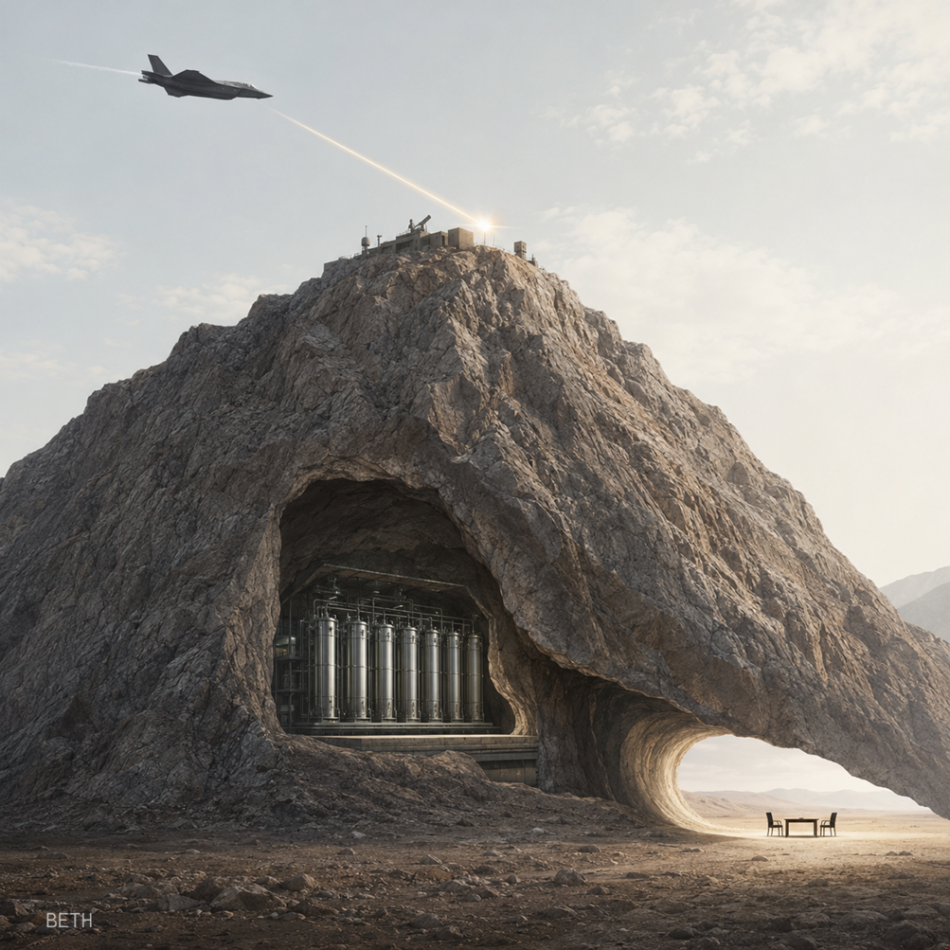
The tenth round of renewed U.S. strikes targets Iran’s military infrastructure, while Tehran hides centrifuges inside mountains and opens the door to negotiations through Pakistan
BETH | B
The U.S. Central Command announced the completion of the tenth round of consecutive strikes against selected military targets inside Iran, as part of an ongoing campaign aimed at weakening Tehran’s ability to continue its attacks and threaten navigation through the Strait of Hormuz.
The strikes targeted military command centers, missile and drone launch and storage sites, air defense systems, maritime capabilities, coastal surveillance facilities, and military logistics infrastructure.
The range of targets indicates that U.S. operations are not focused solely on destroying visible launch sites. Instead, they appear intended to dismantle the entire military chain, from command, surveillance, and storage to launch, supply, and the restoration of sites after they are struck.
In a development related to the future of Iran’s nuclear program, Israeli intelligence believes that Tehran transferred thousands of centrifuges used for uranium enrichment to a network of deep tunnels inside a site known as “Pickaxe Mountain” last autumn.
According to Israeli and U.S. officials, the centrifuges were moved following the 12-day war in June 2025, during which Iran’s three principal nuclear sites came under intensive U.S. and Israeli attacks.
Israel shared its intelligence findings with the United States amid concerns that Iran may have selected the mountain site to conceal and protect part of its nuclear capabilities, paving the way for rebuilding the program away from known facilities exposed to surveillance and targeting.
The Institute for Science and International Security said satellite imagery had shown sustained activity in the area, including truck movements, reinforcement of tunnel entrances, the construction of security fencing, and work around an older tunnel network dating back to 2007.
The institute’s president, David Albright, assessed that Iran had likely transferred centrifuges into the tunnels. However, the site’s actual purpose and the volume of equipment inside it have not yet been independently established.
Pakistani Mediation
Alongside the military escalation, Pakistan is holding talks with Iran in preparation for a new round of negotiations between Tehran and Washington.
Iranian Interior Minister Eskandar Momeni is continuing his meetings in Islamabad, including talks with Pakistani Prime Minister Shehbaz Sharif and Interior Minister Mohsin Naqvi, as part of efforts to reopen the diplomatic track and revive stalled understandings.
Iranian Foreign Ministry spokesperson Esmail Baghaei confirmed that indirect contacts with the United States through mediators remain ongoing despite the continuation of U.S. military strikes.
Iranian President Masoud Pezeshkian, meanwhile, said that all decisions in the country are made in accordance with the guidance of Supreme Leader Mojtaba Khamenei, adding that communication with him has increased recently.
Pezeshkian said Khamenei had stressed in private meetings the need to end the state of “neither war nor peace.” He added that Tehran’s negotiating position was based on reopening the Strait of Hormuz to oil exports and addressing other vital issues, while accusing the United States of failing to honor its commitments.
Analysis
What Is the United States Planning?
The United States does not appear intent on occupying Iran or becoming drawn into an open-ended ground war. Instead, it is seeking to build graduated military pressure that prevents Tehran from regaining its balance and compels it to accept a verifiable agreement, rather than another temporary understanding that gives it an opportunity to reorganize its capabilities.
The tenth round of strikes indicates that Washington has moved beyond limited punitive attacks toward a systematic campaign of attrition. It is not only striking what Iran has launched, but also Iran’s ability to launch again.
The targets therefore include:
- Command-and-control centers.
- Missile and drone storage facilities.
- Launch sites.
- Air defense systems.
- Radar and coastal surveillance facilities.
- Maritime capabilities linked to the Strait of Hormuz.
- Underground logistics and storage networks.
The U.S. objective appears twofold: neutralizing the Iranian threat to maritime routes and U.S. bases, while preventing Tehran from using time to rebuild its military and nuclear capabilities.
Why Is Iran Seeking De-escalation?
Iran’s call for negotiations may appear inconsistent with its continued transfer of nuclear equipment into mountains and the reinforcement of its military facilities. Yet within Iranian strategic thinking, the two tracks may be complementary.
Tehran negotiates when it needs time and stores its capabilities when it anticipates that the conflict will continue.
If Israel’s intelligence about Iran transferring thousands of centrifuges to Pickaxe Mountain is accurate, Tehran did not wait for the war to end before planning for the future. It began early preparations for a program capable of surviving military strikes.
This means that Iran’s pursuit of de-escalation does not necessarily signal an intention to abandon the program. It may instead represent an attempt to protect it.
Iran now needs time to achieve four objectives:
- Halt or reduce the strikes.
- Protect what remains of its military and nuclear capabilities.
- Redistribute missiles and equipment to deeper facilities.
- Restore oil exports and alleviate domestic economic pressure.
Negotiations therefore become part of managing the war, rather than its opposite.
Every day without bombardment gives Iran an opportunity to repair a facility, move equipment, reinforce a tunnel, or reorganize its command network. Every prolonged negotiating round could become political cover for a gradual underground rebuilding operation.
Yet this policy carries a growing cost. Prolonging the active U.S. military presence in the region means continued discovery and attrition of Iranian sites. It also gives Washington more time to expand its target bank and improve its ability to track mobile equipment.
Iran is trying to buy time, but time itself may work against it.
How Could the United States Counter Iran’s Plan?
Washington’s challenge is no longer simply locating known facilities. It must now discover what Iran has transferred into the tunnels and determine whether these sites are being used merely for storage and protection or to reactivate a covert enrichment cycle.
The United States is likely to act across four parallel tracks:
Sustaining Military Pressure
Continuing to strike command, missile, and logistics sites to prevent Iran from turning negotiations into a cost-free ceasefire for rearmament.
Intensifying Intelligence Surveillance
Monitoring truck movements, tunnel entrances, power and ventilation facilities, excavation, and reinforcement work. A mountain facility may conceal its contents, but it cannot operate without leaving logistical indicators outside.
Linking De-escalation to Inspections
Washington may reject any agreement that does not grant the International Atomic Energy Agency effective access to suspected sites, particularly Pickaxe Mountain, alongside an inventory of centrifuges, uranium stockpiles, and equipment transfers.
Keeping the Military Option Open
The depth of the tunnels makes their destruction more difficult, but it does not place them beyond the reach of pressure. The United States could target entrances, electricity and ventilation networks, supply routes, and associated command centers, even if it cannot reach the heart of the facility directly.
The confrontation is therefore shifting from attacks on visible nuclear buildings to the pursuit of a distributed, mobile program concealed beneath mountains.
Foresight and Potential Outcomes
The confrontation is entering a more complex phase because both sides are now engaged in a struggle over time.
Iran wants to stop the strikes before it loses its ability to rebuild. The United States wants to prevent any ceasefire from becoming an opportunity for Tehran to develop a more secretive and fortified nuclear program.
Three potential paths are emerging:
An Agreement Under Monitoring
Pakistani mediation succeeds in opening negotiations that lead to a temporary halt in the strikes in exchange for reopening the Strait of Hormuz, ending Iranian attacks, and allowing inspections of suspected sites.
This is the least costly path, but it depends on Iran accepting stricter monitoring than before and on Washington being convinced that inspections can uncover what has been moved into the mountains.
Negotiations as Cover for Preparations
Iran enters prolonged negotiations without offering verifiable concessions, using diplomacy to slow U.S. operations and reorganize its capabilities.
If Washington suspects such a strategy, the strikes may continue alongside the talks, turning negotiations into a means of managing the intensity of the war rather than ending it.
The Battle Moves Underground
If the presence of thousands of centrifuges inside Pickaxe Mountain is confirmed and Tehran refuses to open the site to inspection, the mountain could become the focal point of the next phase of the confrontation.
The dispute would then no longer concern what Iran did in the past, but what it is concealing for the future.
Conclusion
The tenth round is not merely another night of strikes. Pickaxe Mountain is not merely a potential nuclear site, and Pakistani mediation is not a track separate from the war.
They are all parts of the same struggle:
The United States is striking Iran’s ability to endure. Iran is concealing its ability to return. Negotiations will determine which side benefits from time first.
The central obstacle to any future agreement may not be limited to reopening the Strait of Hormuz. It may also require opening the doors of the mountains.
Prepared and analyzed by the Strategic Media Department – BETH Agency
Supervised by Abdullah Alomairah