



Royal Orders Restructure Responsibilities Across Strategic Sectors
Jeddah – BETH | B
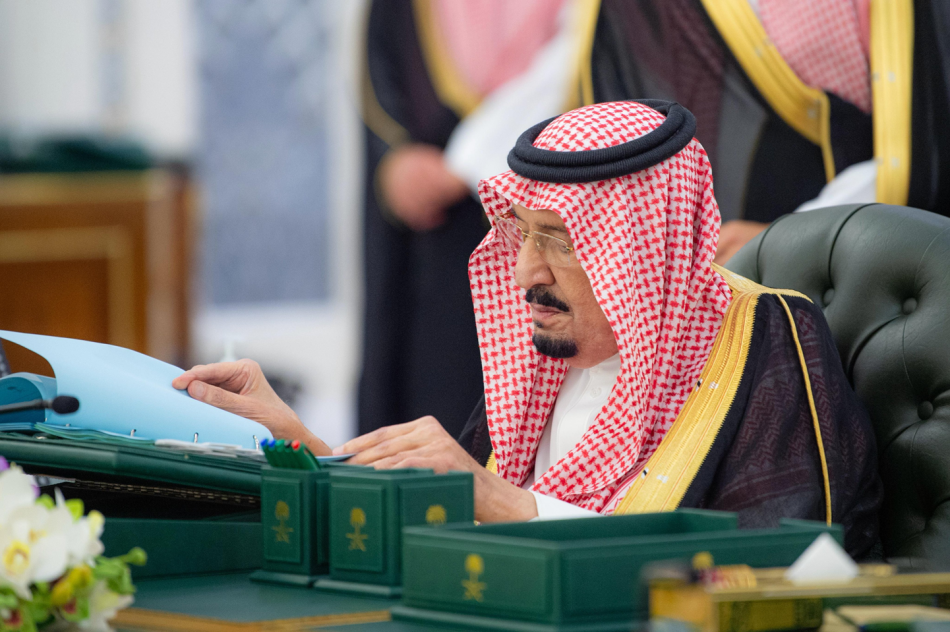
Today, Saturday, 26 Muharram 1448 AH, corresponding to 11 July 2026, a series of Royal Orders were issued introducing changes and appointments across several ministerial and senior leadership positions, including the industrial sector, the Public Prosecution, the Ministry of Justice, the Saudi Central Bank, and the Jeddah Mayoralty.
The Royal Orders included relieving Mr. Bandar bin Ibrahim Al Khorayef of his duties as Minister of Industry and Mineral Resources, and appointing His Royal Highness Prince Abdulaziz bin Salman bin Abdulaziz as Minister of Industry and Mineral Resources, in addition to his current role as Minister of Energy.
Another Royal Order appointed Mr. Bandar Al Khorayef as Minister of State and Member of the Council of Ministers, while also assigning him the responsibilities of Governor of the General Authority for Military Industries, in addition to his current duties, following the relief of Engineer Ahmed bin Abdulaziz Al Ohali from the position.
The Royal Orders also relieved Mr. Shalaan bin Rajeh bin Abdullah bin Shalaan from his position as Deputy Public Prosecutor and appointed him as Adviser at the Royal Court with the rank of ممتازة (Excellent Rank).
Further appointments included Mr. Ihsan bin Abbas Bafaqih as Mayor of Jeddah with the Excellent Rank, and Sheikh Dr. Mohammed bin Suleiman Al-Mutlaq as Deputy Minister of Justice with the Excellent Rank.
In the financial sector, two Royal Orders appointed Mr. Talal bin Fouad Al-Hamoud as Deputy Governor of the Saudi Central Bank for Technical Affairs, and Mr. Abdulilah bin Abdulaziz Al-Duhaim as Deputy Governor for Executive Affairs, both with the Excellent Rank.
BETH Analysis
The Royal Orders reflect a redistribution of leadership responsibilities across several vital sectors, with particular emphasis on industry and energy, military industries, the financial sector, justice, and local administration.
Among the most notable decisions is assigning both the Energy and Industry and Mineral Resources portfolios to a single minister. This move could strengthen policy integration between the two sectors, particularly in areas related to mining, supply chains, manufacturing, and the industrial transformation envisioned under Saudi Vision 2030.
The appointment of Minister of State Bandar Al Khorayef to oversee the General Authority for Military Industries also highlights the continued strategic importance of advancing the Kingdom's defense industrial base, localizing military manufacturing, and strengthening national capabilities.
The remaining appointments reinforce the Kingdom's ongoing approach of placing experienced leadership in judicial, financial, and administrative institutions, supporting institutional efficiency and the continued implementation of national development programs.
The Royal Orders also suggest that the coming phase may witness greater integration between industrial and energy policies, alongside continued emphasis on industrial localization, increasing local content, and supporting high-value-added sectors.
They further demonstrate the continued renewal of executive leadership across key institutions in line with the Kingdom's development priorities, enhancing the readiness of government entities to deliver strategic national projects.
Royal Orders are not measured by the number of positions that change.
They are measured by the direction they set.
When leadership changes are concentrated in sectors such as industry, energy, defense, and finance, they signal the priorities of the next phase, where strengthening institutional capacity becomes an integral part of building the economy, and redistributing responsibilities becomes a tool for deeper integration across strategic sectors rather than a routine administrative reshuffle.