


Saudi Arabia Shapes the Future of Culture and Knowledge
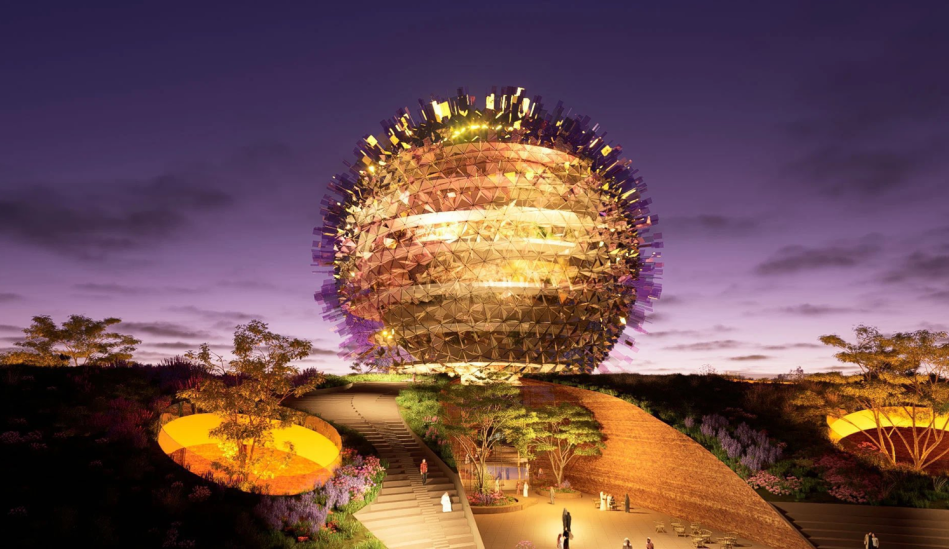
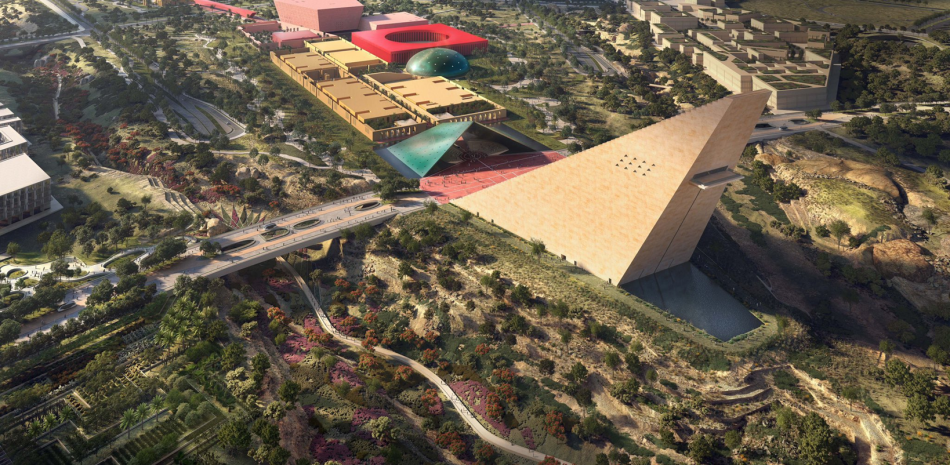
An Iconic Ecosystem Redefining the Global Cultural Experience
Prepared & Analyzed by | Strategic Media Department – BETH Agency | B
Supervised by: Abdullah Al-Umairah
Can a Global Cultural Hub Be Built?
The question may sound simple.
Yet the answer has become more complex than ever.
The world's leading cultural hubs are not created by building a museum, a library, a theater, or hosting an international festival.
They emerge when culture evolves into an integrated ecosystem—where architecture, education, the arts, innovation, tourism, and the creative economy converge to create a living human experience rather than simply another destination to visit.
Over the past few years, Saudi Arabia has been moving decisively in this direction through a growing portfolio of cultural and knowledge-based projects that are not isolated initiatives, but interconnected components of a broader ecosystem reshaping the cultural landscape regionally and globally.
BETH Analysis
For decades, national power was primarily measured through defense, economic strength, and technological advancement.
Then came the era of soft power.
Today, the world is entering what could be called the Era of Experiential Power.
People no longer travel merely to see a remarkable building.
They travel to ask themselves:
How did this place make me feel?
Cities are therefore no longer competing over the number of museums they possess.
They are competing over their ability to create immersive cultural experiences that engage every sense.
This is where Saudi Arabia's transformation becomes particularly significant.
The defining feature is not the number of projects.
Nor the scale of investment.
Nor even the participation of internationally renowned institutions.
The true distinction lies in how these projects connect with one another.
Libraries.
Museums.
Creative districts.
Art exhibitions.
Cultural centers.
Heritage destinations.
Public spaces.
Seasonal festivals.
Digital technologies.
Interactive experiences.
Education.
Innovation.
Each element serves a different purpose.
Together, they operate within a single national vision.
That is the difference between owning cultural projects and building a cultural ecosystem.
And ecosystems—not isolated projects—are what generate lasting influence.
Culture Is No Longer a Sector .. It Is an Economy
In today's world, culture is no longer viewed as a leisure activity.
It has become a major economic industry.
It attracts investment.
Creates jobs.
Improves quality of life.
Drives tourism.
And reshapes a nation's global image.
That is why leading countries continue investing in museums, opera houses, and creative districts.
They understand that visitors who come for culture often leave with an entirely different perception of the country itself.
This is one of Saudi Arabia's most important transformations.
The Kingdom is not simply creating places worth visiting.
It is creating reasons to return.
Architecture .. A Dialogue Between History and the Future
Every civilization has left its mark in stone before leaving it in books.
The Pyramids.
The Roman amphitheaters.
The Eiffel Tower.
The Sydney Opera House.
The Guggenheim Museum Bilbao.
Each has become a lasting symbol of the nation and city it represents.
Saudi Arabia, however, begins from a different foundation.
It is not creating a new architectural identity on a land without memory.
Rather, it builds upon a civilization that stretches back thousands of years—through archaeological sites, historic oases, ancient trade routes, and cities that played a significant role in the story of human civilization.
Today, the Kingdom is doing more than preserving and restoring this remarkable heritage.
It is enriching it with a new generation of iconic architecture and cultural destinations, allowing the past and the future to coexist within a single, integrated vision.
In this way, a building becomes more than an architectural landmark.
It becomes the next chapter in a story that began thousands of years ago—and continues to be written today.
Knowledge as Culture's Closest Partner
Museums are no longer merely repositories of history.
Libraries are no longer just collections of books.
Theaters are no longer simply performance venues.
Modern cultural institutions generate knowledge.
They foster innovation.
They integrate artificial intelligence.
They create interactive experiences in which visitors become participants rather than spectators.
Success, therefore, will no longer be measured solely by visitor numbers.
It will increasingly be measured by the ideas these institutions inspire.
The Next Global Competition
The world is no longer competing only to build smarter cities.
It is competing to shape the world's next cultural memory.
Who tells the stories?
Who designs the experiences?
Who becomes an essential destination on humanity's cultural map?
These are the defining questions of the coming era.
Saudi Arabia appears determined to be among those providing the answers.
Another Perspective
Many believe museums preserve history.
Perhaps the deeper truth is that history preserves the nations that know how to tell their own story.
Culture is not a luxury.
Nor is it decoration.
It is one of the longest-lasting investments a nation can make.
Every successful cultural project adds more than another landmark to a city.
It adds another layer of meaning to the world.