



NATO Summit Opens in Ankara Amid Unprecedented Security Challenges
BETH B
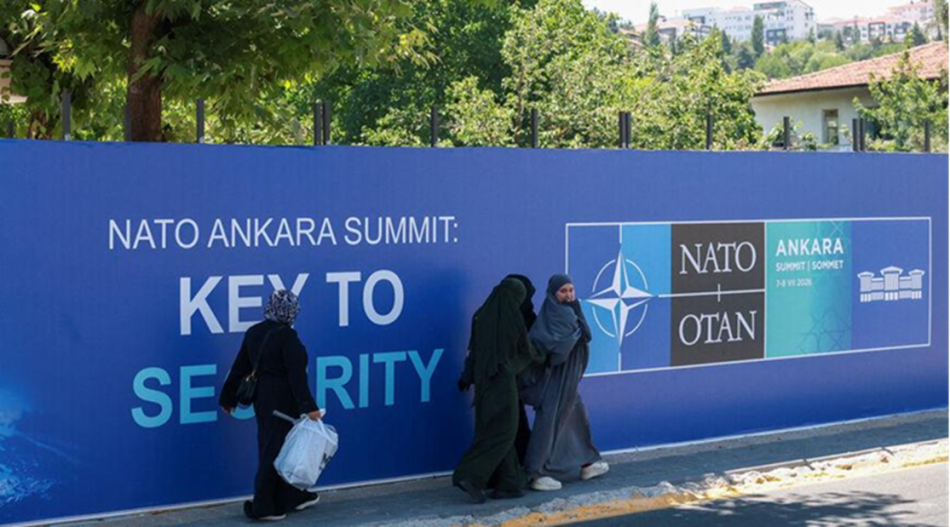
The NATO Summit opened on Tuesday in the Turkish capital, Ankara, bringing together leaders of the Alliance's 32 member states and partner nations to discuss the future of European security, increased defense spending, stronger military capabilities, and continued support for Ukraine amid rapidly evolving regional and global challenges.
Held one year after the Hague Summit, the meeting is focused on translating previous commitments into concrete action, including higher defense investment, accelerated military production, and expanded joint defense manufacturing, as the Alliance faces mounting pressure to rebalance defense responsibilities between the United States and its European allies.
The summit is also expected to announce new defense cooperation initiatives covering unmanned aerial systems, air surveillance, counter-drone capabilities, and joint missile and ammunition production, reflecting NATO's efforts to strengthen military readiness and address supply chain gaps.
BETH Analysis
At first glance, the summit may appear to be another routine NATO gathering.
In reality, however, it is one of the Alliance's most consequential meetings in years.
NATO is no longer debating only how to confront Russia.
It is increasingly redefining what NATO itself should become.
The war in Ukraine, recent tensions in the Middle East, and growing U.S. pressure on European allies to increase defense spending have pushed the Alliance into a new phase of strategic transformation.
Perhaps most notably, the agenda is no longer centered solely on military planning.
It is increasingly focused on defense industrial capacity, supply chains, and the ability to manufacture weapons rapidly and sustainably—signaling a shift from competition over military strength to competition over the capacity to produce and sustain it.
The Ankara Summit may therefore represent more than another gathering of allied leaders.
It could mark the beginning of a new phase in which NATO evolves from an alliance centered on deterrence into one increasingly built around collective defense production, where factories and industrial capacity become as strategically important as military bases and armed forces.
The key question is:
Is the Ankara Summit reshaping NATO's military doctrine... or redefining its defense economy?