



Two Explosions in Damascus... Coinciding with the French President's Visit
BETH B
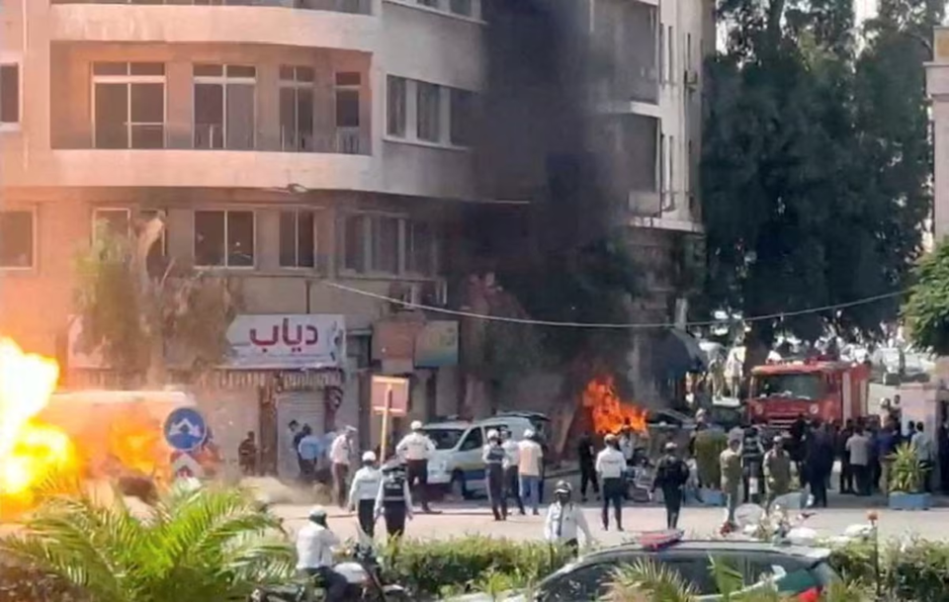
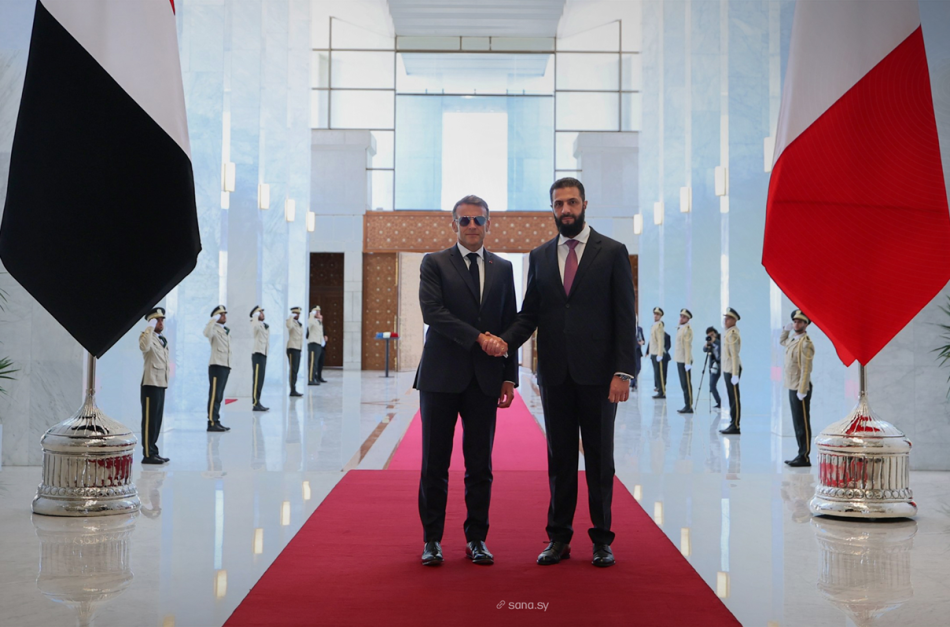
Two explosions struck the Syrian capital, Damascus, on Tuesday, coinciding with French President Emmanuel Macron's visit, just days after another blast hit the city. The incidents have once again drawn attention to the security situation in the capital and raised questions about their timing and political significance.
Although the damage was limited compared with the years of war, the timing of the explosions—amid efforts to reintegrate Syria into the international community—gave the incidents a significance that extends beyond security concerns. They have renewed questions over who seeks to disrupt this process and who benefits from keeping Syria in a state of instability.
BETH Analysis
The most likely assessment is that these explosions were not intended to alter the military balance of power, but rather to create calculated political disruption.
The relatively limited nature of the attacks suggests that the perpetrators were not seeking to open a new military front, but instead to deliver a swift political and psychological message whose impact exceeds its military effect.
The message appears clear:
Damascus has not yet fully regained stability.
The new government continues to face challenges in consolidating security.
And any international re-engagement with Syria will remain accompanied by security concerns.
For that reason, the timing of the attacks may be more significant than their scale.
The fact that they coincided with the visit of a major European leader does not necessarily indicate that France itself was the target. Rather, the attacks appear aimed at the symbolism of the visit and what it represents: Syria's gradual return to international political engagement.
Yet an equally significant counter-message quickly emerged.
Despite the two explosions, daily life in Damascus continued normally, and no changes were announced to the official visit's schedule.
The two presidents proceeded with their meetings as planned, while the visit also included a high-level investment forum focusing on partnership opportunities, economic cooperation, and facilitating investment.
This reveals another kind of confrontation:
Explosions attempting to reinforce the image of instability, versus political and economic engagement seeking to project the image of a functioning state determined to continue its course without yielding to security intimidation.
Who Benefits?
The central question is not simply who carried out the attacks.
It is:
Who does not want Syria to become stable?
Who fears the success of the new government in Damascus, the restoration of state institutions, and Syria's return to its regional and international environment?
Within this context, the most plausible hypothesis is that the perpetrators belong to one of the groups most threatened by Syria's stability and the success of the new government—whether remnants of the former regime, extremist organizations, networks that have lost influence, or local cells that view the restoration of state institutions as a direct threat to their interests and continued influence.
These actors do not necessarily need to operate under a single command.
Shared interests alone may be sufficient to produce the same outcome.
At the state level, some countries may politically benefit from continued instability in Syria.
However, political benefit should not automatically be interpreted as direct responsibility for carrying out the attacks.
Why Now?
Because the easing of major regional confrontations does not necessarily signal the end of conflict.
As large-scale military confrontations subside, competition often shifts toward limited operations designed to influence the political and psychological environment while disrupting emerging political trajectories.
From this perspective, the Damascus explosions appear to be less about causing widespread destruction and more about undermining confidence.
Conclusion
The message may not have been directed solely at Damascus.
It may also have been intended for every country considering deeper engagement with Syria.
The objective does not appear to be the fall of the capital, but rather preserving the perception of instability in the minds of governments, investors, and decision-makers.
At the same time, the continuation of the French presidential visit, along with the political meetings and investment discussions despite the explosions, conveyed a counter-message: that Syria's path toward international re-engagement will not be easily derailed, and that neither fear nor isolated attacks alone will define the country's future.
The key question therefore remains:
Were the explosions aimed at specific locations... or at the very idea of Syria's return to the international stage?