



Day 124 🇺🇸⚔️🇮🇷: The War Is Changing Its Objectives
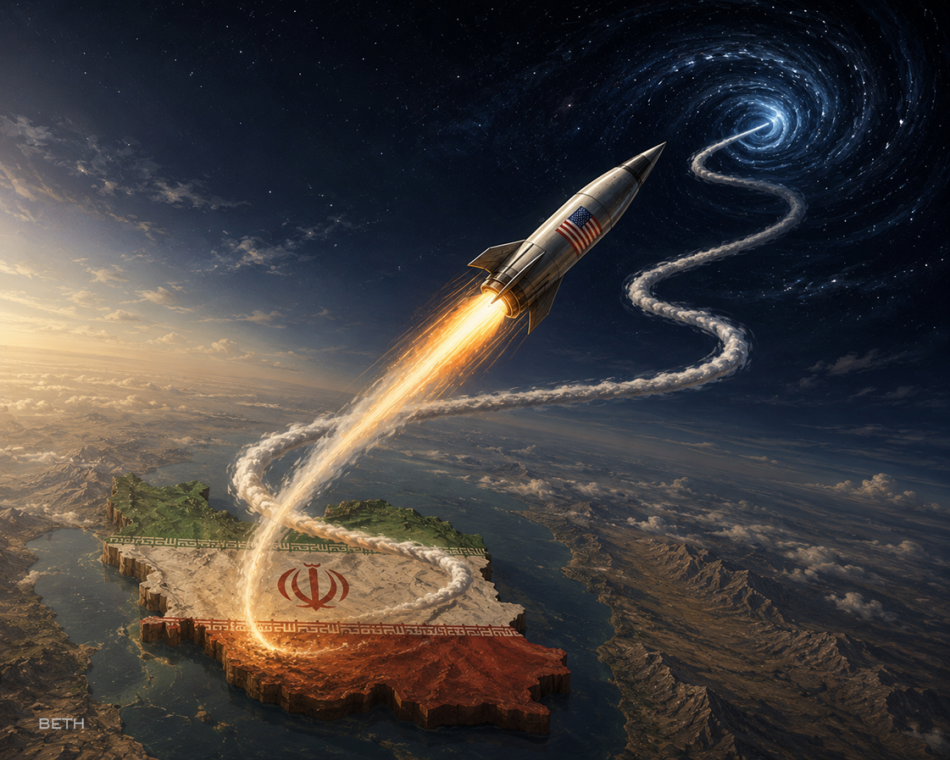
BETH Brief
For the third consecutive day, funeral ceremonies for Iran's Supreme Leader Ali Khamenei continue in Tehran, while his son, Mojtaba Khamenei, remains absent from public view. Meanwhile, Israel has officially acknowledged that it carried out the operation that killed the Iranian leader on the first day of the war five months ago.
In a notable development, senior Israeli military and diplomatic sources have expressed growing concern over Iran's new leadership, describing it as more hardline, less predictable, and more volatile than Ali Khamenei, who had long been viewed as a leader with identifiable red lines and a relatively predictable strategic approach.
At the same time, reports indicate that U.S.-Iran negotiations are no longer centered primarily on Iran's nuclear program, ballistic missiles, or regional influence. Instead, the focus has increasingly shifted toward safeguarding freedom of navigation through the Strait of Hormuz—a shift that one Israeli diplomatic source described as a strategic setback because the war began with very different objectives.
Energy market data also show that the conflict has triggered the largest single-day disruption to supplies of crude oil, natural gas, refined fuels, and fertilizers simultaneously, highlighting the deep interdependence of today's global energy markets.
In the latest political statements, U.S. President Donald Trump said that the United States is not seeking regime change in Iran, while Israeli Prime Minister Benjamin Netanyahu declared that Israel will eliminate any Iranian leader who poses a threat to Israel's security.
BETH Analysis
In major wars, what matters is not only what happens on the battlefield.
It is also how the objectives evolve as the conflict unfolds.
The war that began under the banners of Iran's nuclear program, ballistic missiles, and curbing Tehran's regional influence now appears to be moving toward a different strategic headline:
Global Energy Security.
The shift in negotiations—from the nuclear file to freedom of navigation in the Strait of Hormuz—suggests that priorities are changing, driven by the rising cost of war, market concerns, and the need to shield the global economy from further disruption.
Meanwhile, Israel's acknowledgment of responsibility for the killing of Ali Khamenei sends a new political message, but it does not answer the larger question:
Did the assassination change the behavior of the Iranian system... or merely change the face of its leadership?
Developments inside Iran suggest that state institutions are working to project continuity and stability, while Mojtaba Khamenei's continued absence adds another layer of uncertainty to the succession landscape.
In this context, Israeli concerns that the new leadership may be more hardline and less predictable amount to an implicit recognition that removing the head of a regime does not necessarily produce a more stable strategic environment.
The latest statements by Trump and Netanyahu further highlight the evolving nature of the conflict.
While Trump emphasized that Washington is not pursuing regime change in Iran, Netanyahu declared that Israel will continue targeting any Iranian leader it considers a threat.
At first glance, both statements appear aligned in maintaining pressure on Tehran.
However, they reveal an important strategic distinction.
The United States is defining a political ceiling for the conflict—changing Iranian behavior rather than replacing the regime itself.
Israel, by contrast, appears more focused on eliminating sources of threat, regardless of who ultimately holds power.
This does not necessarily indicate a disagreement between the two allies.
It does, however, suggest that each side may now be pursuing a different vision of how this war should ultimately end.
This raises the broader strategic question:
If the objectives of the war have already begun to change... are all of its participants still working toward the same endgame?
Or does each side now have its own definition of victory?
Strategic Outlook
The longer wars last, the greater the likelihood that their objectives will evolve.
What begins as an effort to reshape the balance of power may eventually become an effort to contain economic fallout, protect global trade routes, or prevent a wider energy crisis.
Perhaps the most important development today is not the continuation of the funeral ceremonies, Israel's acknowledgment, or Mojtaba Khamenei's continued absence.
Rather, it is that the war is no longer merely redefining the priorities of its participants...
It may also be redefining what "victory" means for each of them.
The question that remains is:
If the war has changed its objectives... will it also change the shape of the peace that eventually brings it to an end?