



OPEC+... Flexibility Before Volumes
BETH
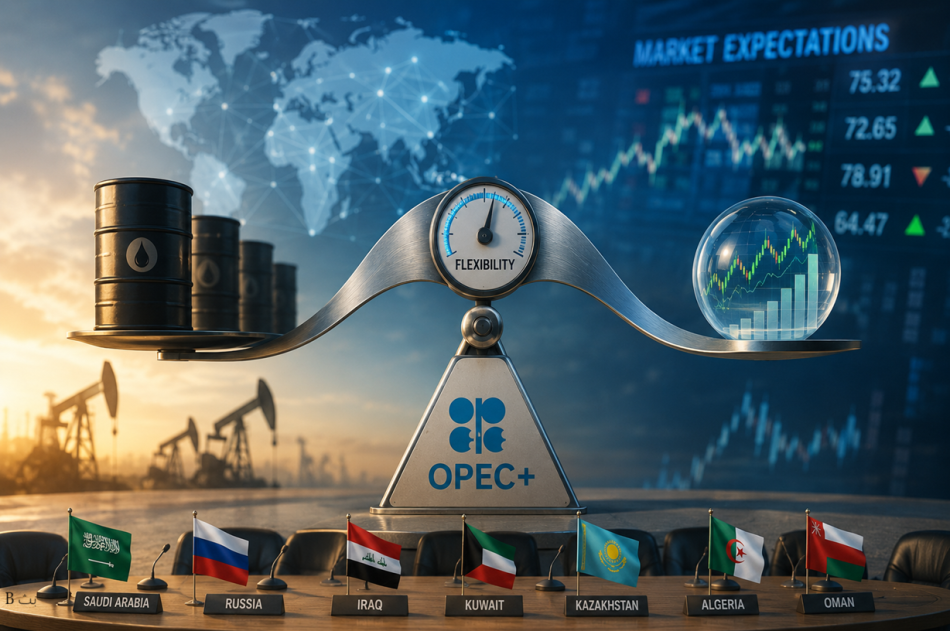
The seven OPEC+ members—Saudi Arabia, Russia, Iraq, Kuwait, Kazakhstan, Algeria, and Oman—have agreed to implement a gradual production increase of 188,000 barrels per day starting in August 2026, as part of the phased reversal of the voluntary production adjustments first announced in April 2023.
The participating countries reaffirmed their commitment to maintaining oil market stability while preserving full flexibility to increase, pause, or reverse production adjustments according to evolving global market conditions.
They also emphasized continued monitoring of compliance levels and compensation plans for any excess production, with the next meeting scheduled for August 2.
BETH Analysis
The announcement is not simply about adding 188,000 barrels per day.
It is about a new approach to managing the market.
For years, markets viewed OPEC+ decisions as relatively fixed production commitments.
Today, however, the alliance appears to be moving toward a different model...
Managing the market through flexibility rather than rigid production figures.
The message emerging from the meeting is that the planned increase is not an irreversible commitment, but a policy tool that can be adjusted whenever market conditions require.
This suggests that OPEC+ is managing market expectations just as carefully as it manages production itself.
The continuation of monthly meetings also reflects a shift away from widely spaced seasonal decisions toward continuous monitoring that allows the alliance to respond rapidly to changes in demand, prices, and geopolitical developments.
From a broader perspective, the decision reinforces Saudi Arabia's central role within the alliance—not only as its largest producer, but also as one of the principal architects of global oil market stability.
The objective is no longer simply to increase or reduce production.
It is to preserve a stable oil market capable of adapting to an increasingly uncertain global economy.
Has OPEC+ evolved from an organization that manages production... into one that manages market expectations?