



Day 123 🇺🇸⚔️🇮🇷: The Iranian Voice Grows Louder .. While America Waits
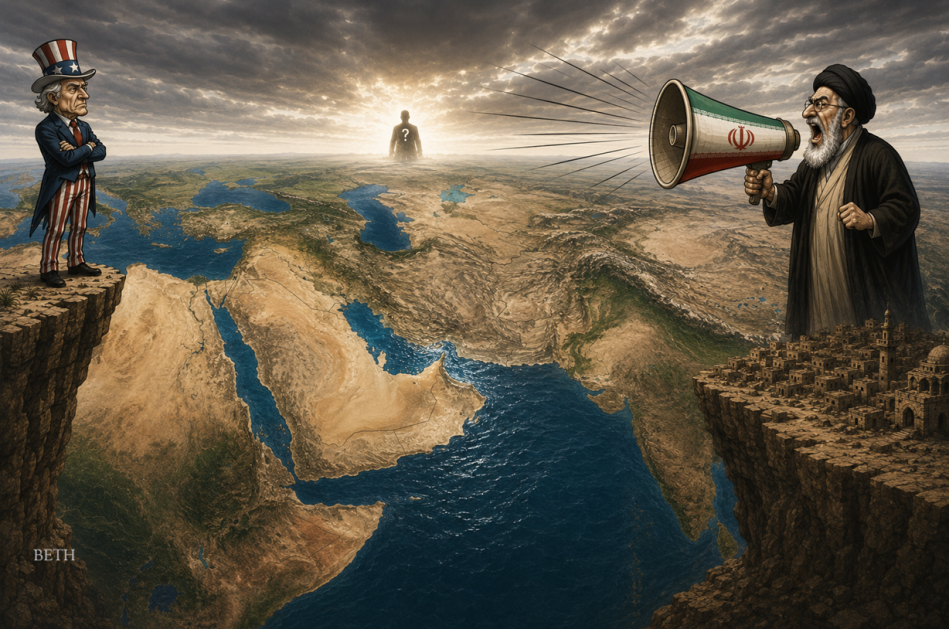
BETH
Tehran continues to raise the tone of its political and military messaging, reaffirming that it is the guarantor of security in the Strait of Hormuz while warning against any Western military movement in this vital maritime corridor, in response to the joint French-British statement regarding the strait.
Iran's Deputy Foreign Minister for Legal Affairs, Kazem Gharibabadi, stated that Iran is "the responsible power and guarantor of security in the Strait of Hormuz," warning against any military activity in the region.
Meanwhile, Iran's Acting Defense Minister, Majid bin Reza, further escalated the rhetoric, declaring that any U.S. violation of its commitments within the framework of the ongoing negotiations would trigger a military response.
These developments coincide with the beginning of the funeral ceremonies for Iran's Supreme Leader, which are expected to continue for several days. At the same time, U.S. President Donald Trump announced a one-week extension for Iran in consideration of the occasion, a move that reflects the continuation of political channels despite the persistence of disagreements over key issues.
Current developments indicate that major differences remain between Washington and Tehran over two central files: the Strait of Hormuz and Iran's frozen overseas assets. Tehran continues to insist on jointly managing the strategic waterway with the Sultanate of Oman while imposing what it describes as a "service fee," a proposal firmly rejected by the United States.
BETH Analysis
The rise in Iran's rhetoric...
does not necessarily mean that war is approaching.
Likewise, America's silence...
does not necessarily imply acceptance of Iran's position.
In major negotiations, it is often the side seeking stronger leverage that raises its voice, while the other chooses silence to avoid giving its opponent additional political momentum or revealing its cards too early.
The Strait of Hormuz has once again emerged as one of the principal pressure points between the two sides.
Iran views it as part of its sovereign sphere and one of its most important sources of regional influence.
The United States and its allies, however, regard freedom of navigation through the strait as an international interest that cannot be subjected to unilateral fees or arrangements.
The dispute, therefore, is no longer simply about who protects the Strait of Hormuz.
It is about who has the authority to shape the rules governing one of the world's most vital energy corridors.
Yet today's developments cannot be understood through the Strait of Hormuz alone.
Timing has also become part of the story.
While Iran is occupied with the funeral ceremonies of its Supreme Leader, the United States has chosen to grant Tehran additional time rather than escalate pressure during this sensitive period.
At the same time, Washington is preparing to celebrate the 250th anniversary of American independence.
Thus, the two countries find themselves experiencing two very different symbolic moments.
Iran looks to the past in farewell to a leader.
America looks to the past in celebration of the birth of a nation.
This raises an important analytical question:
Was the timing of the funeral ceremonies determined solely by religious and ceremonial considerations?
Or does their duration also provide Tehran with additional political space during an exceptionally sensitive phase of negotiations?
It is too early to draw firm conclusions.
However, the coincidence of these developments with the American extension makes timing itself part of the political landscape, rather than merely a chronological detail.
In politics, negotiations are conducted not only through words...
but also through timing, rhythm, and the strategic use of key moments.
The continuing disagreements over the Strait of Hormuz, Iran's frozen assets, and the framework of any future agreement indicate that the most difficult issues remain unresolved.
Perhaps that explains today's scene:
The Iranian voice grows louder...
While America waits.