



Day 122 🇺🇸⚔️🇮🇷: Who Speaks .. and Who Remains Silent?
BETH B
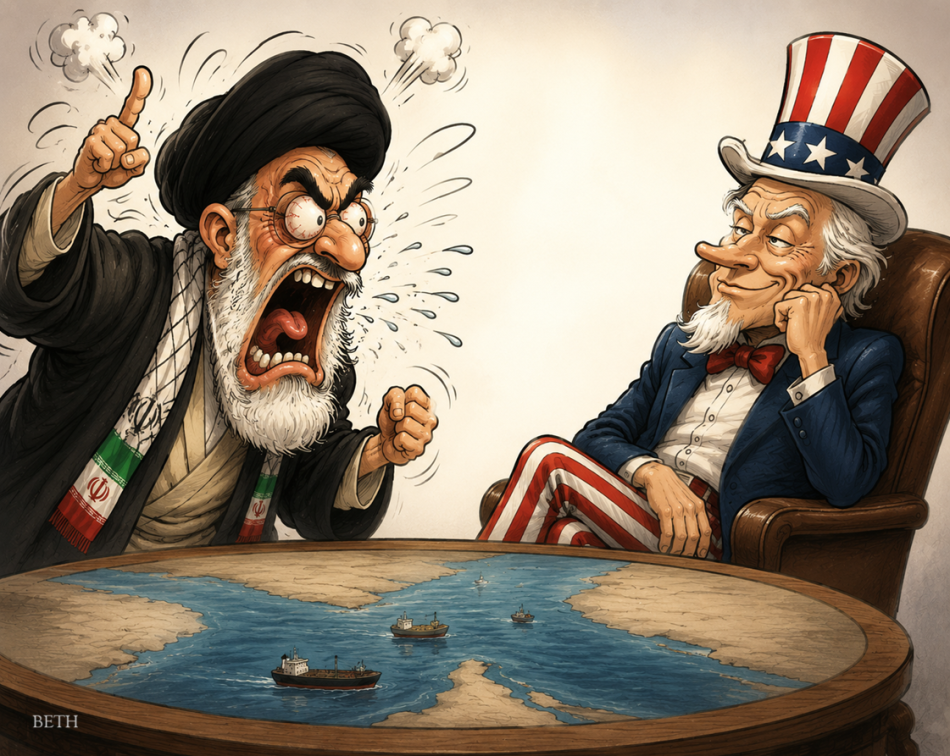
Iranian officials continue to issue statements regarding the Strait of Hormuz, as preparations move forward for another round of indirect technical talks with the United States.
Iranian Parliament Speaker Mohammad Bagher Ghalibaf reaffirmed that Tehran would not allow Washington to interfere in the Strait, adding that Iran and Oman had agreed on a navigation mechanism based on Article Five of the Memorandum of Understanding signed with the United States last June.
Meanwhile, informed sources revealed that Washington had warned Tehran that insisting on controlling the Strait or imposing transit fees could jeopardize the negotiations. The United States reportedly argued that lifting sanctions, releasing frozen Iranian assets, and allowing unrestricted Iranian oil exports would provide Iran with far greater economic benefits.
The developments coincided with renewed warnings from Iran's Islamic Revolutionary Guard Corps (IRGC) to both the United States and Israel, while no official American response had been issued as of Friday afternoon.
BETH Analysis
The most striking development today is not the escalation in Iran's rhetoric.
It is the relative silence from Washington.
In prolonged geopolitical crises, messages are measured not only by what is said.
But also by what remains unsaid.
At times, silence itself can become a negotiating tool just as powerful as public statements.
Over recent days, Tehran has appeared determined to reinforce its narrative regarding the Strait of Hormuz while emphasizing what it considers part of the understandings reached in June. These messages also serve domestic and regional audiences during a politically sensitive period for Iran.
Washington, by contrast, appears—for now—to be avoiding a daily media confrontation.
That does not necessarily indicate any softening of the U.S. position.
Rather, it may reflect a deliberate decision to keep negotiations inside closed channels while preventing public exchanges from influencing the diplomatic process.
This raises a different question:
Are we witnessing media escalation... or a redistribution of negotiating roles?
Iran's louder rhetoric may be directed primarily toward its domestic audience, reinforcing its position on what it considers a sovereign issue.
The United States, meanwhile, may calculate that responding publicly would only amplify those messages, making strategic patience the more effective option until the next technical round of negotiations begins.
For now, the situation does not resemble an open confrontation.
Instead, it appears to be a carefully managed contest of timing and messaging.
One side raises its voice.
The other chooses silence.
The real question, therefore, is not:
Who spoke louder?
But rather:
Who will be the first to adjust their position once substantive negotiations begin?
From an editorial perspective, the situation has also evolved.
A few days ago, it resembled a cat-and-mouse game, with rapid exchanges of statements and counter-statements.
Today, however, it looks increasingly like a game of chess.
In chess, not every move demands an immediate response.
Sometimes, the strongest move...
is simply to wait.