



Major Intersection Upgrade Begins in North Riyadh
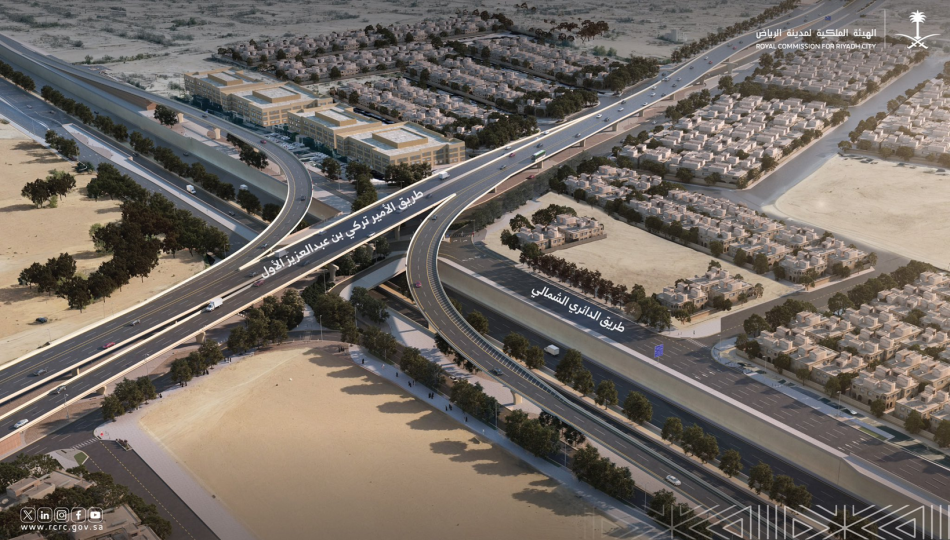
Prince Turki I Road Project Advances
BETH B
The Royal Commission for Riyadh City has begun work on upgrading the intersection of Prince Turki bin Abdulaziz I Road with the Northern Ring Road, as part of the northern section of the project to enhance one of Riyadh's most important traffic corridors.
The project includes the construction of three new bridges and forms part of a broader initiative to improve the efficiency of the capital's road network.
According to the Royal Commission, the upgrade will increase the road's capacity to more than 200,000 vehicles per day, while improving connectivity between key transport corridors, enhancing traffic flow, and reducing travel times.
The section currently under development extends for more than three kilometers and includes road widening, lane improvements, and advanced engineering solutions designed to enhance mobility and improve the overall performance of Riyadh's transportation network.
The project is part of Riyadh's comprehensive road development program, which includes the construction and upgrading of more than 500 kilometers of ring roads and major arterial routes, in addition to bridges, tunnels, and key intersections. The program also supports integration with the city's public transport network, in line with the objectives of Saudi Vision 2030 to develop a modern, sustainable urban infrastructure.
BETH Analysis
At first glance, bridges and highway intersections may appear to be ordinary infrastructure projects.
In reality, however, great cities are not measured by how many roads they build, but by how effectively they prepare for the movement their future growth will generate.
From this perspective, the Prince Turki bin Abdulaziz I Road project is about far more than relieving today's congestion.
It represents a long-term investment in the future of a city experiencing rapid urban, demographic, and economic expansion.
Increasing the corridor's capacity to more than 200,000 vehicles per day reflects not only current demand but also the level of mobility expected as Riyadh continues to grow.
The project also illustrates a broader shift toward developing an integrated transportation network rather than treating individual roads as isolated projects, improving connectivity, reducing travel times, lowering fuel consumption, and enhancing the overall efficiency of urban mobility.
From an economic standpoint, advanced transportation infrastructure strengthens a city's attractiveness for investment, improves logistics performance, and supports productivity, as the efficiency of road networks is directly linked to the movement of people, goods, and capital.
Equally important is the project's integration with Riyadh's expanding public transport system, reflecting a modern approach to urban planning in which roads, bridges, tunnels, and mass transit operate as one connected mobility ecosystem rather than as separate infrastructure projects.
Viewed through this lens, the project does more than shorten travel distances across Riyadh.
It shortens the time required to build a smarter, more efficient, and more sustainable capital prepared for the demands of the future.