



Construction Continues on Saudi Arabia's First Domestic Tire Manufacturing Plant
بث B
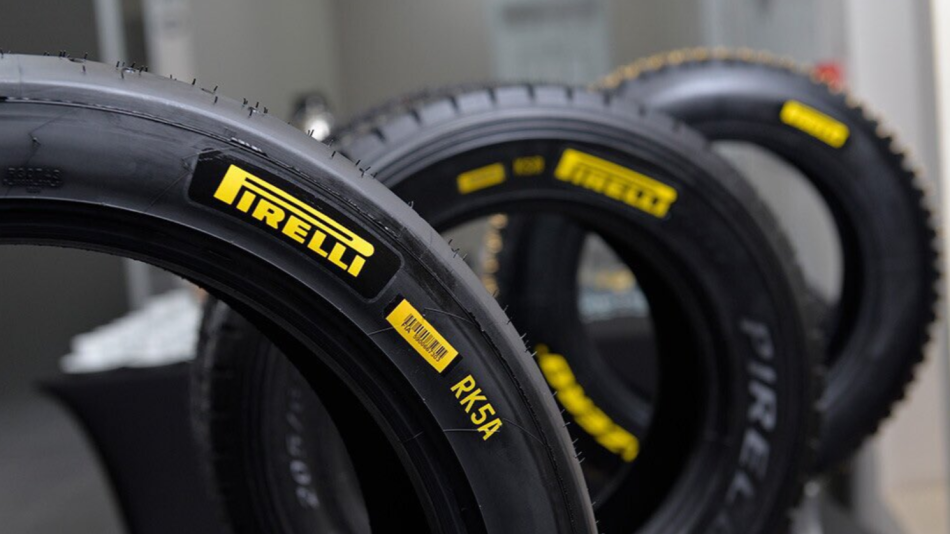
Construction is progressing on the Pirelli manufacturing facility in King Abdullah Economic City, which will become Saudi Arabia's first premium tire production plant. The facility is designed with an annual production capacity of 3.5 million tires through a partnership between the Public Investment Fund (PIF) and Italy's Pirelli.
The project represents another step in Saudi Arabia's efforts to localize advanced industries, strengthen supply chains, and support the objectives of Saudi Vision 2030 by expanding the industrial sector and increasing local content.
BETH Analysis
At first glance, the project may appear to be simply the construction of another factory.
Its true value, however, lies not in the tires themselves—
but in what tires represent within a modern economy.
A tire is not merely a finished product.
It is a critical component connected to the automotive industry, transportation, logistics, mining, large-scale infrastructure projects, and even economic security.
Building the Kingdom's first world-class tire manufacturing facility therefore means that Saudi Arabia is doing far more than adding another production line.
It is building another pillar of an integrated industrial ecosystem.
The project's greater significance lies in the partnership itself: combining national capital, represented by the Public Investment Fund, with global industrial expertise, represented by Pirelli. This model has become increasingly evident across Saudi Arabia's strategic projects, where the objective extends beyond attracting investment to include technology transfer, knowledge localization, talent development, and the creation of a globally competitive industrial base.
The project also aligns with global efforts to reshape supply chains, as countries seek to reduce dependence on imports in strategic industries while strengthening domestic manufacturing capabilities, particularly in sectors closely linked to transportation and industry.
From an economic perspective, producing 3.5 million tires annually is not only about meeting part of domestic demand.
It also creates opportunities to export to regional markets by leveraging Saudi Arabia's strategic geographic location, expanding logistics network, and growing portfolio of trade agreements.
Ultimately, the most important question raised by this project is not:
How many tires will Saudi Arabia produce?
Rather:
How many new industries can be built around this factory?
Experience from major industrial economies shows that a successful factory does not merely manufacture a product.
It attracts an entire ecosystem of suppliers, service providers, research and development activities, supporting industries, and high-value employment opportunities.
Viewed from this perspective, the Pirelli plant is far more than an industrial project.
It represents another milestone in Saudi Arabia's transition from an economy that imports products to an economy that creates value.