


Day 121 🇺🇸⚔️🇮🇷: The Cat-and-Mouse Game
بث B
Tensions continue in the Strait of Hormuz despite the ongoing understanding between Washington and Tehran.
The United States has informed Iran that it rejects any changes to navigation procedures in the strait, stressing that any such move would constitute a violation of the memorandum of understanding signed by both sides last June. Washington also stated that it is closely monitoring Iran's activities in the waterway and warned that any escalation would have direct consequences.
On the other side, Iran's Islamic Revolutionary Guard Corps (IRGC) warned the United States against any intervention in the Strait of Hormuz, insisting that all vessels must follow the maritime routes designated by Tehran. Iranian officials stated that any U.S. intervention would be met with a swift and decisive response, arguing that the continued American military presence over the Strait threatens regional security.
BETH Analysis
At first glance, the latest developments may appear to be the prelude to another military confrontation.
A closer reading, however, suggests that both sides are engaged in a different kind of contest.
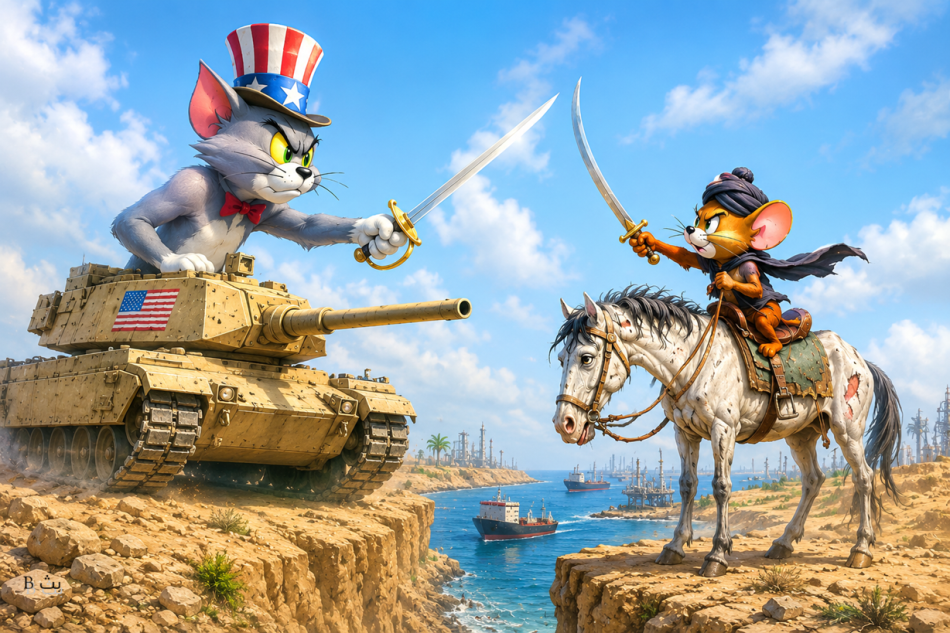
It is a cat-and-mouse game.
Each side moves close to the red line, then deliberately stops short of crossing it.
The rhetoric escalates, while actions on the ground remain carefully calculated, as though the objective is not to ignite a crisis, but to manage the level of tension.
Washington understands that any major disruption in the Strait of Hormuz would immediately affect global energy markets and the world economy.
Tehran, meanwhile, recognizes that a direct confrontation could impose political, military, and economic costs that it has little interest in bearing at this stage.
As a result, both sides appear to be pursuing the same delicate equation:
Project strength without being forced to use it.
The public statements should therefore be understood in light of their intended audiences.
Washington seeks to reassure its allies and international markets that freedom of navigation remains non-negotiable.
Tehran, meanwhile, aims to demonstrate to its domestic audience and regional partners that it continues to exercise influence over one of the world's most strategic maritime corridors, and that its understanding with the United States does not mean abandoning its posture of sovereignty and deterrence.
This explains why the rhetoric often sounds more confrontational than the reality on the ground.
That said, the risks should not be underestimated.
The greatest danger lies not in the statements themselves, but in miscalculation.
The greater the military presence, the more aircraft operating over the area, and the more signals exchanged between both sides, the greater the possibility that a minor tactical mistake could trigger a crisis that neither side intended.
The key question, therefore, is no longer:
Will a confrontation erupt?
Rather, it is:
How long can this cat-and-mouse game continue before one side misjudges the other's next move?
In crises of this nature, wars do not always begin with a political decision.
Sometimes they begin with a misunderstanding, a misreading of intentions, or a reaction that moves faster than careful calculation.
That is why the Strait of Hormuz has become more than just a vital energy corridor.
It is now a strategic arena where major powers test their ability to exercise deterrence—without sliding into war.