


Day 120 🇺🇸⚔️🇮🇷 | Negotiations Under the Shadow of Power
BETH B
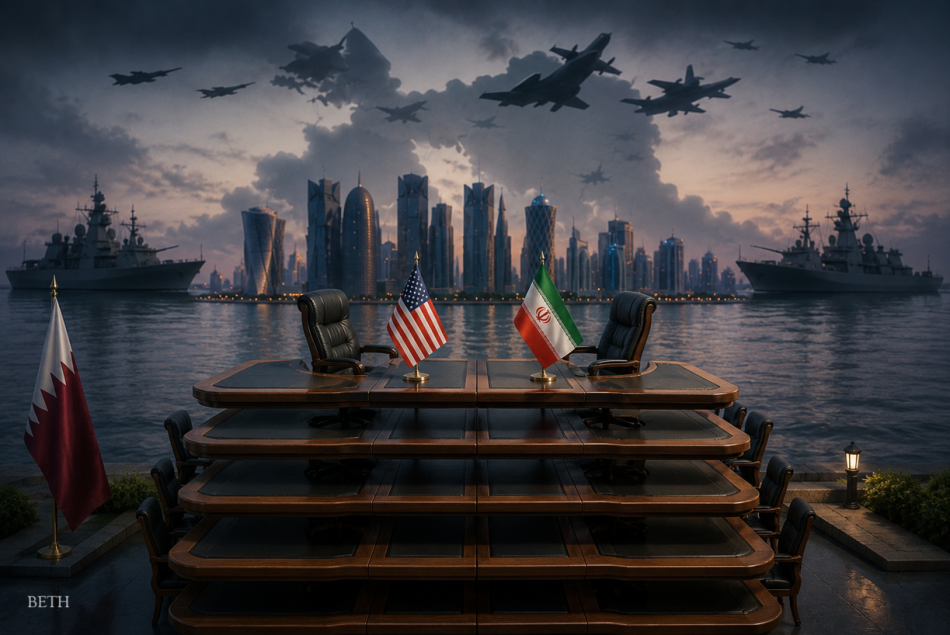
Indirect talks between the United States and Iran continue today, Wednesday, in Doha, Qatar, with Qatari mediation remaining active. Washington has reaffirmed its commitment to diplomacy while keeping the military option on the table should negotiations fail.
Qatari Prime Minister and Minister of Foreign Affairs Sheikh Mohammed bin Abdulrahman Al Thani reaffirmed to U.S. envoys Steve Witkoff and Jared Kushner that Doha remains committed to supporting all dialogue tracks stemming from the U.S.-Iran memorandum of understanding.
Witkoff and Kushner reiterated Washington's commitment to continuing negotiations. Meanwhile, Iran indicated that the Doha discussions are expected to focus on its frozen assets, while maintaining that it has no intention of holding direct talks with the U.S. delegation.
At the same time, U.S. media reports revealed that President Donald Trump recently discussed with senior military officials the possibility of resuming large-scale strikes against Iranian targets before deciding, for now, to keep the diplomatic track in place.
Trump said the negotiations are "going well," but again warned that military action remains an option if diplomacy fails, stating: "Iran has to agree, or we'll do what we have to do."
BETH Analysis
The negotiations are no longer defined by a simple choice between war and peace.
Instead, they are unfolding along two parallel tracks:
Diplomacy and military pressure.
The United States is negotiating while preserving its military leverage.
Iran is also negotiating, but seeks to avoid appearing to retreat. That is why it continues to deny direct meetings and emphasizes that all communication takes place through mediators.
Both sides appear to be fighting two battles simultaneously:
One inside the negotiating rooms.
The other in the arena of public opinion.
In negotiations of this kind, media messaging becomes an integral part of the negotiating strategy itself.
BETH Outlook
If the Doha round produces tangible progress, discussions are likely to expand gradually beyond frozen assets to include the nuclear file and broader regional security issues.
If the talks stall, continued U.S. references to the military option could quickly push the region back toward escalation—while leaving the door to diplomacy open at the same time.