



Day 119 🇺🇸⚔️🇮🇷.. Negotiation or Denial?
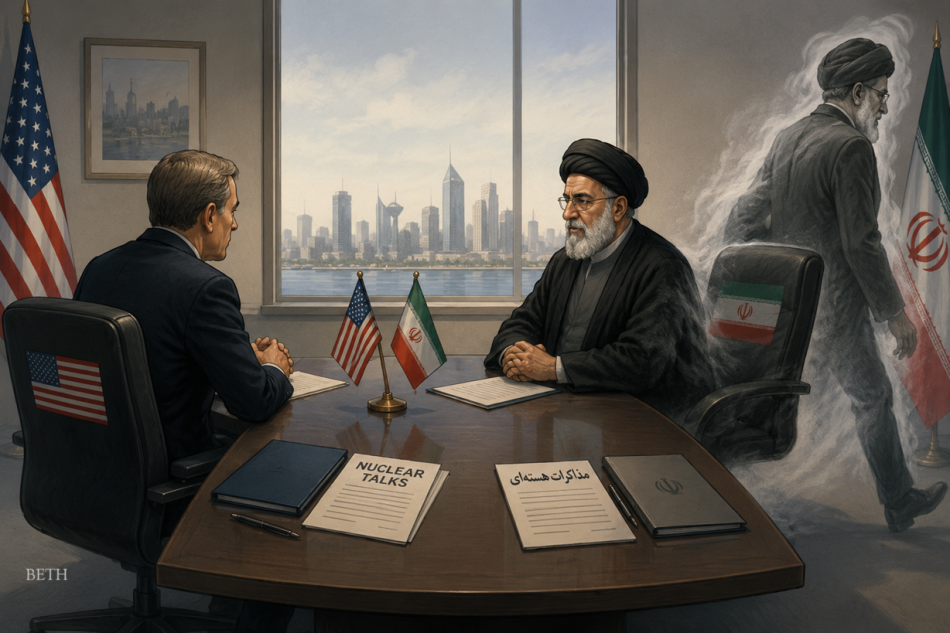
Attention is turning to Doha, where Washington says talks with Iran are imminent, while Tehran continues to deny that any official meeting has been scheduled. Between U.S. confirmation and Iranian denial, uncertainty has once again come to dominate the nuclear negotiations at one of their most sensitive stages.
Key Developments
- U.S. and Iranian delegations are expected to arrive in Doha.
- U.S. sources say Special Envoy Steve Witkoff and Jared Kushner will meet with Qatari Prime Minister and Foreign Minister Sheikh Mohammed bin Abdulrahman Al Thani, in addition to holding discussions with other senior Qatari officials.
- Indirect U.S.-Iran talks, mediated by Qatar and Pakistan, are expected to take place on Wednesday.
- U.S. President Donald Trump described the anticipated Doha meeting as "possibly important," adding, "We'll know later."
- Meanwhile, Tehran denied that any meeting has been scheduled, with Iranian Deputy Foreign Minister Kazem Gharibabadi stating that no technical working-group meetings are planned this week.
BETH Analysis
The central question today is no longer:
Will the meeting take place?
Instead, it has become:
Why is Washington confirming what Tehran is denying?
This divergence may reflect less a contradiction than a difference in political messaging.
The United States appears keen to demonstrate that diplomacy remains alive, reinforcing confidence in a negotiated path and helping reassure global markets. Iran, on the other hand, may view any public acknowledgment of talks before they begin as granting Washington a political advantage or increasing domestic pressure on its own leadership.
If the meetings ultimately do take place, Tehran's denial may prove to be less a rejection of diplomacy than a negotiating tactic designed to preserve strategic flexibility.
The larger question therefore remains:
Will Doha become the venue that revives diplomacy, or merely another stop in a prolonged cycle of negotiations without a meaningful breakthrough?
Latest Developments – Day 119 (As of 3:00 PM)
Iran has confirmed that no negotiations with the United States took place on Tuesday, consistent with Tehran's earlier statements.
According to the latest information, indirect negotiations between the two sides are now scheduled to take place on Wednesday in Doha, through mediators.
BETH Analysis
The postponement of the negotiations until Wednesday raises several questions, but it does not necessarily indicate that either side has imposed its position on the other.
Four possible explanations stand out:
First: The delay may be part of a mutually agreed negotiating tactic, allowing mediators additional time to narrow the gaps before the formal talks begin.
Second: Iran may have sought to reinforce its narrative that it—not Washington—controls the timing of announcing the negotiations, avoiding any perception that it is responding to American pressure. Such an approach would serve both its domestic and external messaging.
Third: Washington may have intentionally publicized the meetings early to generate political and media momentum, while Tehran preferred to maintain ambiguity until the last moment—a pattern seen in previous rounds of negotiations.
Fourth: Technical or logistical considerations cannot be ruled out, nor the possibility that unofficial consultations among mediators required postponing the formal opening of the talks until Wednesday.
BETH Assessment
If the negotiations proceed as scheduled on Wednesday, it will strengthen the view that the dispute was primarily about managing public messaging rather than the negotiations themselves.
However, if the talks are postponed again or canceled, it would suggest a more substantive divergence between the two sides, either over their positions or over the conditions for launching the dialogue.