


Day 117 🇺🇸⚔️🇮🇷: Escalation Shifts to the Gulf
BETH | B
U.S. President Donald Trump reiterated that Iran will "never" be allowed to possess a nuclear weapon, while again signaling the possibility of military action following recent U.S. strikes on Iranian military facilities and radar sites.
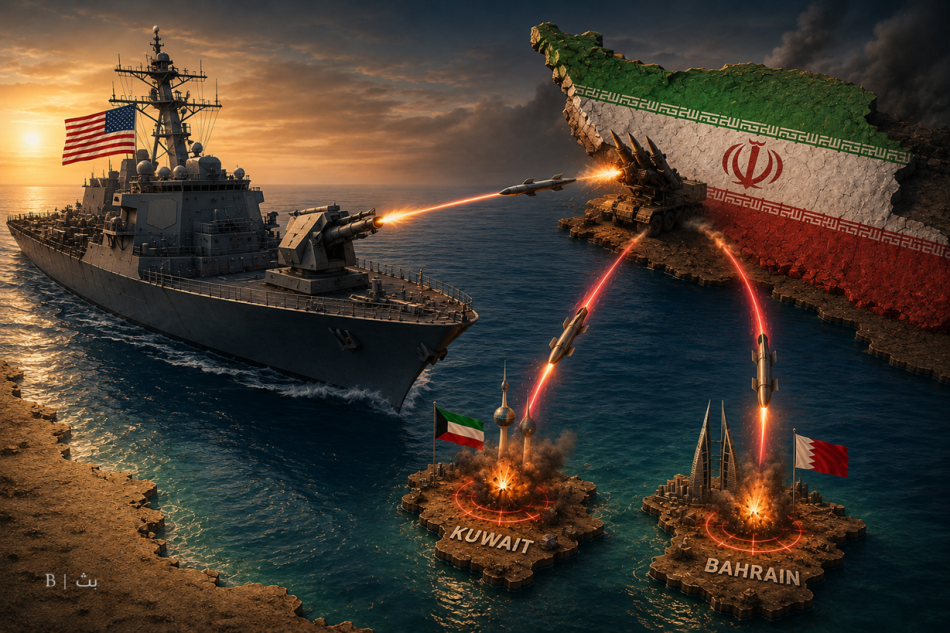
Meanwhile, Iran's Islamic Revolutionary Guard Corps (IRGC) claimed it had launched attacks targeting U.S. positions in Bahrain and Kuwait, while threatening to suspend all technical talks and the negotiation track with Washington.
BETH Analysis
The key question is no longer why Iran is responding.
Rather:
Why is it choosing to respond through the Gulf?
Iran understands that directly attacking U.S. naval forces or the American military assets surrounding its territory could trigger a broader and far more costly military confrontation.
By contrast, claiming to target U.S. facilities located within Gulf states provides Tehran with greater room for strategic maneuvering.
It portrays its actions as attacks against the American military presence, while in practice shifting the pressure of confrontation onto Gulf geography and exposing neighboring states to risks they did not choose.
Here, a long-standing Iranian strategic calculation becomes visible:
Avoid direct confrontation when its costs are prohibitive, while expanding the arena of pressure whenever part of the burden can be transferred to others.
For Tehran, the Gulf is not merely a military theater.
It is also a political, economic, and psychological pressure point.
Any threat to Bahrain, Kuwait, maritime navigation, or energy infrastructure sends a message to Washington—and to the wider world—that the security of the entire region will become part of the price of increasing pressure on Iran.
Yet this strategy carries significant risks.
The more Iran portrays its actions as attacks solely against American military assets, the more Gulf states may conclude that the issue extends beyond the U.S. presence itself to a strategic mindset that views the security of neighboring countries as a bargaining instrument.
The question is therefore no longer:
Are Washington and Tehran negotiating, or confronting one another?
The more pressing question is:
Is Iran using the Gulf as a pressure card because it seeks to avoid bearing the full cost of a direct military confrontation on its own?