


Riyadh Develops Its Major Road Network
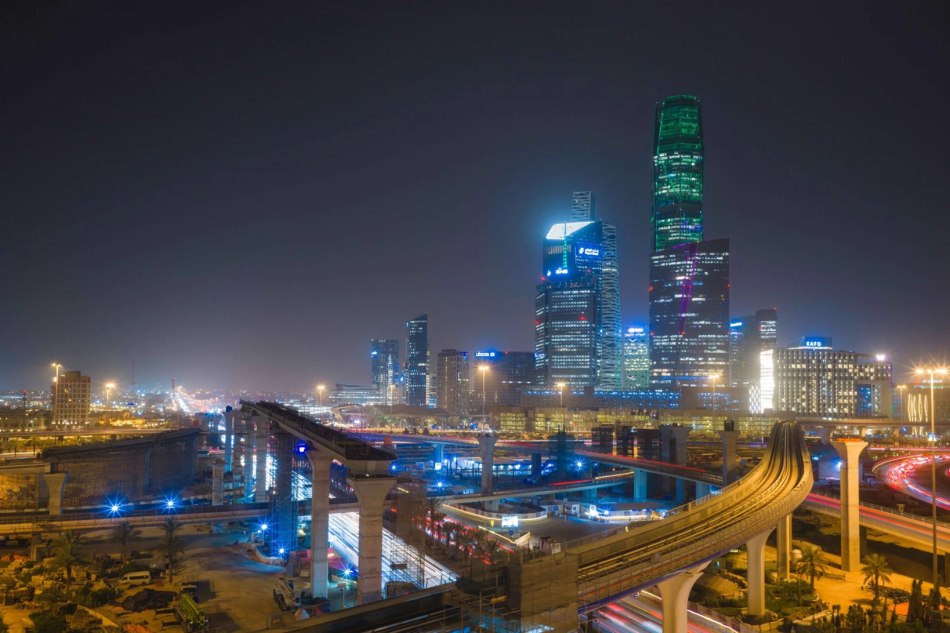
Fourth Phase Raises Total Program Investment to SAR 38.8 Billion in the Largest Road Development Project in Riyadh’s History
Riyadh | BETH | B
The Royal Commission for Riyadh City has launched the fourth phase of its Circular and Major Roads Development Program, with investments totaling SAR 9.8 billion to develop four major roads spanning a combined length of 40 kilometers.
The new phase includes the construction of 14 major intersections, 33 bridges, five tunnels, and six pedestrian bridges, with a total traffic capacity exceeding 950,000 vehicles per day, enhancing the efficiency of Riyadh’s road network and strengthening connectivity across the capital.
The projects include the development of:
- Sheikh Jaber Al-Ahmad Al-Sabah Road – Southern Section.
- Prince Turki bin Abdulaziz I Road – Central Section.
- Prince Mishal bin Abdulaziz Road.
- Najm Al-Din Al-Ayyubi Road – Western Section.
With the launch of this phase, the number of completed program phases has now reached four, forming part of the largest road development program in Riyadh’s history and the biggest of its kind in the region, with total investments of SAR 38.8 billion.
Overall, the program comprises 22 projects, including the construction of 158 bridges, 22 tunnels, and the upgrading of dozens of major intersections, as part of a long-term strategy to improve mobility, reduce travel times, enhance quality of life, and support Riyadh’s urban and economic expansion.
BETH Analysis
In traditional cities, roads are built to serve traffic.
In global cities, roads are built to serve the future.
The newly launched fourth phase should therefore not be viewed merely as a SAR 9.8 billion road project, but as part of a comprehensive infrastructure program worth SAR 38.8 billion, reflecting Riyadh’s long-term vision for reshaping its transportation network.
The capital is preparing not only for more vehicles, but for a larger population, stronger economic activity, greater investment, and an expanding calendar of global events.
What stands out is that the program is not focused on a single road or isolated intersection. Instead, it represents an integrated network of 22 projects, supported by hundreds of bridges and tunnels designed to improve connectivity and mobility across the city through long-term strategic planning.
In today’s economy, infrastructure is no longer simply a public service.
It is one of the defining factors of a city's global competitiveness.
With the continued expansion of the Riyadh Metro, the New Murabba project, and major economic and urban developments, Riyadh is doing more than expanding its road network.
It is building the infrastructure for a city designed to thrive for decades to come.
The question is no longer:
How is Riyadh solving today’s traffic congestion?
But rather:
How is Riyadh building a road network capable of serving the city of tomorrow?