



Day 114 🇺🇸⚔️🇮🇷: Defeat... and Negotiations
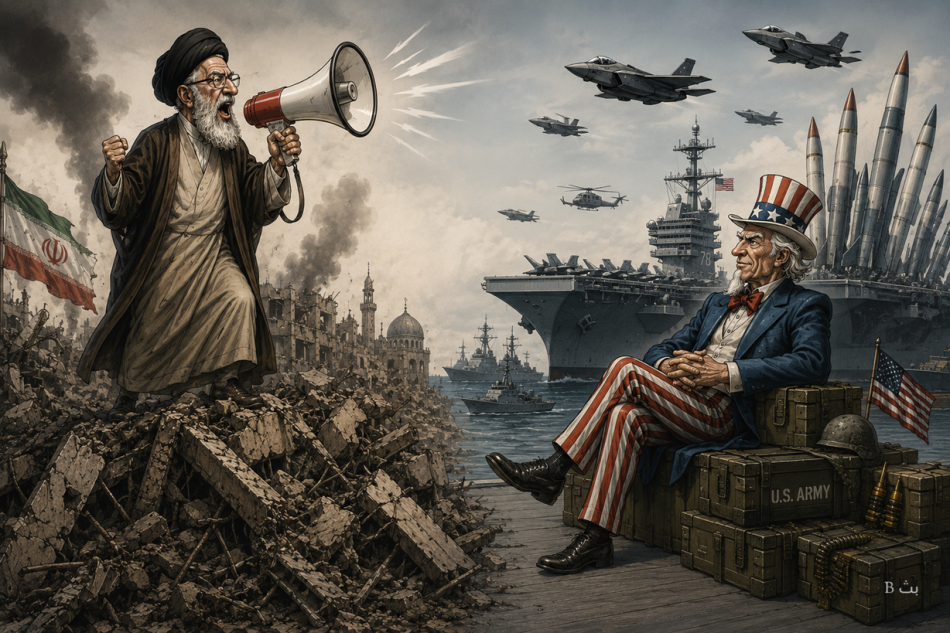
BETH | B
Mohammad Bagher Ghalibaf renewed Iran’s position on regional security, stressing that the security of the region should be ensured exclusively by regional countries. He described the memorandum of understanding signed with the United States as “a declaration of America’s defeat.”
The remarks were made during his participation in the 20th Conference of the Parliamentary Union of the Member States of the Organisation of Islamic Cooperation, hosted by Azerbaijan.
Meanwhile, Pakistan confirmed that negotiations between the United States and Iran remain ongoing, adding that expert-level technical talks are expected to resume next week under joint Pakistani-Qatari mediation.
The nuclear issue also returned to the spotlight after Rafael Grossi confirmed that inspectors from the International Atomic Energy Agency will visit Iranian nuclear facilities, despite continued discrepancies between Iranian and American statements regarding the scope and mechanisms of inspections.
BETH Analysis
The current situation presents a notable paradox.
The louder the rhetoric of victory becomes, the more negotiations seem to return to the forefront.
And whenever one side speaks of the other’s defeat, a new round of meetings, technical discussions, or diplomatic contacts appears to follow.
The key question today may not be:
Who claims victory?
But rather:
Why do negotiations continue if one side has already been defeated?
Nations do not usually negotiate with an opponent that no longer matters.
Nor do they resume technical talks with a party that has lost all of its leverage.
This suggests that much of the political rhetoric is directed toward domestic audiences, while strategic calculations continue along a more pragmatic and less emotional track.
At the same time, the IAEA’s insistence on returning to inspection sites underscores that the nuclear file remains at the heart of the dispute, and that any future agreement will ultimately revolve around one central question:
What is happening inside the nuclear facilities?
As the conflict enters its 114th day, the region appears trapped in a familiar pattern:
Harsh rhetoric.
Competing declarations of victory.
And negotiations that never truly stop.
The increasingly important question is no longer:
Who won the media battle?
But:
Are the parties moving closer to a genuine settlement, or simply managing a long-term conflict under the umbrella of negotiations?