


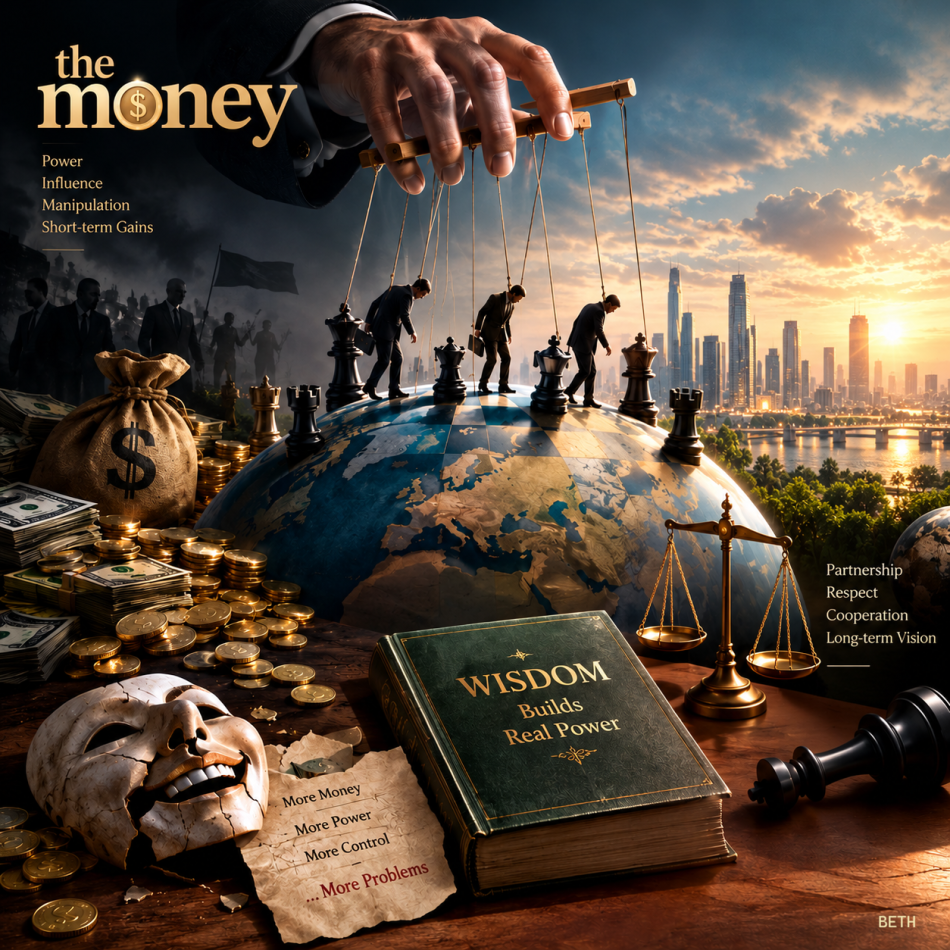
From Goebbels to Trump… Who Owns the Microphone?
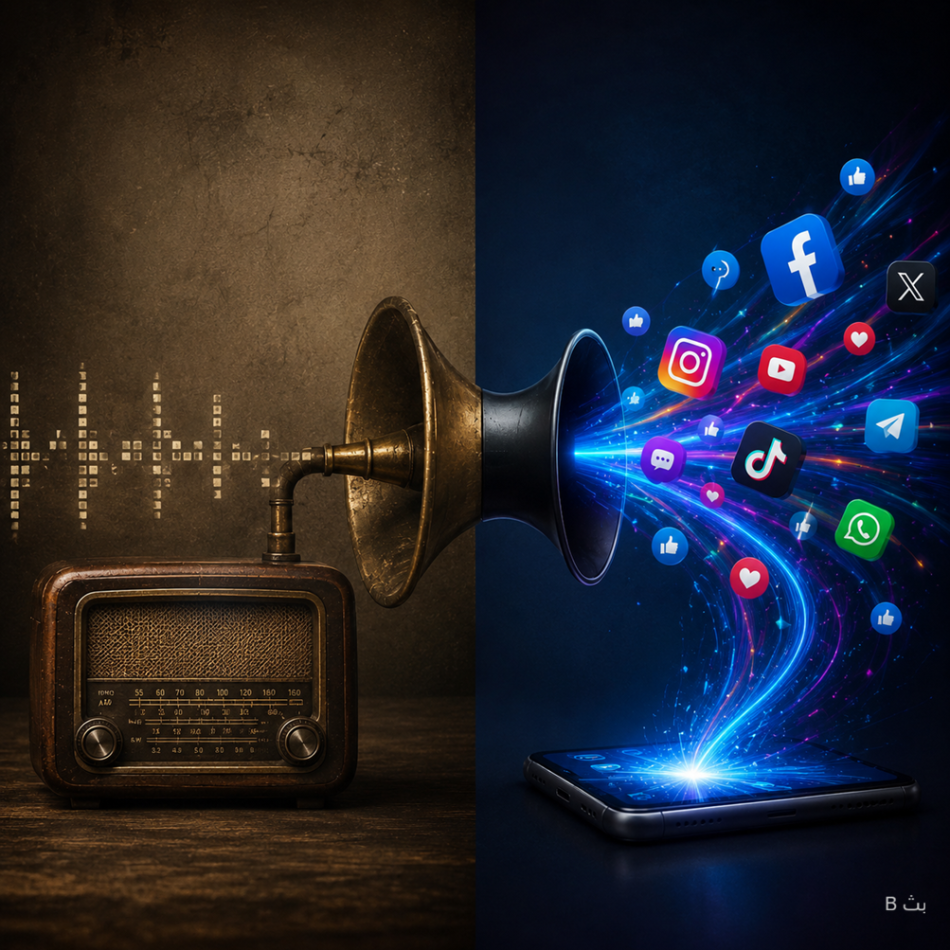
Lessons in Media Between State Propaganda, Denial, and Direct Influence
Prepared and Analyzed by
Strategic Media Department – BETH | B
Supervised by Abdullah Al-Omairah
Times change.
Tools evolve.
Platforms transform.
Yet one question has remained present for nearly a century:
Where does media power come from?
From the state?
From the leader?
From repetition?
Or from the audience itself?
And does the media create truth?
Or does it create an audience willing to believe it?
Goebbels: The Media of the Closed State
Joseph Goebbels, Nazi Germany's Minister of Propaganda, represented a model of media power based on controlling the platforms, repeating the message, and turning propaganda into political doctrine.
The objective was not necessarily to persuade everyone, but to dominate the public sphere and prevent competing narratives from emerging.
But the end exposed the limits of that model.
The fall of Hitler brought down not only the regime but also the propaganda machine built around it.
Its foundation was clear:
The regime first.
And when the regime fell, so did the propaganda.
Al-Sahhaf: The Media of Denial
Iraqi Information Minister Mohammed Saeed Al-Sahhaf represented a different model.
He was not building a long-term propaganda project.
He was attempting to manage collapse with words.
His strength lay in confidence, performance, and repeated denial.
But reality moved faster than rhetoric.
Eventually, his statements became symbols of irony rather than instruments of influence.
Again, the foundation was clear:
The regime first.
And when it collapsed, so did the message.
Trump: The Media of Personality
Donald Trump introduced a completely different model.
He did not need a Ministry of Information.
Nor did he rely on monopolizing media platforms.
Instead, he turned himself into a media platform.
He confronted traditional media, benefited from it, and bypassed it at the same time.
He spoke directly to his audience.
News often began with a statement, a post, or a sentence from Trump before being picked up by the media.
Here, power no longer rested in institutions.
It rested in the ability to create events, provoke debate, and maintain a constantly engaged audience.
Its foundation was different:
The audience first.
Not power.
Which explains why his influence survived beyond the White House.
Collective Media: The Single Voice
There is another model that is not tied to any individual.
Collective media.
Numerous outlets, but one voice.
The logos may differ.
But the perspective is the same.
The vocabulary is the same.
The priorities are the same.
Sometimes even the silence is the same.
This model does not rely on a single speaker.
It depends on a network that reproduces the same message.
Its foundation is:
Authority first.
And its strength often depends on the strength of the power around which it revolves.
Tools Change… Human Nature Does Not
Goebbels relied on monopolizing truth.
Al-Sahhaf relied on denying reality.
Trump relied on shock, polarization, and direct communication.
Collective media relies on repetition and unified narratives.
Yet what connects all these models is not technology.
It is human nature itself.
People do not always seek truth.
Sometimes they seek narratives that provide reassurance, confirm beliefs, or offer a sense of belonging.
The Problem Is Not the Narrative
People do not always search for truth.
How Do We Reach Greater Depth?
Truth is not reached through intuition alone, eloquence, or endless observation.
It requires tools.
The first is critical thinking.
Not simply asking:
What was said?
But:
Why was it said?
Who benefits?
And what was left unsaid?
The second is multiple sources.
Truth should not be viewed through a single window or built from one platform.
The third is reading behavior rather than statements.
Political and media actors may say one thing, but reveal themselves through timing, actions, images, silence, and repetition.
The fourth is data and technology.
From monitoring tools and trend analysis to verification technologies and the detection of manipulation and deception.
Yet the most important tool remains the human being.
A journalist who practices professional skepticism rather than destructive doubt.
One who understands that the mission is not to believe the fastest narrative, but to test the deeper one.
Reaching depth requires more than eyes that see.
It requires a mind that connects, tools that verify, and the courage to ask.
The Final Lesson
The question today is no longer:
Who owns the media?
But:
Who owns attention?
Who can make people listen?
And who can maintain their trust?
From Goebbels to Al-Sahhaf to Trump, times and tools have changed.
But one truth remains:
Media does not survive through power alone.
Nor through repetition alone.
And the loudest voice does not always prevail.
History has shown that platforms fall.
Regimes change.
But human beings continue to seek narratives that provide meaning, reassurance, or a sense of belonging.
And the question that accompanies every age remains:
Does the media create truth?
Or does it create an audience willing to believe it?
Perhaps the deeper question is:
Do people truly seek truth… or do they seek the version of truth they wish to be true?
In an age where the world is within everyone's reach, the survival of media platforms and the stability of systems are no longer determined by the loudest voice, but by the level of trust they can inspire.
Media that deals professionally with reality is more likely to earn that trust—especially in an era in which audiences are better informed and less willing to believe any narrative without question.