



Day 109 🇺🇸⚔️🇮🇷 | Has the War Ended?
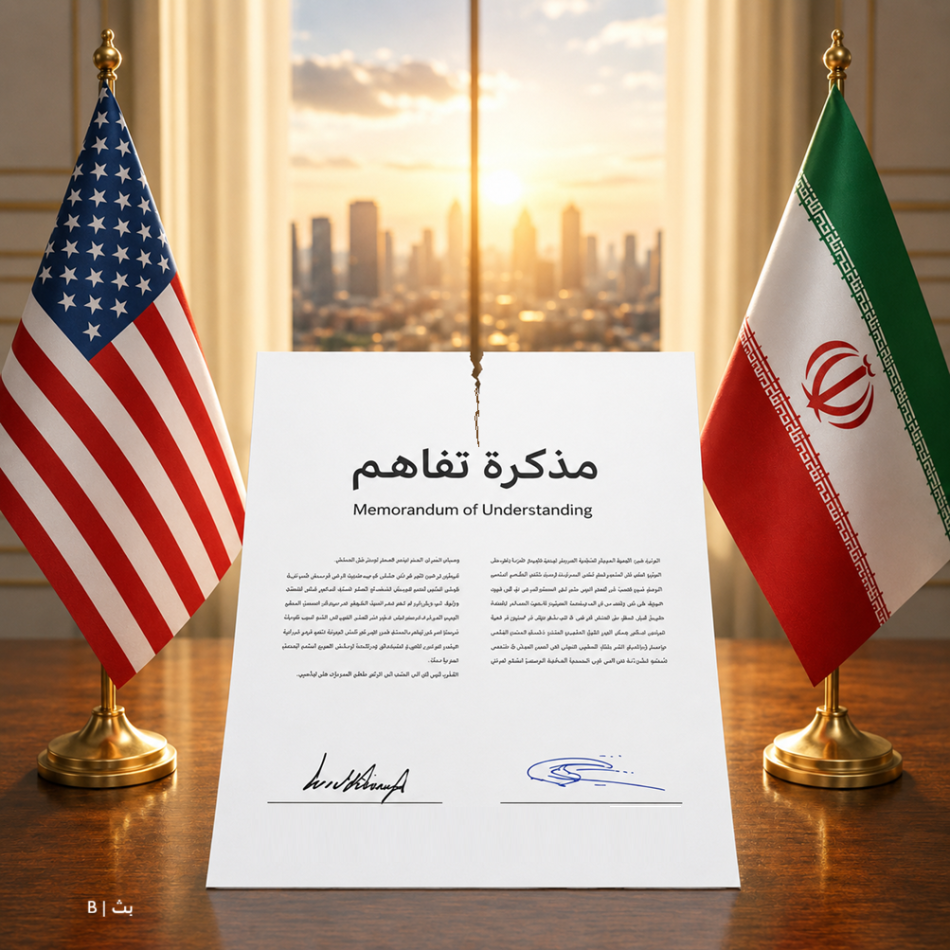
Has the war between the United States and Israel on one side, and Iran on the other, really ended?
And if not, when could it end?
Prepared and Analyzed by
Strategic Media Department – BETH | B
Supervised by Abdullah Al-Omairah
After 109 days of war, strikes, escalation, threats, and negotiations, some believe the conflict ended with the signing of the Memorandum of Understanding between Washington and Tehran.
But two questions now impose themselves:
Has the war really ended?
And if not, when could it end?
The answer closest to reality is:
No, the war has not ended.
It has simply changed its form.
What was once a hot conflict has entered a more complex phase, where negotiations mix with pressure, ceasefires with threats, and politics with military power.
The First Test of the Memorandum
Today's postponement of the planned U.S.-Iran talks in Switzerland, amid conflicting statements from Bern and Islamabad, added further uncertainty to negotiations that are supposed to last sixty days, with the possibility of extension.
Although Pakistan denied the existence of any obstacles, the delay suggests that moving from paper to implementation may prove more difficult than reaching the memorandum itself.
Lebanon: A Front That Has Not Gone Quiet
At the same time, southern Lebanon witnessed renewed Israeli military escalation that left casualties, while the Israeli army announced strikes against Hezbollah targets, citing repeated violations of the ceasefire.
Israel appears determined to send a clear message: negotiations with Iran do not mean freezing other fronts, and any attempt to rebuild Hezbollah's capabilities will be met with force.
Iraq: New Cards on the Table
Reports also emerged that Iran's Revolutionary Guard has formed new covert cells in Iraq, operating outside traditional militia networks in an effort to preserve regional leverage while avoiding detection.
If confirmed, these reports suggest that the post-war phase has not yet become a phase of peace, but rather one of reorganizing tools and influence.
Has the War Ended?
The reality is that the conflict was never merely about airstrikes.
The issues that ignited the confrontation remain unresolved:
- Iran's nuclear program.
- Hezbollah and Lebanon.
- Armed factions in Iraq.
- Gulf security.
- Regional influence.
- Israel's security.
- The future balance of power in the Middle East.
Therefore, signing a Memorandum of Understanding does not mean the end of the conflict. Rather, it marks the beginning of a new phase of testing.
So, When Will It End?
The current round may end.
Negotiations may succeed in preventing a major explosion.
But speaking of lasting peace remains difficult as long as the core issues remain unresolved.
More likely, the region is entering a prolonged period characterized by:
- Negotiations.
- Pressure.
- Sanctions.
- Limited strikes.
- A continued reshaping of influence.
In other words, a phase with neither full-scale war nor complete peace.
More Analysis
After 109 days, the war has not ended.
It has moved from the skies to the negotiating table.
From missiles to details.
The aircraft are less visible.
But pressure has not stopped.
Proxy networks have not disappeared.
And doubts remain.
The question is no longer:
Has the war stopped?
But rather:
Can negotiations contain the conflict, or has the region entered a new phase of prolonged low-intensity warfare?
The document has been signed.
But the road toward a genuine and lasting peace remains long and difficult.
And that is why...
The count continues.
Day 109.
Who Wants the War to Continue?
The most important question today is no longer simply whether the war has ended.
It is: Who wants it to continue? And who wants to put it out?
While the Memorandum of Understanding seeks to move the conflict to the negotiating table, other actors appear determined to keep the flames alive. Hezbollah remains active on the Lebanese front, while reports have emerged of Iranian Revolutionary Guard-linked cells in Iraq allegedly preparing attacks against Gulf countries hosting U.S. forces. Reuters, citing eight Iraqi sources, reported that new covert cells have been established in Iraq to conduct drone attacks against Gulf states, suggesting an effort to bypass traditional militia networks and reduce political exposure.
Here lies the more dangerous reality: those who want to prolong the war do not always say so openly. Instead, they open a secondary front, activate a proxy, or create an incident sufficient to disrupt negotiations.
By contrast, those seeking to extinguish the conflict are working to contain the fronts, protect the Gulf, and prevent Lebanon and Iraq from becoming testing grounds for the memorandum.
The struggle is no longer only between Washington and Tehran. It is also between those who see the agreement as an opportunity to reduce tensions and those who view calm as the loss of their leverage.
BETH Analysis | B
When battlefronts remain active after the signing of the document, it suggests that some actors are not testing peace, but testing peace's ability to survive.
The greatest threat to the Memorandum of Understanding may not lie in its text, but in those who operate outside it.
The document was signed by states.
But chaos may come from the proxies.