



Council of Ministers Chaired by the Crown Prince
Saudi Arabia Welcomes the Washington–Tehran Agreement and Reaffirms Freedom of Navigation in the Strait of Hormuz
Riyadh Chosen as Headquarters for the First UN Cybersecurity Office
New Regulations for Entertainment, Counterterrorism, and Management of Seized Assets
Easier Residency Renewals for Domestic Workers and Agreements with China, Pakistan, India, Canada, and Kuwait
International Recognition of the Saudi Economy’s Resilience and the Progress of Vision Programs
Jeddah | BETH | B
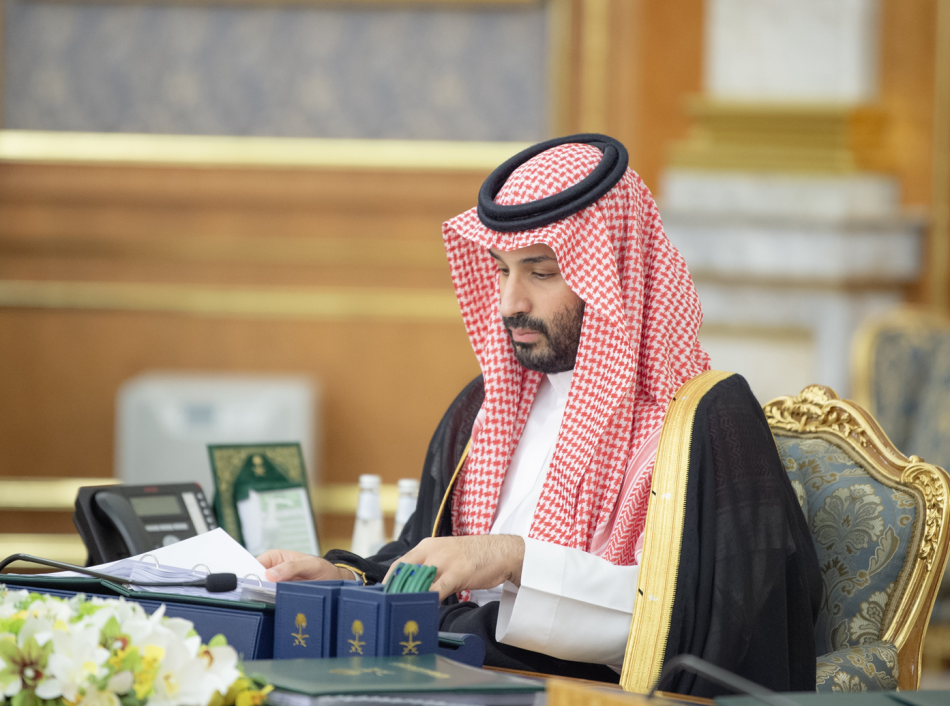
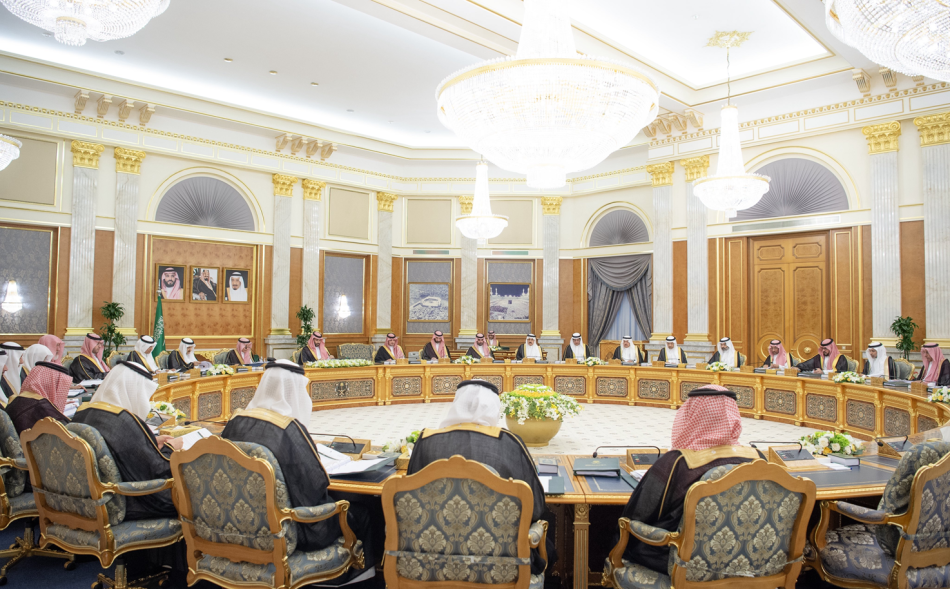
The Council of Ministers held its first session following the 1447H Hajj season under the chairmanship of His Royal Highness Prince Mohammed bin Salman bin Abdulaziz Al Saud, Crown Prince and Prime Minister, in a meeting that addressed regional security, the economy, institutional transformation, international cooperation, and domestic regulatory affairs.
The Council began by praising the successful Hajj season, which enabled more than 1.7 million pilgrims to perform their rituals through an integrated operational, security, and service system that reflected the advancement of the Saudi model in crowd management and the use of data and modern technologies.
Overview
First: Regional Affairs
- Welcoming the agreement between the United States and Iran to end military operations and begin detailed negotiations aimed at reaching a permanent agreement.
- Praising the mediation efforts undertaken by Pakistan and Qatar.
- Reaffirming the importance of restoring freedom of navigation in the Strait of Hormuz to the conditions that existed before February 28.
- Renewing the call to strengthen regional security and respect the sovereignty and internal affairs of states.
Second: Cybersecurity
- Welcoming the selection of Riyadh as the headquarters of the first cybersecurity office affiliated with the United Nations Institute for Training and Research (UNITAR).
- Emphasizing that this selection reflects Saudi Arabia’s advanced international standing in this sector.
Third: Economy and Vision Programs
- Welcoming the results of the International Monetary Fund consultations, which confirmed the resilience of the Saudi economy and its ability to withstand regional developments.
- Praising the achievements of the National Transformation Program, with 71% of its implementation initiatives completed.
- Highlighting the achievements of the Human Capability Development Program in education and training, and in enhancing the competitiveness of Saudi talent.
Fourth: Agreements and Memoranda of Understanding
The Council approved or authorized the signing of a number of agreements and memoranda of understanding, most notably:
- Civil defense cooperation with the Sultanate of Oman and Belarus.
- Mutual recognition of private driving licenses with Pakistan.
- Customs cooperation and mutual assistance with China.
- Cultural cooperation with India.
- Establishing a regional office of the International Alliance for the Protection of Heritage (ALIPH) in Riyadh.
- Cooperation in the mining sector with Canada.
- Health cooperation with Kuwait.
- Cooperation in food safety and risk assessment with Germany.
- News exchange and cooperation between the Saudi Press Agency and the National News Agency of Tajikistan.
Fifth: Regulations and Legislation
- Ratification of the Riyadh Design Law Treaty.
- Approval of the system for managing seized and confiscated assets in money laundering and terrorism financing crimes.
- Amendments to the Counterterrorism and Terrorism Financing Law and its executive regulations.
- Approval of the Entertainment Activities and Supporting Activities Law.
Sixth: Administrative and Institutional Decisions
- Establishing two additional committees in Riyadh to adjudicate insurance disputes and violations.
- Renewing and appointing members of the Family Affairs Council.
- Allowing the issuance and renewal of residency permits for domestic workers on a quarterly basis.
- Appointing a new member to the Board of Directors of the National Health Insurance Center.
- Approving final accounts for a number of universities.
- Endorsing several promotions and appointments across government entities.
BETH Analysis
The first Cabinet session following the Hajj season reflects three parallel tracks on which the Kingdom is moving simultaneously.
The first is external, reflected in support for regional de-escalation and the welcoming of arrangements that reduce the likelihood of military escalation, while maintaining a consistent emphasis on maritime security and regional stability.
The second is economic and developmental, highlighted by a focus on the strength of the Saudi economy, the continuation of Vision programs, and the expansion of international partnerships in culture, mining, healthcare, customs, and cybersecurity.
The third is institutional and legislative, evident in the volume of regulations, laws, and organizational measures approved during the session, signaling the continued modernization of the Kingdom’s regulatory and administrative environment alongside economic transformation.
Notably, the decisions were not concentrated in a single sector. Instead, they spanned security, the economy, technology, culture, education, entertainment, and public services, reflecting an approach based on comprehensive transformation rather than addressing issues in isolation.
The key question is not how many decisions were issued during the session.
Rather:
What do the nature of these decisions reveal?
The answer is that Saudi Arabia continues to pursue two parallel paths: strengthening its regional and international influence, while simultaneously developing and modernizing its domestic institutional, legislative, and economic framework in line with the next phase of the objectives of Saudi Vision 2030.