


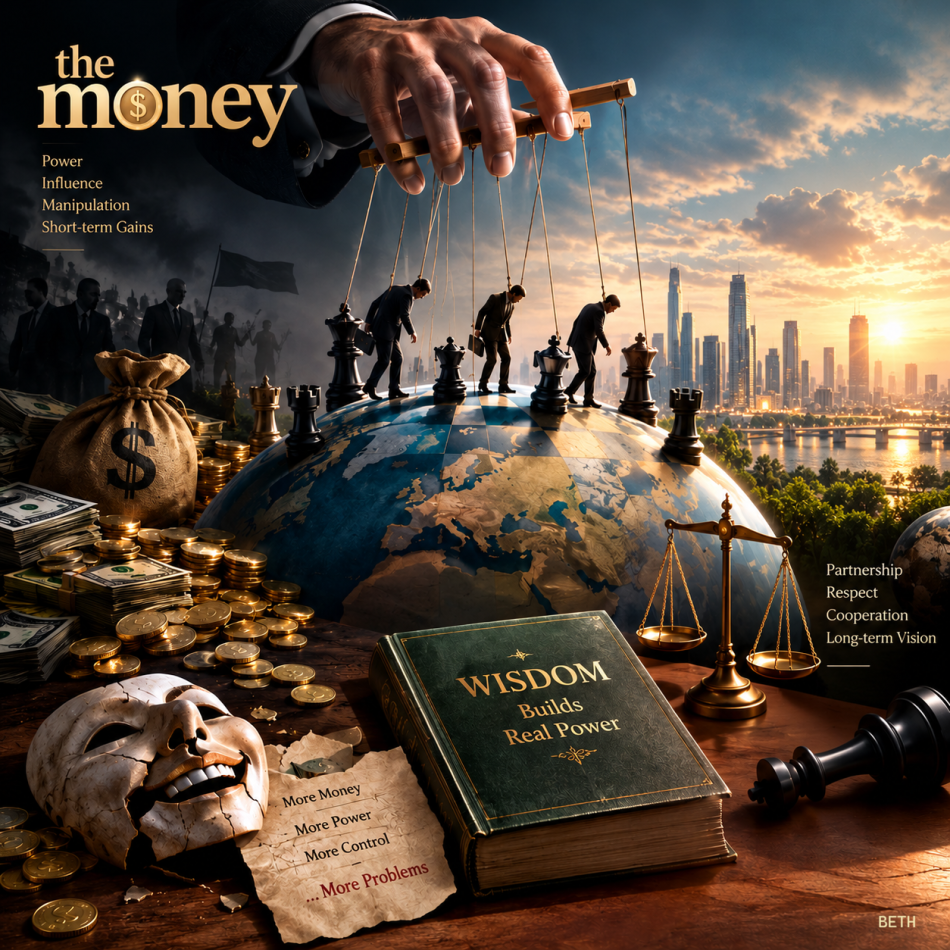
War, the Public, and Public Opinion
By Abdullah Al-Omairah
Many people understand that the public is a broad group of individuals who receive messages, watch events, or consume various forms of content.
Public opinion, however, is something different.
It is not merely the act of following events.
Rather, it is the result that follows from that engagement.
It is the collective outcome of the attitudes, judgments, and impressions that people develop toward an issue, an event, or a public matter.
This raises an important question:
What happens to the public when it follows a prolonged crisis such as the confrontation between the United States and Iran?
And what impact is left by hundreds of conflicting statements, mutual threats, agreements that appear close one day and distant the next, and the continuous cycle of advances and retreats?
Does everything simply disappear once the crisis ends?
Or does something remain within the collective memory?
The Public Does Not Forget as Easily as We Think
Many people may not remember the details of the news months or years later.
Yet they often remember the final impression.
People forget numbers.
They forget dates.
They forget the names of many officials.
But they remember the feeling an event left behind.
For that reason, prolonged crises do not leave information alone.
They leave experiences and impressions that slowly accumulate within the collective consciousness.
From these accumulations, public perceptions are formed.
From Observation to Experience
The public is not expected to understand every military, political, or technical detail.
Yet continuous exposure creates a form of general experience.
A viewer who has followed the Iranian file for years may not know all its complexities.
Nevertheless, he begins forming personal conclusions.
Who is delaying?
Who is maneuvering?
Who threatens more than acts?
Who honors commitments?
Who repeatedly changes positions?
Over time, these impressions evolve into broader judgments.
In many cases, such judgments can become more influential than the facts themselves.
What Has the Media Done?
This leads to a more sensitive question:
Has the media succeeded in explaining what is happening?
Or has it merely reported what is happening?
There is a significant difference between reporting an event and understanding it.
Images convey the scene.
But they do not explain it.
Statements communicate positions.
But they do not reveal motivations.
As a result, much of the media remains focused on the event itself.
Meanwhile, the public needs those who can help it see beyond the event.
The problem today is often not a lack of information.
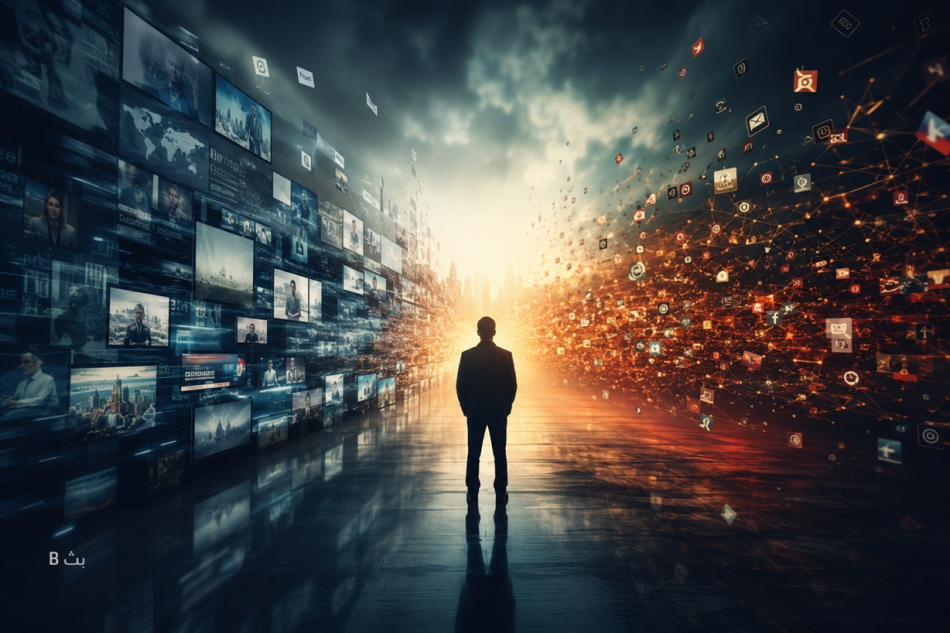
It is an excess of information.
An Opinion Forming in Silence
In the Arab world in particular, a large segment of the public appears to belong to what might be called the “hesitant audience.”
Not because it is uninterested.
But because it receives multiple and often conflicting narratives at the same time.
It finds itself caught between:
An official narrative.
An opposition narrative.
A media narrative.
A digital narrative.
And narratives generated by algorithms.
In such an environment, many people hesitate to adopt a clear position.
That does not mean they lack opinions.
It means their opinions are forming gradually.
And often in silence.
Is the Media Trapped in a Closed Circle?
A question naturally emerges today:
Does the media still create public opinion?
Or has it become trapped in a continuous cycle of news, wars, entertainment, and daily noise?
The truth is that media influence has not disappeared.
It has changed.
In the past, the media was capable of shaping a largely unified public opinion because messages often came from a limited number of relatively aligned sources.
Today, however, it has become a participant in shaping multiple and competing opinions because audiences receive messages from countless sources that may complement one another at times and contradict or undermine one another at others.
This is where the real challenge of modern media emerges.
The challenge is not repeating a single message.
It is creating diverse yet coherent messages that ultimately lead to a shared understanding and a more informed public opinion.
For that reason, the real battle is no longer over the news itself.
It is over its interpretation.
It is no longer about the image.
It is about its meaning.
The public does not need more information as much as it needs help understanding what lies beyond the event.
Who Shapes Awareness?
A thoughtful observer does not merely follow events.
He tries to understand who is shaping the narrative and where it is leading.
Over time, he develops a position and a perspective—positive or negative—according to the depth of his awareness and his ability to analyze.
This is why there remains a need for professional, forward-looking national media led by individuals of knowledge and conviction, not by those who simply repeat what is dictated to them.
People may differ in their views.
But they ultimately recognize a simple truth:
Those who have no opinion leave no impact.
The greater danger is when those without an opinion are guided by external forces, or unknowingly become tools that harm their nation in the short and long term.
Conclusion
Wars may end.
Agreements may be signed.
Headlines may change.
But the impact events leave on the public does not disappear as quickly.
Every prolonged crisis leaves behind a reservoir of impressions, experiences, and judgments.
That reservoir becomes the raw material from which future public opinion is formed.
Therefore, the most important question is not:
What happened between the United States and Iran?
But rather:
What did the public learn from everything that happened?
Events create the news.
But the way people understand those events...
That is what creates public opinion.
And Perhaps One More Question Remains
What does the media do when wars end?
Does it return to its normal role?
Or does it begin searching for a new war?
How is the final narrative of a war written?
Who determines the victor in public memory?
How are the images of the parties involved reshaped?
Who rebuilds trust?
Who heals social divisions?
Does incitement end when the war ends?
What happens to audiences that have spent months or years living under fear and mobilization?
Does the media become a tool for reconciliation and building the future?
Or does it continue managing conflict in new forms?
Related Topic