



Day 104 🇺🇸⚔️🇮🇷
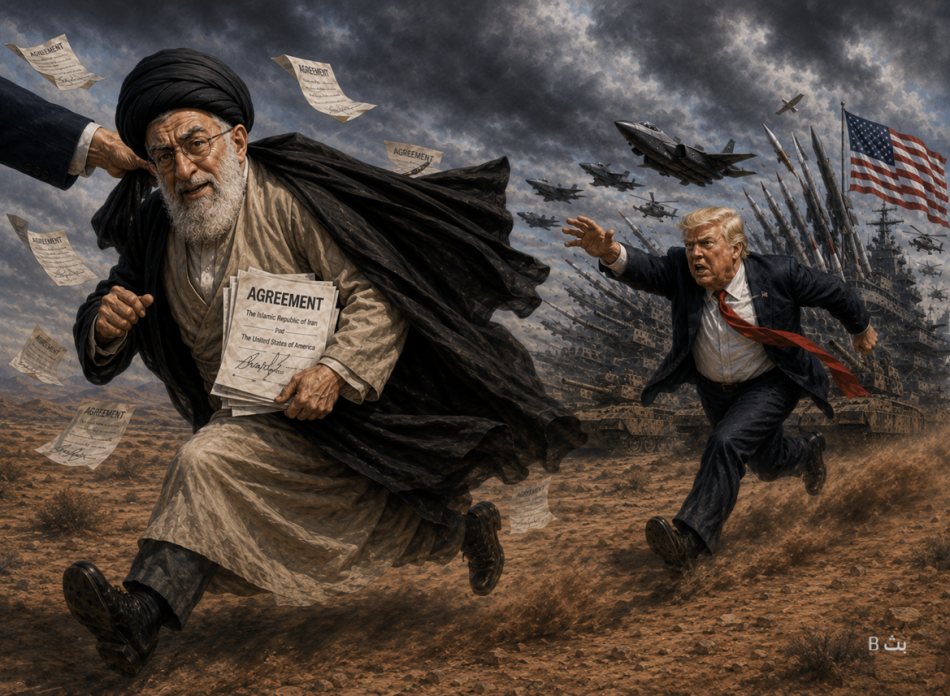
The Agreement: Advances and Retreats.. While Doubts Remain on the Table
Overview
Attention is focused on the anticipated virtual meeting between the American and Iranian delegations amid growing expectations that a memorandum of understanding could soon be signed, potentially ending the confrontation that erupted between the two countries in February.
Reports suggest that the agreement may include reopening the Strait of Hormuz, lifting restrictions on Iranian ports, and launching a new phase of de-escalation.
At the same time, Tehran continues to insist that the final decision remains under review, while American, Iranian, and diplomatic sources point to ongoing differences over several sensitive provisions.
In a parallel development, four major Iranian banks were hit by a cyberattack that disrupted some services, while the Israeli government is preparing for a special meeting to discuss the implications of the expected agreement.
What Does This Mean?
When these developments are viewed together, they suggest that negotiations may be approaching the political finish line, but they have not yet reached the trust line.
Both sides are talking about an agreement.
Yet each side continues to behave as if it is also preparing for the possibility that the agreement could fail.
What Deserves Attention?
The most important issue is no longer the signing date.
It is whether the two sides can bridge the gap between:
The American vision for implementation.
And the Iranian vision for fulfilling commitments.
As negotiations move closer to the implementation details, the real disagreements become more visible.
Early Signal
Over recent months, it has become increasingly clear that the Trump administration views the agreement as a tool to close outstanding files and secure the implementation of specific and measurable commitments.
Meanwhile, some factions within Iran appear to be betting on time, hoping that pressure may ease or political circumstances may eventually change.
For that reason, the real challenge is no longer reaching an agreement.
It is ensuring that both sides interpret and implement it in the same way.
What Comes Next?
If the agreement is signed, an entirely new phase will begin.
A phase that will test political will.
Test commitment.
And test each side's readiness to pay the price required for stability.
If disputes over implementation and interpretation continue, however, the agreement could become more of a political truce than a final settlement.
BETH Assessment
Current indicators suggest that both sides are closer to an agreement than at any previous point.
They also suggest that the disagreement is no longer about signing the agreement itself.
It is about what happens after the signing.
The most important question today may therefore be:
Are the parties signing because they have reached a genuine shared understanding?
Or because the cost of continued confrontation has become greater than the cost of agreement?
Real peace does not begin with a signature.
It begins with the first test of trust after the signature.
Strategic Media Department | BETH Agency