



Day 103 🇺🇸⚔️🇮🇷
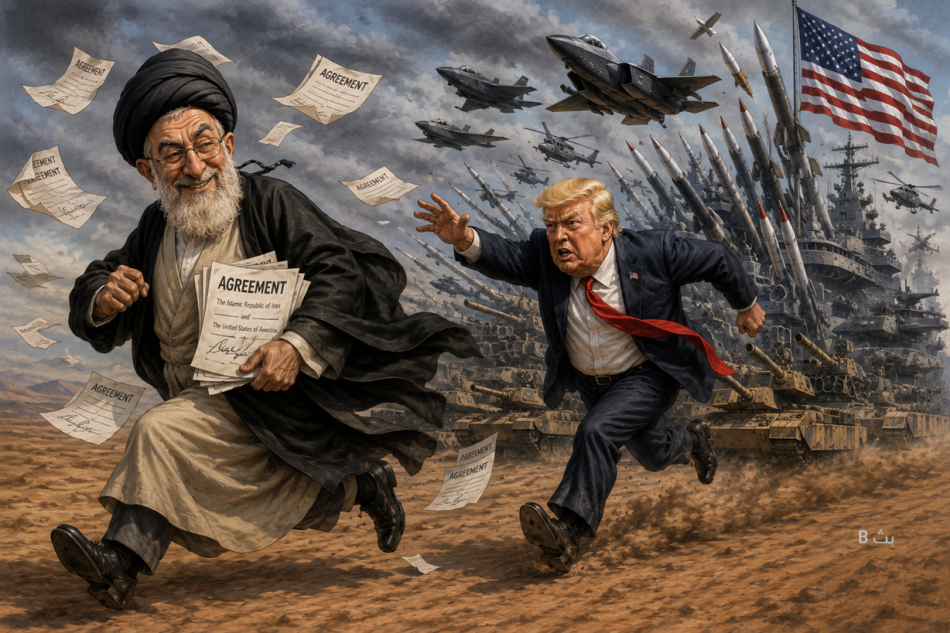
The Agreement Draws Closer... Trust Continues to Fade
Overview
Washington, Tehran, and the Pakistani mediator are all expressing optimism about a potential agreement that could bring the current confrontation to an end, while reports indicate that an initial signing may take place remotely, with planned Geneva meetings postponed for the time being.
At the same time, signs of a persistent trust gap continue to emerge, as significant differences remain between the American and Iranian narratives regarding the agreement and its details.
Meanwhile, U.S. intelligence reports indicate that Iran has isolated its stockpile of highly enriched uranium by sealing storage sites and making access more difficult. At the same time, the U.S. military announced that it had intercepted Iranian drones targeting commercial vessels in the Strait of Hormuz.
What Does This Mean?
When these developments are viewed together, they tell a story different from the optimism reflected in official statements.
While the agreement appears to be moving closer politically, developments on the ground suggest that the crisis of trust remains unresolved.
It appears that both sides are operating on two parallel tracks:
- A negotiating track moving toward an agreement.
- A security track built on continued caution and mutual suspicion.
What Deserves Attention?
Perhaps the most important development is not the expected signing date.
Rather, it is the U.S. reports concerning Iran’s stockpile of highly enriched uranium.
If accurate, these reports suggest that one of the most sensitive elements of the agreement remains surrounded by significant uncertainty and complexity.
Who Benefits?
The primary beneficiary of any agreement would be regional stability and global markets.
However, the continued exchange of security-related messages indicates that both sides still view the agreement as a tool for managing the crisis rather than a declaration that their differences have ended.
BETH Assessment
The closer the agreement gets, the clearer one reality becomes:
The problem between Washington and Tehran is no longer simply a matter of negotiation.
It has become a matter of trust.
For that reason, signing the agreement may prove to be the easiest part.
The real test will begin the day after the signing.
Signing Tomorrow?
The Agreement Moves Closer... As Geneva Moves Further Away
Overview
U.S. President Donald Trump announced that the agreement with Iran could be signed tomorrow, while statements from American, Iranian, and Pakistani officials continue to point toward the imminent completion of a final understanding.
The notable development, however, is that the expected signing will reportedly take place remotely rather than in person, with direct meetings that were expected to be held in Geneva remaining postponed.
What Does This Mean?
If these reports prove accurate, the situation conveys two simultaneous messages:
First, the agreement appears closer than ever.
Second, the level of trust between the parties has not yet reached the point where a major political gathering or face-to-face signing is considered necessary.
What Deserves Attention?
The discussion has shifted within days from:
"Is there an agreement?"
to:
"How will the agreement be signed?"
This transition reflects how close negotiations may be to the finish line.
At the same time, a remote signing could suggest that some sensitive issues still require further testing and verification in the next phase.
Early Signal
Historically, major agreements seek to produce a political image alongside the political text itself.
The absence of a direct meeting may indicate that the parties prefer to secure the agreement first, while postponing the symbolic political handshake to a later stage.
BETH Assessment
If the agreement is signed tomorrow, the most important development will not be the signing itself.
It will be the nature of the relationship that follows.
The message emerging from most current indicators is clear:
The agreement is moving forward quickly.
Trust, however, is moving much more slowly.
Strategic Media Department | BETH Agency