



Day 101 🇺🇸⚔️🇮🇷
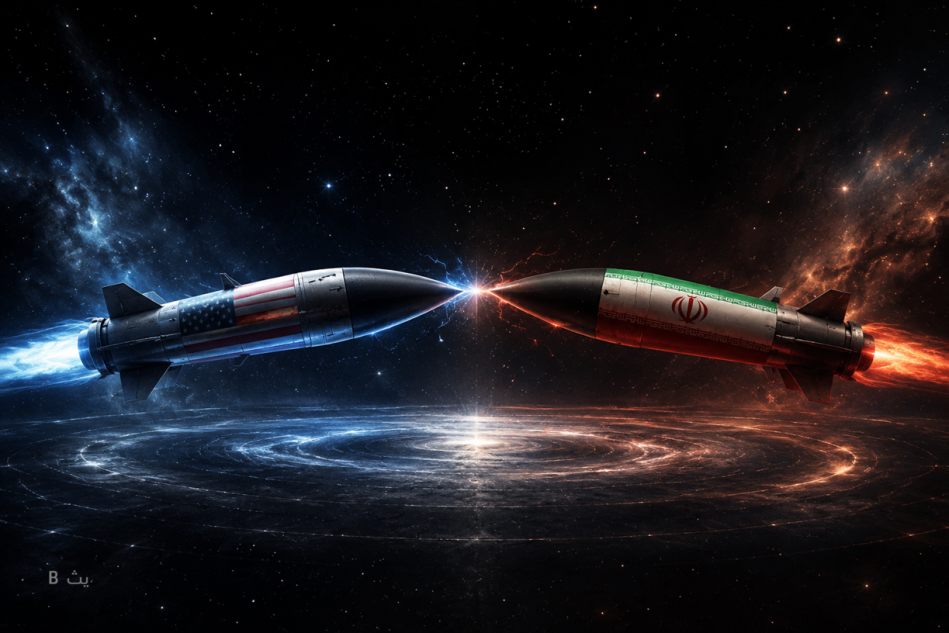
The U.S.–Israeli conflict with Iran enters its 101st day with largely the same dynamics:
Political pressure, military exchanges, mounting sanctions and containment efforts, alongside continuing speculation about negotiations and a possible agreement.
While some American media outlets report that communication channels between Washington and Tehran remain active, President Donald Trump has once again raised the level of pressure, warning that if Iran does not sign an agreement, it could face further strikes until its capabilities are completely destroyed.
Key Developments
- The United States carried out a new wave of strikes early Thursday, targeting what it described as Iranian military surveillance capabilities, communication systems, and air defense sites.
- Iran responded by announcing strikes against targets in Kuwait and Bahrain, while Iranian media also reported ballistic missile launches toward Jordan.
- Air raid sirens were activated in Bahrain, and authorities urged residents to move to safe locations.
- Kuwait temporarily closed its airspace before reopening it later in the morning.
- Pakistan renewed its call for a negotiated settlement and confirmed that it would continue mediation efforts despite the latest escalation.
BETH Analysis
A War That Refuses to End
After 101 days, the conflict still appears to be operating within carefully managed limits.
The strikes are significant enough to maintain pressure.
Yet they remain below the threshold of full-scale war.
The rhetoric is severe.
Yet neither side has completely closed the door to diplomacy.
The result is a conflict moving along two parallel tracks:
A military track designed to increase costs.
And a political track designed to prevent total escalation.
The American Message
The latest strikes send a clear signal:
Washington wants Tehran to understand that time is no longer working in its favor.
The United States appears determined to prevent negotiations from becoming a tool for delaying decisions or rebuilding military capabilities.
This is why military pressure continues alongside diplomatic messaging.
The underlying message seems straightforward:
Sign first, and the strikes can stop.
The Iranian Message
Tehran, meanwhile, seeks to demonstrate that it still possesses the ability to retaliate and that military pressure has not stripped away its regional leverage.
However, expanding retaliation toward neighboring countries introduces a far more sensitive dimension, as any miscalculation could transform the crisis from a U.S.–Iran confrontation into a broader regional conflict.
Why Is Pakistan Persisting With Mediation?
Islamabad understands that a prolonged conflict threatens not only Iran and the United States, but also a wide network of economic and strategic interests stretching from the Gulf to South Asia.
Any long-term disruption to energy flows or trade routes would carry significant consequences for the entire region.
For that reason, Pakistan continues to believe that the diplomatic window has not yet fully closed.
Where Does Day 101 Lead?
The question is no longer:
Are negotiations taking place?
Negotiations have never entirely disappeared.
The more important question is:
Are military strikes being used to facilitate an agreement?
Or is the prospect of an agreement being used to postpone a larger phase of the conflict?
What stands out is that both sides continue to exchange messages through force on one hand and diplomacy on the other.
This suggests that the region is experiencing neither genuine peace nor all-out war.
Instead, it remains trapped in a prolonged and costly middle phase, one that may ultimately be aimed at compelling one side to accept conditions it was unwilling to accept on the first day of the conflict.
Trump: A New Strike Tonight
U.S. President Donald Trump raised the level of escalation once again, announcing that the United States would launch a "very powerful strike" against Iran tonight, while affirming that Washington is moving toward broader control over Iran’s oil infrastructure and energy markets.
In a post on his Truth Social platform, Trump said that Iran has lost most of its defensive and offensive capabilities, adding that the United States would be able to take control of key oil facilities, particularly Khark Island, just as it did — in his words — with Venezuela.
The statement comes after a series of recent U.S. strikes targeting sites and facilities inside Iran, amid continuing military and political escalation between the two sides.
Sudden Reversal
U.S. President Donald Trump announced that Iran has submitted amendments to the draft agreement under discussion between the two sides, indicating that the location and date of the signing could be announced soon.
In a notable development, Trump said he had decided to cancel the military strikes that he had previously announced would be carried out against Iran tonight, in a move that reflects a sudden shift in the trajectory of escalation between the two countries.
BETH Analysis
What stands out is not merely the prospect of a potential agreement.
Rather, it is the rapid transition from the language of military strikes to the language of signing a deal.
Within just a few hours, the narrative shifted from announcing a “very powerful strike” to discussing the timing and location of a forthcoming agreement.
This suggests that the recent military messaging may have been part of an intense negotiation pressure campaign, rather than the beginning of a prolonged escalation.
The key question remains:
Did the military pressure succeed in pushing the negotiations forward?
Or is this simply another chapter in the long-running cycle of diplomatic maneuvering between Washington and Tehran?
BETH Analysis
What stands out in Trump’s statement is not the threat of a strike itself.
Rather, it is the fact that he specified its timing in advance: "tonight."
Major powers usually leave a degree of ambiguity regarding the timing of military operations. Announcing the timing before execution carries political and psychological messages that go beyond the military dimension itself.
It reflects a high level of confidence in the ability to execute the operation.
It also reflects a desire to demonstrate control over the pace of escalation, as if Washington is saying that it no longer relies solely on warnings, but now sets the timing and carries out the action.
The significance of the statement increases because Trump had signaled escalation the previous night, which was followed by actual strikes.
If a new strike is carried out tonight, it would be the third in a short period of time — conducted on consecutive nights following Iran’s attack on U.S. Apache helicopters — reinforcing the impression that the United States has moved from the stage of threats to the stage of immediate response and the imposition of facts on the ground.
Trump’s reference to oil and economic infrastructure also suggests that the confrontation is no longer focused solely on military capabilities, but is expanding toward the economic foundations on which the Iranian regime depends.
The key question remains:
Is the objective to compel Iran to sign an agreement?
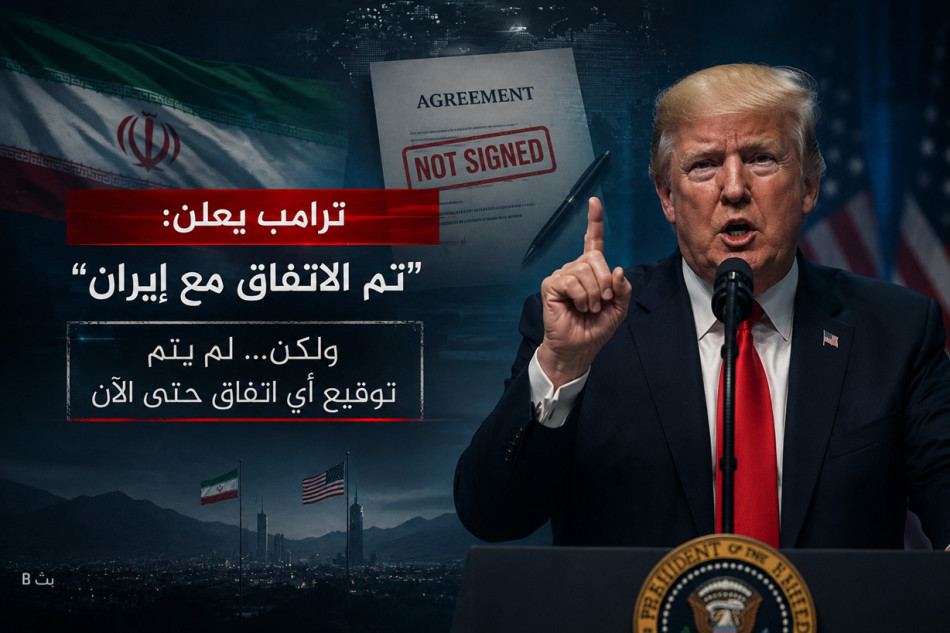
What Do the Two Sides Appear to Have Agreed on in Principle?
Available indications suggest that Washington and Tehran have reached preliminary understandings on a number of key issues, including:
- An Iranian commitment not to pursue the development of a nuclear weapon, a condition that President Donald Trump has repeatedly described as the core of any potential agreement.
- Continued negotiations over uranium enrichment levels and Iran’s stockpile of highly enriched uranium, with discussions reportedly involving the freezing or suspension of certain nuclear activities in exchange for corresponding U.S. measures.
- Ensuring freedom of navigation and the full reopening of the Strait of Hormuz to international trade and energy flows.
- A gradual easing of certain economic sanctions and restrictions in return for verifiable Iranian compliance.
- The continuation or temporary extension of the ceasefire pending a broader and more comprehensive agreement.
What Remains Unclear?
Despite these indications, several major issues remain uncertain, and no confirmed details have yet emerged regarding:
- The future of Iran’s missile program.
- The level of uranium enrichment Iran may be allowed to retain.
- The fate of Iran’s current uranium stockpile and how it will be handled.
- The future of Iran’s regional networks and affiliated groups.
- The nature of any mutual security guarantees between the two sides.
- The timetable and mechanisms for lifting economic sanctions.
Initial Assessment
If these indications are confirmed, the prospective agreement appears to be closer to managing and containing the conflict than to achieving a final settlement of all outstanding disputes.
The most sensitive and complex issues remain unresolved, while the current understandings seem focused on reducing tensions, regulating the nuclear file, and creating an environment that allows negotiations to continue on the larger and more difficult issues.
The key question remains:
Does this agreement mark the end of a phase of the conflict?
Or is it merely a temporary framework for managing differences while postponing the most difficult issues to future rounds of negotiations?