


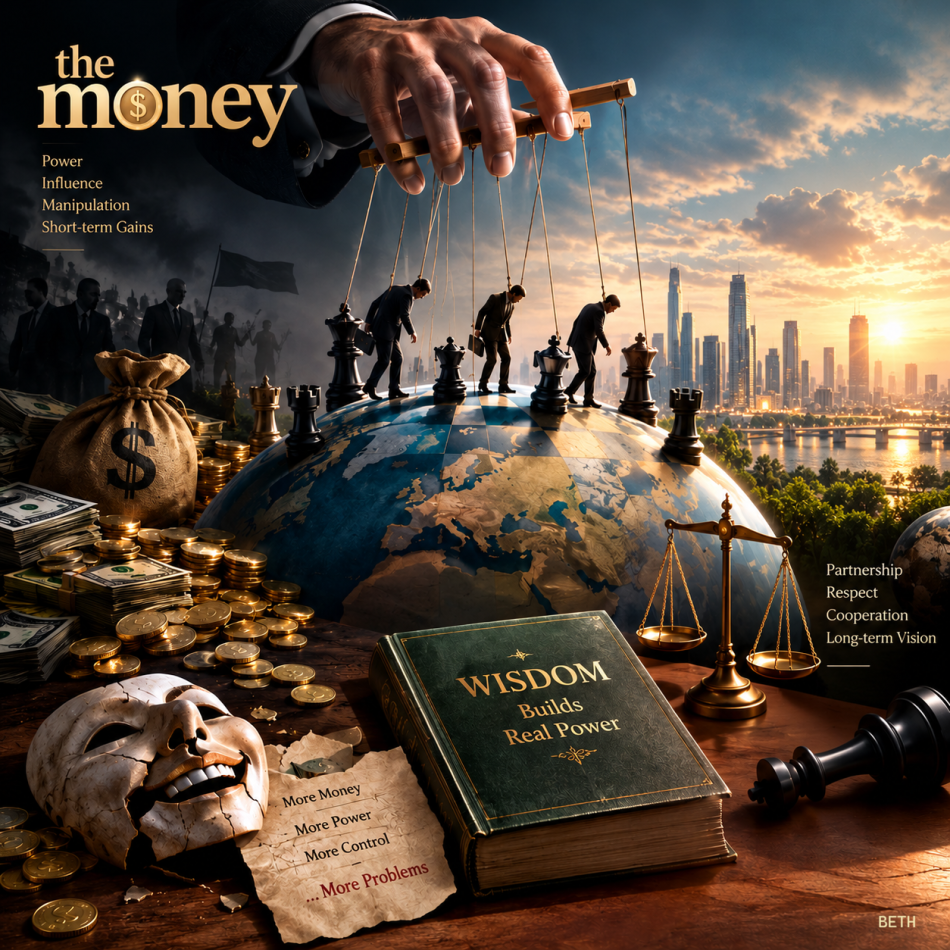
Manufacturing Illusion
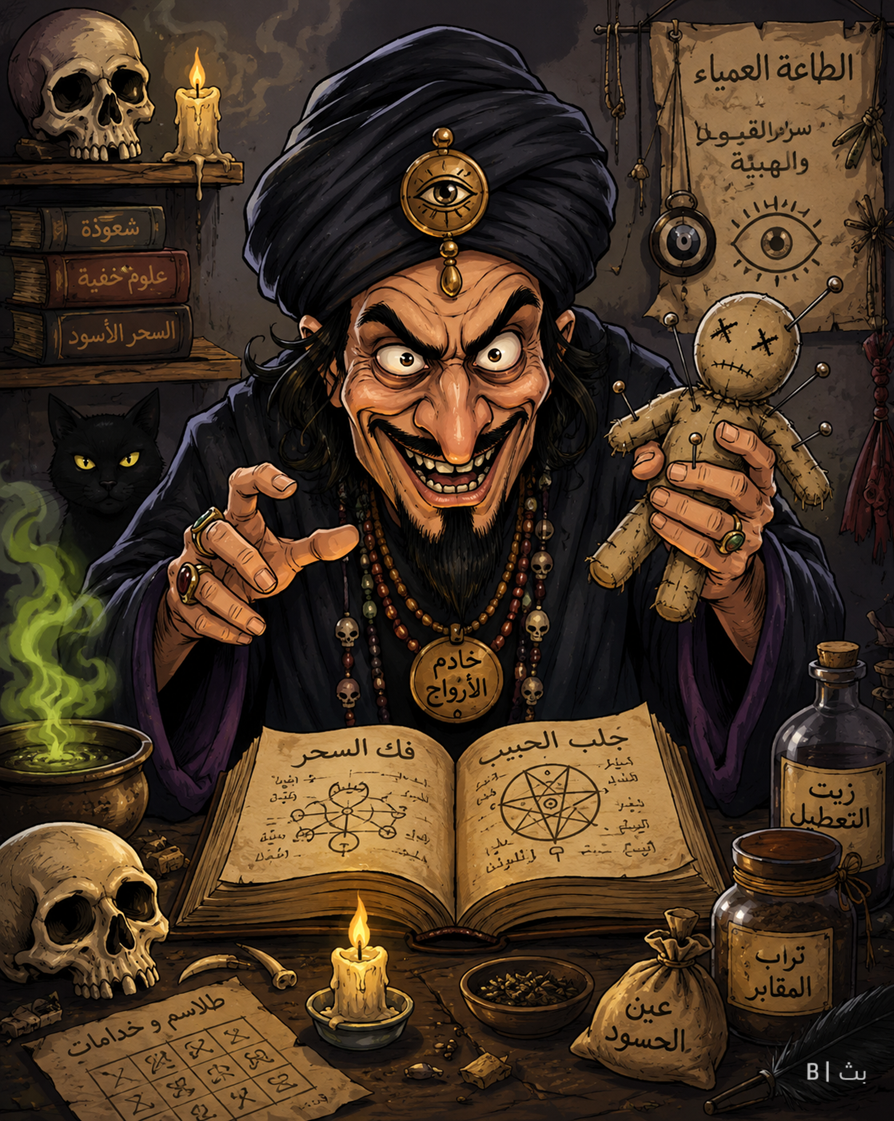
Why Do Superstition and Sorcery Find Fertile Ground?
Prepared and Analyzed by
Strategic Media Department – BETH Agency
Supervised by: Abdullah Al-Omairah
When people hear the word superstition, what usually comes to mind is:
A magician.
A sorcerer.
A fortune teller.
Or someone selling illusions to others.
But that is not where the story begins.
That is where it ends.
The real beginning starts with a different question:
Why does superstition become a widespread social belief in certain environments?
The problem is not merely the existence of a charlatan selling false hope.
Rather, it is a society—or a large segment of it—that treats magic and superstition as plausible explanations for failure, illness, conflict, envy, or personal setbacks.
Sometimes the issue extends beyond social acceptance and reaches the tolerance of certain institutions or influential actors that allow such practices to persist, or even benefit from them directly or indirectly.
At that point, superstition is no longer just a story about fraudsters.
It becomes a reflection of a society’s level of awareness, trust in science, quality of education, and commitment to critical thinking.
When awareness weakens, illusion requires little effort to spread.
It only needs ready-made fear, unquestioned assumptions, and people searching for quick explanations.
The greater danger emerges when superstition leaves the margins of society and enters more influential circles such as sports, entertainment, media, and public life.
When those regarded as role models begin embracing magical thinking and superstitious explanations, the challenge of awareness becomes far greater.
Illusion no longer spreads among ordinary people alone—it gains undeserved legitimacy through platforms of influence and fame.
When People Search for an Escape
In stable societies, people usually turn to:
Science.
Law.
Institutions.
And experts.
In environments marked by anxiety, poverty, division, and declining trust, however, some individuals begin searching elsewhere.
Not because they are less intelligent.
But because they are more desperate.
A person who feels powerless over reality becomes more willing to believe almost any promise of relief.
This is where superstition begins its work.
Not as knowledge.
But as instant hope.
Superstition and Despair
Superstition is not simply the child of poverty.
Although poverty can sometimes provide fertile ground for it.
More often, it flourishes where hope weakens, trust in institutions declines, and people feel incapable of shaping their own future.
This is why superstition frequently spreads in societies experiencing economic, social, or political crises, as well as environments marked by frustration, division, or civilizational decline.
The issue is not income alone.
It is the feeling of helplessness.
One might therefore say:
Superstition does not flourish merely where poverty exists—it flourishes where despair exists.
Poverty Alone Is Not Enough
Here lies an important paradox.
If poverty alone caused superstition, it would disappear from wealthy nations.
Reality suggests otherwise.
Even advanced societies have their own forms of superstition:
Astrology.
Mystical energies.
Pseudo-healers.
And theories that explain the entire world through a single hidden force or conspiracy.
The labels differ.
But the psychological mechanism remains remarkably similar.
Human beings everywhere are sometimes attracted to simple answers for complex questions.
Superstition and the Trance-Like Mind
Not all minds process information in the same way.
Some question, investigate, and seek evidence.
Others move between belief and doubt.
Yet superstition finds its ideal environment in what might be called the trance-like mind.
A mind that reacts to ideas more than it examines them.
A mind that asks:
“Who said this?”
Rather than:
“Is it true?”
A mind that seeks belonging more than evidence.
This is why superstition spreads most easily where critical thinking is weak, blind imitation is strong, and emotion replaces analysis.
In such environments, the issue extends beyond sorcery.
It reaches politics.
Media.
Fanaticism.
And absolute conspiracy theories.
Any idea that demands belief before understanding.
Who Benefits?
Here the story takes another turn.
Superstition is not merely a belief.
It can become an industry.
Some profit from it.
Some build influence through it.
Some prefer people to remain occupied with illusions rather than ask difficult questions.
The aware individual asks:
Why?
How?
Where is the evidence?
The person immersed in superstition often seeks confirmation more than truth.
Some researchers therefore argue that the battle for awareness is not against the charlatan alone, but against every environment that allows superstition to replace knowledge.
The Other Face of Superstition
Perhaps an even more disturbing question is this:
Why do some people deliberately seek to harm others through claims of sorcery and magical practices?
Most stories surrounding magic are not about success, creativity, or progress.
They revolve around:
Division.
Hatred.
Revenge.
Obstruction.
And causing harm.
At this point, the issue ceases to be merely a belief.
It becomes a reflection of deeper human impulses.
Often, the motivation is not genuine gain.
It is the desire to deprive others of success, stability, or happiness.
Thus we repeatedly encounter:
Envy.
Jealousy.
Hatred.
The desire for control.
And the inability to compete fairly.
When such emotions combine with ignorance and superstition, an environment emerges in which these practices can spread.
Why Does It Continue?
Because superstition does not survive on its own.
It feeds on fear.
The greater people’s fear of the unknown, the wider the space available to charlatans.
The weaker public awareness becomes, the easier it is for fraudsters to sell illusion.
The greatest weapon of the charlatan is not any supposed supernatural power.
It is the fear planted in the minds of others.
What Is the Remedy?
Combating superstition does not begin with pursuing charlatans alone.
It begins with building people.
Through education.
Awareness.
Faith.
Critical thinking.
And personal responsibility.
The higher the level of awareness, the smaller the space available for illusion.
The stronger authentic faith becomes, the weaker the influence of charlatans and fearmongers.
The Reputation No One Sees
The consequences of superstition do not stop at internal social damage.
Societies known for sorcery, fraud, and magical thinking often pay another price.
A reputational one.
The world judges societies not only by their economies and politics.
But also by their level of awareness.
When a society becomes more associated with superstition than with science and innovation, the impact extends far beyond the phenomenon itself.
The reputation of nations is built not only by the products they manufacture.
But by the ideas they produce.
The Real Story
Perhaps this is not ultimately a story about sorcery.
Or magic.
Or charlatans.
Perhaps it is a story about awareness—and the lack of it.
A story about human beings searching for certainty in anxious times.
Seeking hope amid frustration.
Searching for simple explanations in an increasingly complex world.
For that reason, confronting superstition begins not with fighting charlatans alone.
But with building stronger human beings.
Improving education.
Encouraging critical thinking.
Strengthening awareness.
And rebuilding trust between individuals and the institutions around them.
Reflection
Superstition does not triumph because it is stronger than truth.
It triumphs because it sometimes finds an environment willing to host it.
When awareness rises, illusion weakens.
Magic becomes a story.
And deception becomes a losing business.
Shock Point
Magic did not impoverish nations.
Rather, nations impoverished in awareness are the ones that enrich sorcerers.
That statement perhaps captures the spirit of this entire report.
In the end, the essence of awareness and faith remains the conviction that benefit and harm belong to God alone. No human being possesses independent power to benefit or harm another except by His permission. For this reason, a true believer does not fear a sorcerer or charlatan, but places trust in God, takes legitimate means, and knows that illusions hold no power over a heart filled with faith and certainty.
As the old saying wisely states:
“The astrologers lie, even when they happen to tell the truth.”
Final Note
BETH does not pursue sorcerers.
It pursues the reasons why some societies choose to believe them.
BETH | B
All Rights Reserved