



When the Audience Laughs
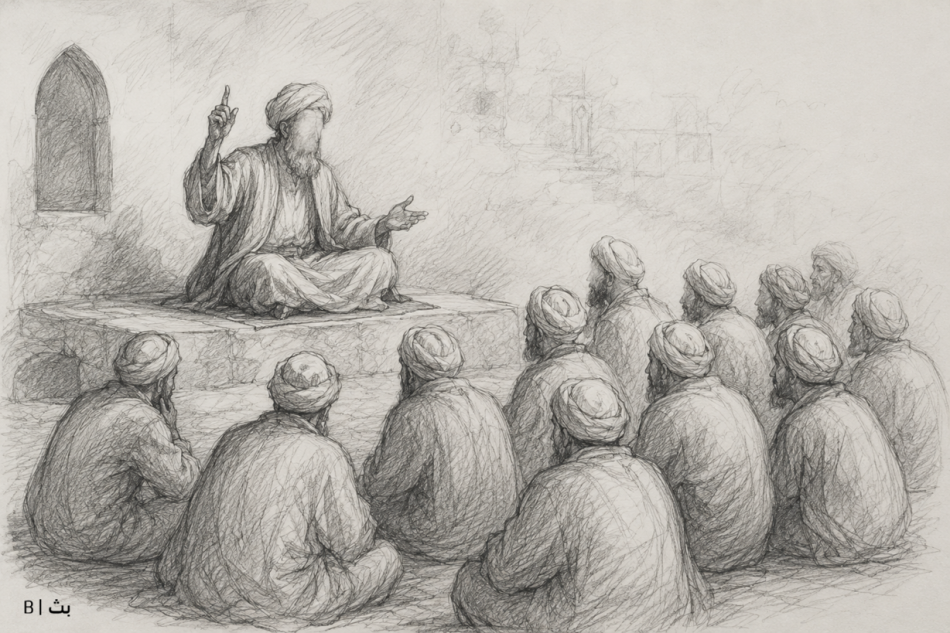
Respecting Minds in the Digital Age
By Abdullah Al-Omairah
In the past, many political, military, and media messages reached audiences through limited channels.
The space for comparison was narrow.
Today, however, the world has changed.
The audience itself has changed.
The tools of knowledge have changed.
The speed of access to information has changed.
In fact, the average individual now possesses a level of comparison and verification that was not available just a few years ago.
As a result, the question is no longer:
What should we tell the audience?
But rather:
How will the audience understand what we say?
And this is where the story begins.
The Most Dangerous Challenge Facing Media Messages
Many believe that the greatest threat any message can face is rejection.
Reality suggests otherwise.
There is something more dangerous than rejection:
Ridicule.
Rejection means the audience is still engaging with the idea.
Ridicule, however, often means that the message has lost part of its power to persuade.
This is why intelligent institutions fear becoming the subject of jokes more than they fear criticism.
Why Do Audiences Laugh?
People do not always laugh because something is funny.
They laugh because they perceive a gap between the narrative and reality.
Or between a statement and the impression it creates.
Or between what is being said and what they believe they can clearly see for themselves.
As that gap widens, laughter emerges.
Then comes sarcasm.
And soon, jokes begin spreading faster than the original message itself.
The Audience Is No Longer What It Used to Be
In the age of the internet, audiences are no longer merely recipients.
They have become:
Readers.
Analysts.
Commentators.
Publishers.
And sometimes fact-checkers.
As a result, the public's ability to identify contradictions is greater than ever before.
It is no longer easy to persuade people with messages that conflict with what they see, compare, and discuss among themselves.
Respecting Intelligence
One of the biggest mistakes made by some political and media narratives is focusing more on sending the message than on how it will be received.
They ask:
What do we want to say?
But forget to ask:
How will people understand it?
This is where the difference between genuine communication and propaganda becomes clear.
A successful message is not measured by what the sender says.
It is measured by what the audience understands.
For this reason, respecting the audience’s intelligence is not merely an ethical value.
It is a professional necessity.
When Does a Message Become a Target of Ridicule?
When the audience senses exaggeration.
Or performance for appearance’s sake.
Or disregard for what people already know and observe.
The public may disagree with you.
Reject you.
Or oppose you.
But it rarely forgives those who underestimate its intelligence.
This is why some messages designed to project strength end up producing the exact opposite effect.
Not necessarily because their content is wrong.
But because the way they were presented failed to convince the audience.
The New Age of Awareness
We now live in a different era.
An era in which the speaker no longer holds complete authority.
Communication has become a partnership between the speaker and the audience.
Every message enters an open arena of analysis, comparison, commentary, ridicule, and reinterpretation.
This is why the real battle is often no longer fought on the ground.
It is fought in the mind.
Conclusion
Some messages succeed in generating fear.
Others succeed in creating enthusiasm.
But the most successful messages are those that respect the intelligence of their audience.
People may forget many statements.
They may forget many slogans.
But they rarely forget those who respected their intelligence...
Or those who attempted to insult it.
A message is not an extraordinary tale invented from imagination and recited within a closed circle of people who accept everything they are told.
A smart message is one that speaks to conscious minds and can withstand the questions of intelligent people.
The age of myth has ended.
And with it, the practice of dressing myths in the garments of religion has come to an end—while true religion remains entirely innocent of such distortions.
The age of questions has begun.
And as awareness expands, the influence of blind followers of superstition continues to decline, giving way to a culture that questions ideas rather than surrendering to them.