



Iran Says It Fired Warning Shots at U.S. Destroyers
Monitoring & Analysis | BETH | B
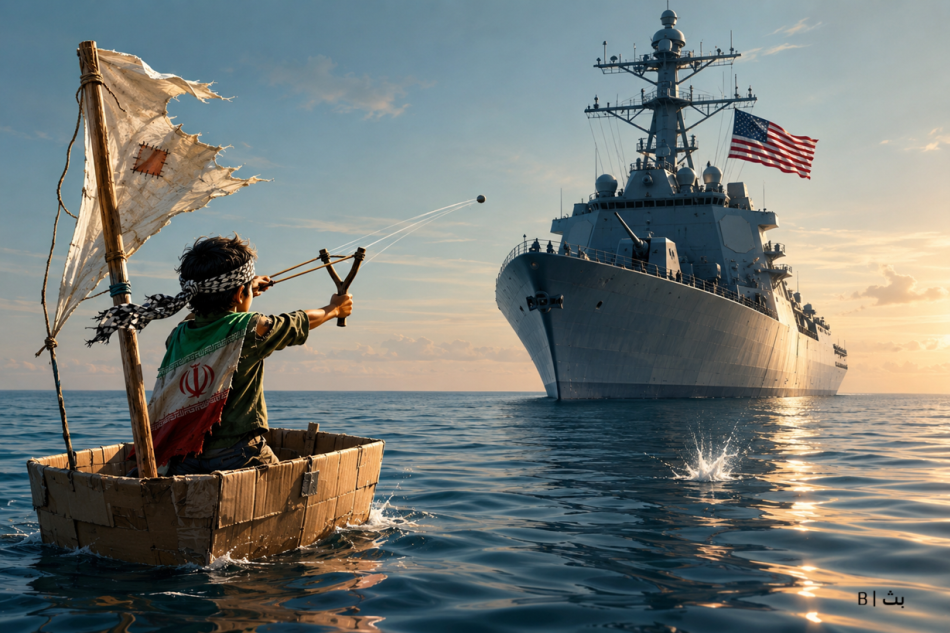
Iran has claimed that it fired warning shots toward U.S. destroyers, in the latest episode of ongoing tensions between Tehran and Washington amid continued indirect political and military confrontation between the two sides.
The announcement comes at a time when the region remains on edge, with stalled negotiations, an exchange of political and military messages, and no clear indication that the current confrontation is nearing an end.
BETH Analysis
When reading this type of news, the most important question may not be:
Were the warning shots actually fired?
But rather:
Who was the message really intended for?
In modern conflicts, messages are not always directed solely at the immediate adversary. They may also be aimed at a broader audience that includes domestic public opinion, allies, rivals, and even undecided observers watching events unfold.
The Message to the Domestic Audience
In the psychology of media and communication, states under pressure often seek to preserve an image of resilience and confidence before their own populations.
As a result, limited incidents can sometimes be transformed into media messages that carry far greater symbolic value than military significance.
The objective is not necessarily to achieve a battlefield effect, but to convey a message:
We are still here.
We are still responding.
We are still capable of demonstrating our position.
Creating the Image of Parity
In international conflicts, there is often a difference between actual power and the perception of power.
States do not defend only their interests; they also defend their image in the eyes of their citizens and their adversaries.
This is why statements or actions may emerge that seek to preserve an image of “parity,” even when the military and technological gap between the parties is widely understood.
Yet battlefield and psychological pressure can sometimes lead to messages designed to project strength without fully considering how they will be received—or whether they will reinforce that image of parity or instead raise questions about it.
Psychological Deterrence
In many cases, the purpose of military messaging is not to inflict damage on an opponent.
Rather, it is to remind the opponent of one’s presence and ability to complicate the situation.
In other words:
We are here.
We are watching.
We remain part of the equation.
Such messages are often psychological in nature more than they are decisive military operations.
Why Do Such Reports Generate Debate?
Because observers naturally compare the scale of the statement with the actual balance of power on the ground.
When the gap between the two becomes too large, a message intended as deterrence may instead become a subject of debate, skepticism, or even ridicule.
This highlights a familiar dilemma in political and military communication:
Exaggeration can sometimes produce the opposite of its intended effect.
In modern warfare, some shots are not aimed solely at ships.
They are aimed at minds.
And so perhaps the most important question is not:
Were the shots heard?
But:
Who was supposed to hear them?
Or is this simply another chapter in a long tradition of revolutionary messaging aimed more at shaping perceptions than changing realities?
Narrative vs Reality
The mind can complete the rest.
BETH (B Press) – All rights reserved