


The Fear Industry
How Some Major Industries Have Come to Thrive on Managing Human Fear
By Abdullah Al-Omairah
Death is a certainty.
Disease is a reality.
And wars have been part of human history for thousands of years.
No one has the power to grant life or take it away outside the will of God.
Yet throughout history, humanity has learned something else:
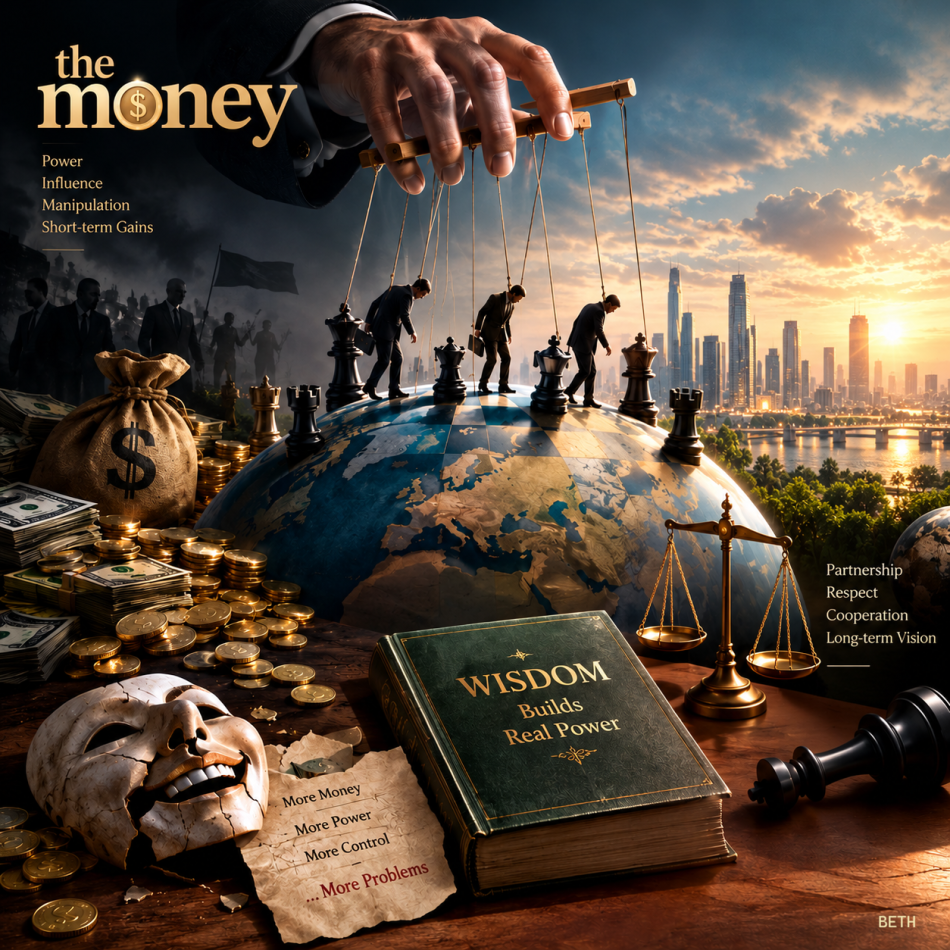
That fear itself can become an industry.
Here, we are not talking about divine destiny.
We are talking about the causes created by human beings.
About markets that grow as fear grows.
And industries that flourish whenever people feel threatened.
Where Does the Story Begin?
When people fear war, the arms market prospers.
When they fear disease, the pharmaceutical industry prospers.
When they fear hunger, the food industry prospers.
When they fear the future, the insurance industry prospers.
Fear is not a commodity.
Yet many commodities are sold through fear.
What Do These Industries Have in Common?
Weapons.
Medicine.
Security.
Insurance.
Defensive technologies.
All of them grow around a genuine human need:
Survival.
And herein lies the paradox.
These industries may save lives.
They may protect nations.
They may treat the sick.
Yet at the same time, they also benefit economically from the existence of danger.
Do Arms Dealers Create Wars?
And do pharmaceutical companies create pandemics?
Here, we must be careful.
Not every war is a conspiracy.
And not every epidemic is manufactured.
Yet a legitimate question remains:
Are there economic interests that benefit from the continuation of fear?
The answer is:
Yes.
And history has demonstrated this repeatedly.
The Devil and Fear
Why does evil always seem present wherever people feed on one another's fears?
In the arms trade.
In the drug trade.
In corruption.
In the exploitation of crises.
And in turning human suffering into profit.
Not because the devil builds factories.
But because some people discover that fear is more profitable than hope.
When Fear Becomes an Interest
The problem may not lie in the arms industry.
Nor in the pharmaceutical industry.
Nor in any other industry.
Rather, it begins at the moment fear becomes an interest.
And when the continuation of a crisis becomes more profitable than its resolution.
At that point, the question is no longer:
Who creates life?
Or who creates death?
But rather:
Who benefits from keeping people afraid?
How Does Humanity Confront Fear?
Not by denying it.
Not by surrendering to it.
And not by believing everything it is told.
Fear is a natural feeling created by God to protect human beings.
But the problem begins when fear transforms from a tool of caution into a way of life.
At that point, people become prisoners of what they fear.
The first step in confronting fear is:
Understanding
The more people understand what is happening around them, the less power fear holds over them.
That is why ignorance has always been fear's greatest ally.
And knowledge its greatest enemy.
The second step is:
Distinguishing Between Real and Imagined Threats
Not every threat is a catastrophe.
Not every crisis is the end of the world.
And not every breaking news alert deserves panic.
The third step is:
Refusing to Let Fear Steal Life
History is filled with wars.
Pandemics.
And crises.
Yet life continued.
Humanity continued.
And civilizations endured.
Freedom from Fear
Many may benefit from keeping people afraid.
But the greatest victory is not eliminating fear altogether.
It is preventing fear from taking control of the mind.
A mind that understands is stronger than rumors.
Stronger than exaggeration.
And stronger than merchants of fear.
Therefore, perhaps the most important question is not:
Who benefits from keeping people afraid?
But rather:
How can I remain a free human being in a world that tries to sell me fear every day?
Who Creates Awareness?
If there are those who benefit from fear,
And if people need awareness to confront fear,
Then who is responsible for delivering that awareness?
The answer is not simple.
True awareness is not created by a single institution.
The family plants the first seed.
Schools build knowledge.
Universities broaden horizons.
Religious institutions provide moral guidance.
And the state creates the environment.
Yet the media occupies a unique position.
It is the daily bridge between people and the world.
And for that reason, it can become:
A transmitter of fear.
Or a transmitter of awareness.
An amplifier of rumors.
Or a revealer of facts.
A merchant of anxiety.
Or a partner in building confidence grounded in understanding.
This is where the responsibility of the true journalist begins.
The journalist's mission is not to hide dangers from people.
Nor to frighten them.
But to help them understand.
Because when people understand what is happening around them, they become more capable of making decisions and less vulnerable to manipulation.
Conclusion
Awareness is everyone's responsibility.
But the media bears a special responsibility because it stands every day between fear and truth, between rumor and knowledge, and between reaction and understanding.
And here the circle of this article is complete:
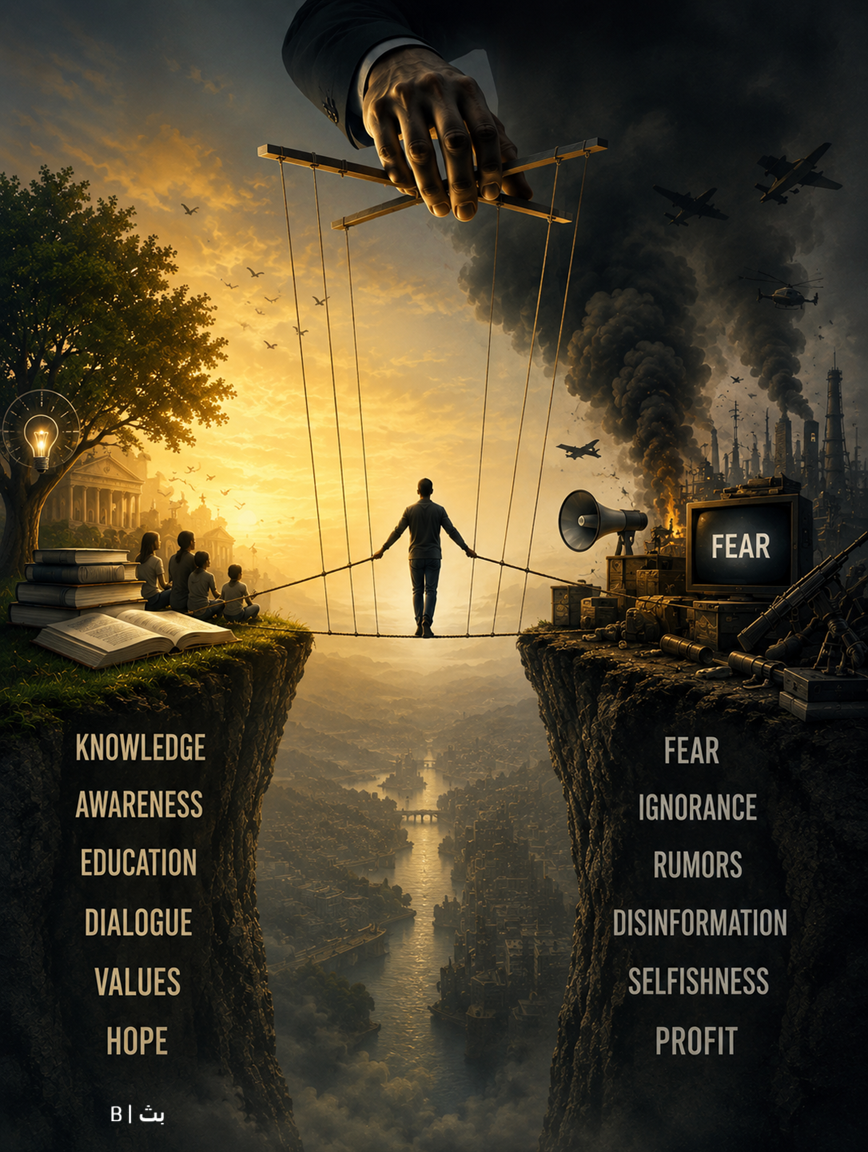
There are those who profit from fear.
And there are those who confront fear with awareness.
The remaining question is:
Is the media fulfilling its role in building awareness, or is it merely participating in the manufacture of fear?
BETH (B Press) – All rights reserved