



Day 90: The Knot Loosens

Monitoring & Analysis | B | بث
Ninety days after the outbreak of the U.S.–Israeli war with Iran, the situation appears to have entered a different phase.
The large-scale and sustained strikes that characterized the early weeks have largely subsided.
Yet the war itself has not ended.
The blockade remains in place.
Negotiations continue.
Threats are still being exchanged.
And any final outcome remains postponed.
For nearly the past fifty days, the pattern has been remarkably repetitive:
At the beginning of the day, officials speak of an imminent agreement.
By the end of the day, the same obstacles return to the forefront.
While Israel announced the launch of a broad operation in southern Lebanon, the Israeli Defense Minister stated that operations against Hezbollah would continue “until the end.”
Meanwhile, Iranian President Masoud Pezeshkian warned that the domestic situation remains highly sensitive, stressing that state management should not be confined to a narrow circle of decision-makers. His remarks reflected ongoing debates and divisions within Iran regarding negotiations and the management of the current phase.
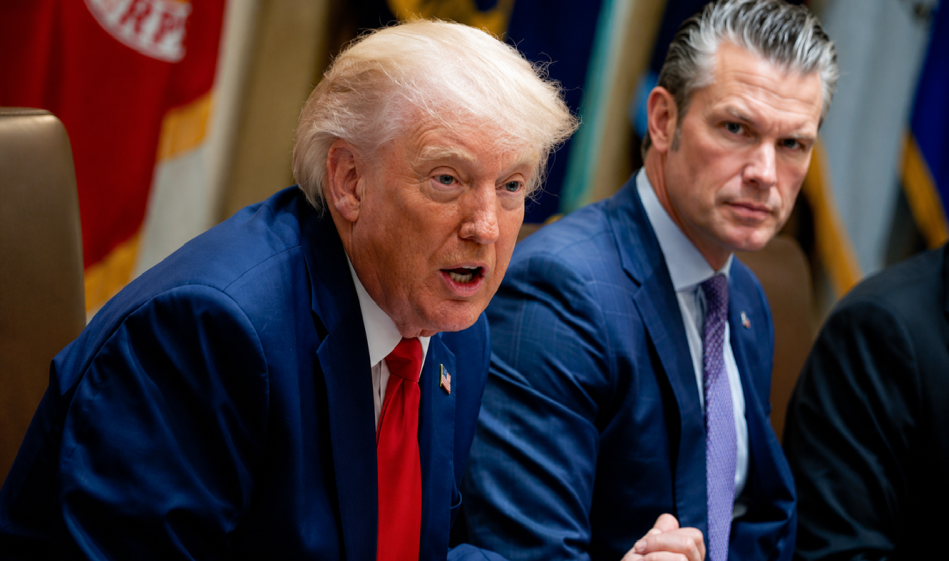
U.S. President Donald Trump, for his part, once again asserted that an agreement with Iran is close. At the same time, however, he repeated his warning that military action remains an option should an agreement fail to meet U.S. conditions.
He also emphasized Washington’s preference for a diplomatic solution, arguing that an agreement would lead to the reopening of the Strait of Hormuz and the resolution of the Iranian nuclear issue, while insisting that he is “in no hurry.”
A New Round
New reports have revealed that U.S. President Donald Trump is seeking to launch a new round of negotiations with Iran that could extend for several additional days, reflecting Washington’s continued reliance on the diplomatic track despite ongoing pressure and mutual threats.
This development reinforces the perception that the United States still believes an agreement remains achievable, and that, for now, time continues to be preferred over direct military escalation.
B Analysis
After 90 days, the central question is no longer:
Is there an agreement?
It has become:
Why has the agreement not been finalized?
The apparent contradiction in U.S. statements is no longer merely a media detail.
Trump says:
- We are close to an agreement.
- If it fails, we will return to force.
- And we are not in a hurry.
To some observers, these messages appear contradictory.
Yet they may, in reality, be part of a single negotiating strategy.
A party that believes time is working against it rarely declares that it is not in a hurry.
Likewise, a party that possesses the option of war does not spend three months issuing threats without broader calculations extending beyond the simple use of force.
Beyond the Contradiction
The real contradiction may not lie in Trump’s statements.
It may lie in the nature of the crisis itself.
The United States seeks to resolve several issues simultaneously:
- The nuclear file.
- Maritime security.
- The Strait of Hormuz.
- The future of Iranian influence.
- The shape of the region’s emerging balance of power.
Iran, meanwhile, seeks to preserve as much of its political and strategic leverage as possible.
In this context, time itself becomes part of the negotiation.
Not merely a waiting period.
Why Is the Crisis Not Being Resolved?
Because military success does not necessarily guarantee political success.
This is one of the most important lessons major powers have learned over recent decades.
Destroying military capabilities can be easier than building the stability that must follow.
Washington therefore appears to be searching for a solution that achieves its strategic objectives at the lowest possible cost.
Tehran, meanwhile, seeks an agreement that avoids total defeat while preserving whatever leverage it can.
The Deeper Transformation
What is taking place today is no longer merely a confrontation between the United States and Iran.
It is a test of a larger question:
Can military power alone still dictate political outcomes?
After three months of conflict, Iran has not succeeded in imposing its terms.
At the same time, the United States has not yet achieved the end state it continues to describe.
Here, a reality often overlooked becomes visible:
Power can open doors.
But it cannot always determine what happens on the other side.
Final Scene
After 90 days, the war appears to have paused.
Yet it has not ended.
Negotiations appear to be moving.
Yet they have not arrived anywhere definitive.
Threats appear to be escalating.
Yet they are not turning into decisive action.
For that reason, the most accurate description of the current situation may be neither:
War.
Nor:
Peace.
Rather, it is an extended phase of crisis management, in which each side seeks an acceptable outcome without appearing to retreat.
And with every passing day, one question becomes more pressing:
Is the moving pendulum truly bringing the parties closer to an agreement?
Or has it itself become part of the crisis?
BETH (B | بث) – All rights reserved