



The Hajj Equation
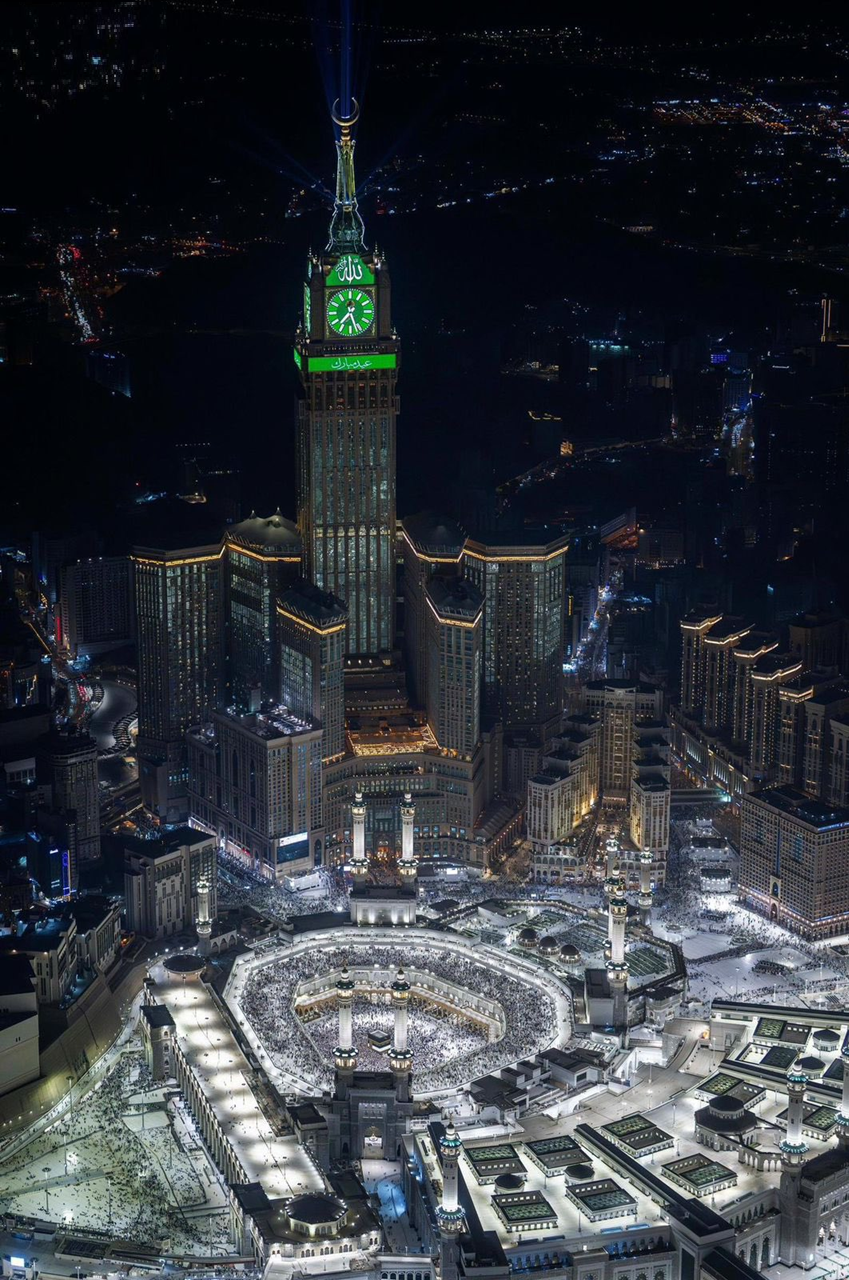
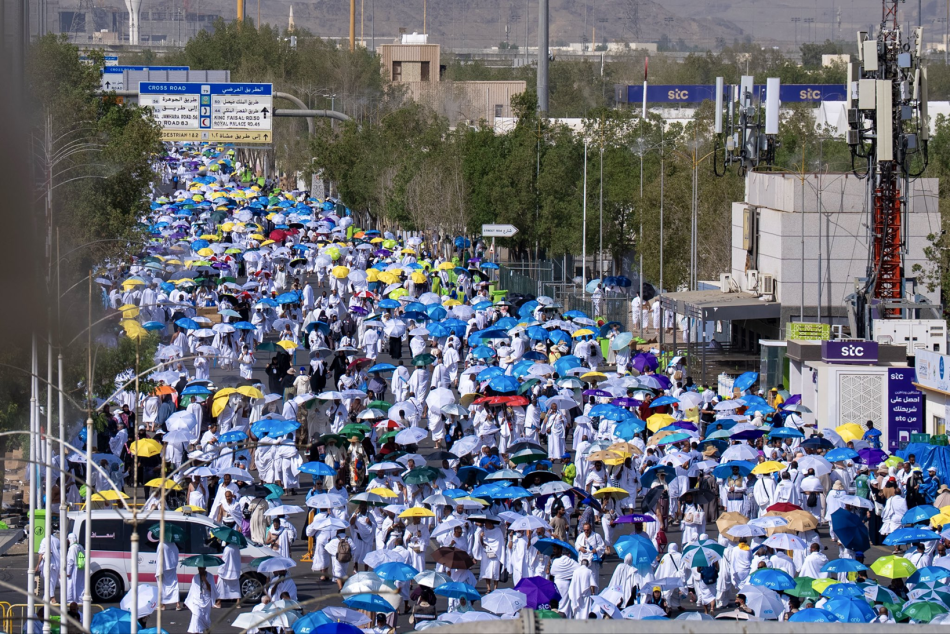
How Did Saudi Arabia Manage 1.7 Million Pilgrims with Exceptional Precision?
Coverage and Analysis | B | B
Today marks the second day of Tashreeq, the twelfth day of Dhul-Hijjah 1447 AH.
This afternoon, pilgrims began departing from Makkah after completing the Hajj rituals and performing the Farewell Tawaf (Tawaf Al-Wada'), the final obligatory rite of Hajj.
Departures take place in two phases: on the 12th of Dhul-Hijjah for those who choose to leave early, and on the 13th for those who remain longer.
As pilgrims complete the final stages of their journey in an atmosphere of calm and smooth movement, it can be confidently stated that the 1447 AH Hajj season has successfully passed its most critical operational and organizational tests.
As has become customary in Saudi Arabia, success does not mark the end of the mission; it marks the beginning of a new phase.
Even as the last pilgrims prepare to leave the holy sites, the relevant authorities have already begun reviewing the season in detail, studying observations, data, and operational indicators in preparation for the upcoming Umrah season and next year's Hajj.
This mindset explains an important part of the Hajj success equation year after year.
In Saudi Arabia, Hajj is not managed as a seasonal event that ends with the completion of the rituals. Rather, it is managed as a continuous project of development, improvement, and learning.
Hajj Is Not an Ordinary Gathering
When the figure of 1.7 million pilgrims is mentioned—people arriving from across the globe with different languages, cultures, and traditions—it may appear to be merely a statistic.
Behind that number, however, lies one of the most complex human-management operations in the world.
Pilgrims do not gather in a single location.
They move along designated routes, at specific times, between multiple holy sites, within an extremely limited geographical area and timeframe.
In such an environment, success is not measured by the number of pilgrims alone.
It is measured by the ability of the system to manage millions of human movements with the highest levels of safety and efficiency.
When Crowd Management Becomes a Science
In the past, crowd management relied largely on field experience.
Today, it has become a sophisticated discipline built on:
- Data analysis.
- Mathematical modeling.
- Artificial intelligence.
- Real-time monitoring systems.
- Predictive simulations.
- Scenario management.
As a result, managing crowds is no longer based solely on reaction.
It is increasingly based on anticipation, prevention, and addressing bottlenecks before they emerge.
Here lies one of the most important secrets of success.
What Distinguished This Year's Season?
Previous Hajj seasons achieved important and cumulative successes.
However, this year's season demonstrated an exceptionally high level of integration among all participating entities.
From the Kingdom's leadership to operations centers, security agencies, healthcare services, transportation systems, technology teams, and volunteers, the entire system appeared to function as a single coordinated command structure.
This was reflected in:
- Precise pilgrim movement management.
- Smooth transportation flows.
- Rapid response capabilities.
- High-quality services.
- Effective crowd-density management.
- Enhanced levels of safety and comfort for pilgrims.
Technology Behind the Scene
What the pilgrim sees is the final outcome.
Behind the scenes, vast systems of technology, data, and analytics are continuously at work.
During this season, artificial intelligence applications, real-time monitoring systems, environmental surveillance technologies, and crowd-movement analysis emerged as essential tools supporting field decisions and improving operational efficiency.
Technology is no longer merely a supporting element.
It has become a fundamental component of Hajj management itself.
Why Does Hajj Deserve Global Study?
At a time when the world faces growing challenges related to large-scale public events and crowd management, Hajj stands as one of the most significant practical models worthy of study.
What takes place within a matter of days includes:
- Managing millions of human movements.
- Operating an integrated service network.
- Coordinating dozens of agencies.
- Maintaining security, health, and safety.
- Making thousands of decisions at the right moment.
These are challenges that major countries and cities often face on a much smaller scale.
B Analysis
The most significant achievement of this year's Hajj is not simply the reception of 1.7 million pilgrims.
Rather, it is the ability to manage such a large number of people within a limited space, a restricted timeframe, and a highly complex operational environment, while maintaining high levels of discipline, efficiency, and service quality.
From this perspective, Hajj is not merely a story of seasonal success.
It is a story of management, planning, and continuous improvement.
What distinguishes the Saudi experience is not success alone, but a culture of constant enhancement.
While many view the end of the season as the finish line, the responsible authorities view it as the starting point for the next season.
As a result:
Experience accumulates year after year.
Systems evolve year after year.
Performance improves year after year.
Final Scene
Many people see millions of pilgrims.
Specialists see something more.
They see one of the most sophisticated crowd-management operations in the world.
They see a model that combines:
Leadership,
Planning,
Technology,
Coordination,
And execution.
In an increasingly crowded and complex world, the Hajj experience remains a practical lesson demonstrating that success is not achieved by resources alone.
It is achieved by management that knows how to employ those resources in the right place, at the right time.
BETH (بث B) – All rights reserved