



Day 88: In the Dilemma
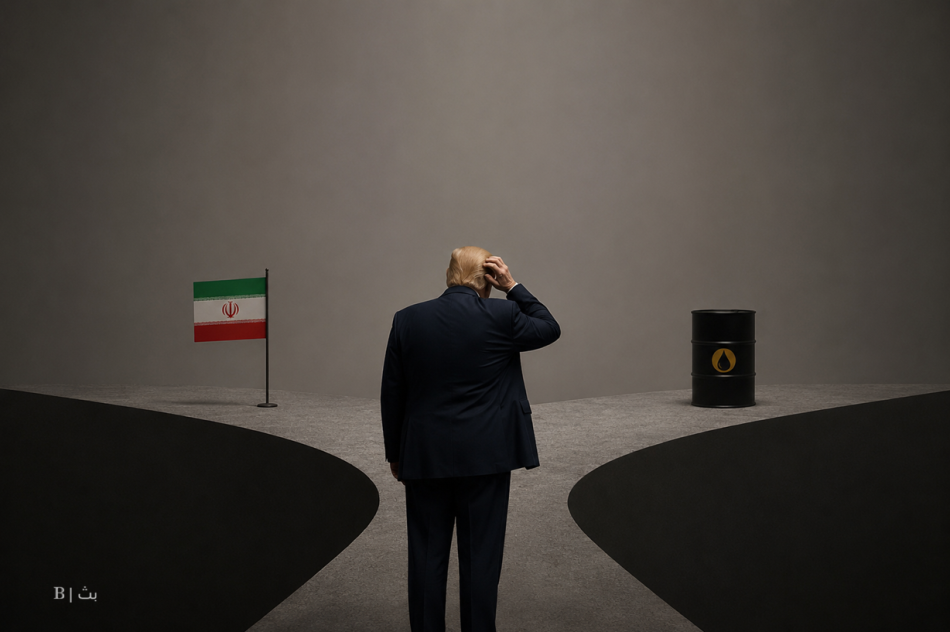
Follow-up & Analysis | B | B
U.S. President Donald Trump finds himself facing a highly complex equation in his effort to end the war with Iran. On one side, he is under domestic pressure to reopen the Strait of Hormuz and reduce fuel prices. On the other, he faces pressure from hardline Republicans who reject any agreement that could be perceived as a concession to Tehran.
Diplomatic efforts are moving toward a preliminary agreement that could extend the current ceasefire and ease Iranian restrictions on the Strait of Hormuz, while postponing discussions on the more sensitive issue of Iran’s nuclear program. U.S. Vice President J.D. Vance stated that Washington and Tehran have not yet reached a final agreement, but are getting close, despite ongoing disagreements over Iran’s stockpile of highly enriched uranium.
If achieved, such a temporary agreement could give Trump an opportunity to ease tensions in energy markets. At the same time, however, it could trigger a domestic confrontation with the Republican faction calling for “finishing the mission” militarily, especially since the war was launched under the banner of preventing Iran from obtaining a nuclear weapon.
B Analysis
The key question is:
Is Trump facing a real dilemma?
Or is the image of a dilemma being used to prepare the ground for another policy?
Most likely, the reality contains elements of both.
Trump is genuinely constrained because any temporary agreement could be viewed by hawks as a retreat from the war’s original objective, while any renewed escalation would increase pressure on oil prices, gasoline costs, and the U.S. economy.
At the same time, he may be using this dilemma to create a ready-made political justification: Iran is hesitating, Republicans are applying pressure, and the markets cannot withstand further instability.
In other words, the dilemma itself may become a political tool.
If negotiations fail, Trump can argue that Iran did not offer enough.
If an agreement is reached, he can present it as a smart ceasefire rather than a final concession.
And if he chooses not to complete the mission, he can attribute the decision to regional complexities and the growing costs of war.
More importantly, the temporary agreement may not represent peace at all, but merely a pause between two rounds.
Washington wants to reopen Hormuz and calm the markets without paying a significant political price.
Tehran wants relief from pressure without surrendering all of its strategic and nuclear leverage.
Meanwhile, Israel and hawkish circles in Washington view any postponement of the nuclear issue not as a solution, but as a revival of the Obama-era agreement under a different name.
Here lies the central dilemma of Day 88:
Trump does not want an open-ended war.
He does not want an agreement that appears weak.
And he does not want to inherit the image of an America that strikes hard and then stops before completing the mission.
For that reason, the temporary agreement appears less like a resolution and more like a test of intentions.
The question that remains open is:
Is Washington paving the way for a major agreement?
Or is it searching for an exit from a war it can no longer transform into a clear victory?
Beyond the Statements
The issue is not that Iran is stronger than America.
Nor is it that America fears Iran.
The issue is that Trump is attempting to achieve political objectives that are far larger than the military gains achieved on the ground.
The United States is capable of striking and destroying targets, but the harder question is:
Can it transform military success into a new and stable Middle East?
Iran, for its part, is not militarily stronger, but it still possesses the ability to complicate matters, prolong the timeline, and increase the cost of achieving a decisive outcome, making the conflict more political than military.
As for Trump and his vice president repeatedly saying:
"We are close to an agreement, but we are not there yet,"
this may not simply be a description of negotiations. It may also be a way to buy time, calm the markets, maintain pressure on Tehran, and keep all options available.
The real question is not:
Does America control the battlefield?
Rather:
Does America know what kind of ending it wants?
The more objectives expand to include:
the nuclear issue,
Hormuz,
peace with Israel,
and reshaping the region,
the more difficult it becomes to achieve a clear and recognizable victory.
For that reason, the American dilemma does not appear to be defeating Iran.
It appears to be defining what victory itself means.
Perhaps that is why the phrase:
"We are close to an agreement"
continues to be repeated.
While the real ending remains... postponed.
BETH (بث B) – All rights reserved