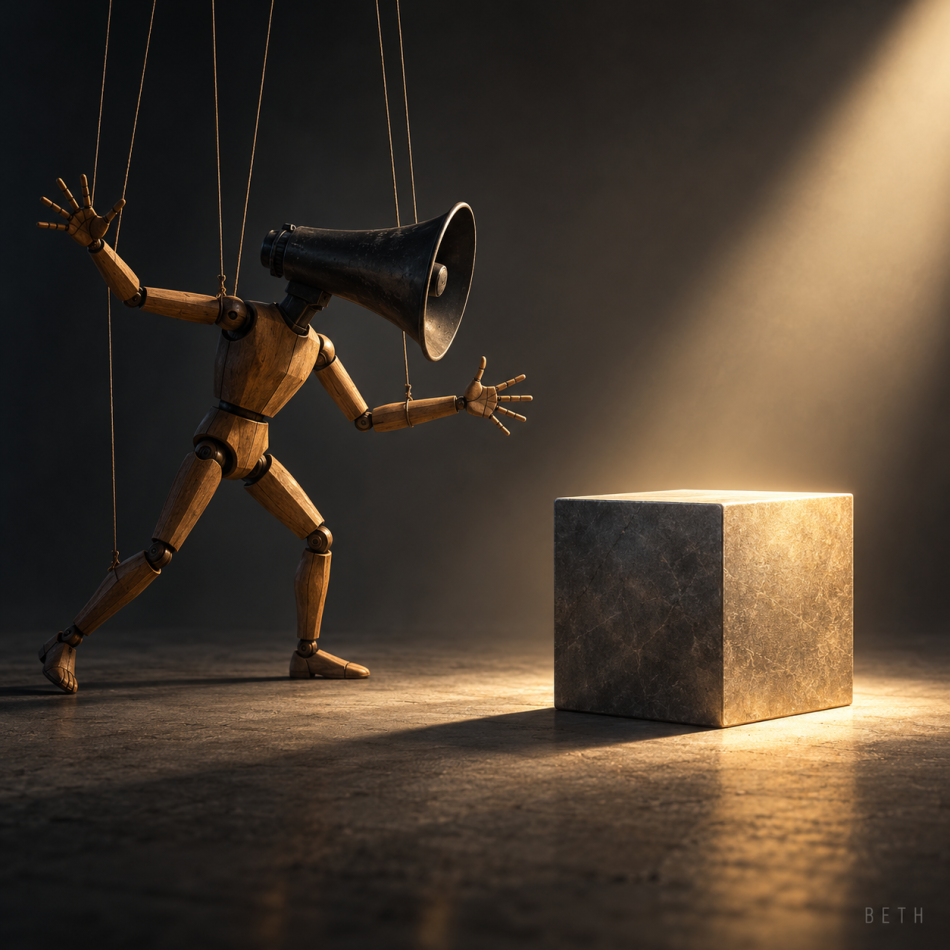



How Does the World Change .. Without People Noticing?
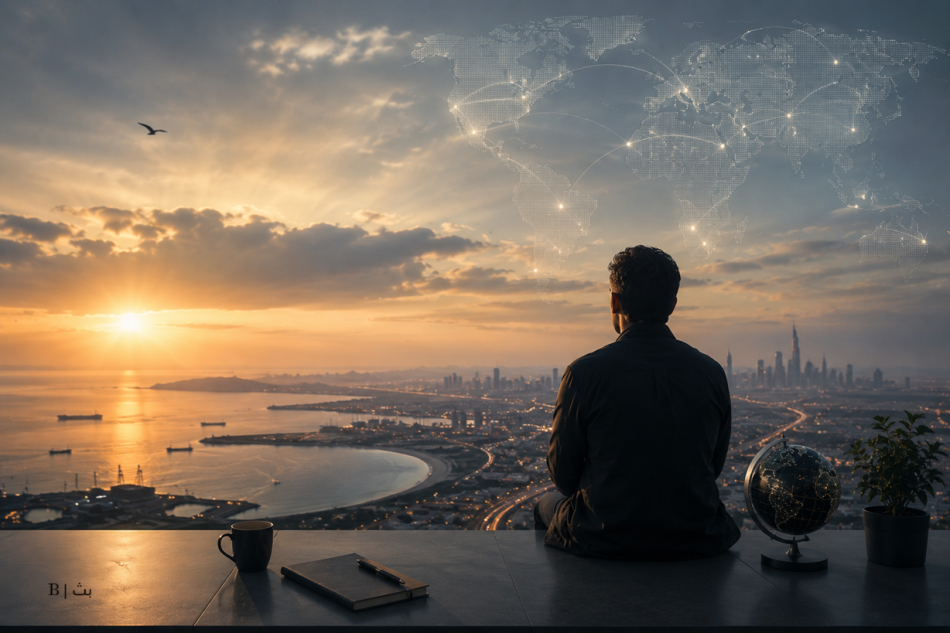
Prepared & Analyzed by | Strategic Media Department – B | B
Supervised by: Abdullah Alomairah
The world does not always change through:
major wars,
sudden explosions,
or the سقوط of capitals.
Sometimes,
it changes quietly,
while everyone is distracted by the noise.
People see:
statements,
threats,
summits,
images of leaders,
and the noise of the media.
But real transformations usually begin elsewhere:
in the economy,
in energy,
in maritime corridors,
in the exhaustion of peoples,
and in the changing meaning of power itself.
What is happening today in the Middle East is not merely a conflict between:
America and Iran,
or Israel and those who claim to be a “resistance axis,”
or a traditional competition for influence.
Rather,
it is the beginning of the world’s transition into a completely different phase.
A phase in which power is no longer linked only to:
weapons,
the number of armies,
or even the scale of destruction.
But rather:
the ability to protect stability,
ensure the continuity of life,
and shield the global economy from collapse.
And here,
the world has begun to realize something extremely important:
The Gulf is no longer merely:
an oil region.
It has become:
a center for the continuation of global life.
Energy,
navigation,
supply chains,
investment,
food,
and global economic balance,
either originate from the region,
or pass through it in one way or another.
Therefore,
chaos in the Gulf is no longer merely a regional problem,
but a direct threat to the entire world.
At the same time,
traditional wars have begun to lose their ability to achieve:
“complete decisive victory.”
Therefore,
the responsibility for preserving the Gulf’s security and stability is no longer merely a regional responsibility,
but an international responsibility tied to the stability of the world itself.
America,
despite its power and its display of that power,
is facing increasing difficulty in transforming military superiority into a stable ending.
Iran,
despite its attempts at endurance and maneuvering,
knows that continuing to manage chaos indefinitely also carries existential risks for itself.
As for Israel,
it still operates with the mindset of:
military power first,
at a time when the world is moving toward far more complex equations than it imagines; equations linked to stability and long-term interests.
And here,
the most dangerous transformation appears:
The world has begun to grow weary.
Not only of wars,
but of:
continuous military displays,
open-ended tension,
and crisis management without real solutions.
There are peoples,
markets,
and nations around the world
that no longer ask:
Who will win?
But rather:
When will stability return?
Therefore,
the region may be standing before the end of an entire era:
the era of prolonged slogans,
extended wars,
and the management of chaos as a tool of influence.
And the entrance into a new era,
whose real title is:
livable stability.
The most dangerous question now is:
Do the major powers realize that the world has truly changed?
Or are they still trying to manage the future
with the mentality of the past?
Perhaps this is why
the current phase appears filled with contradictions:
massive power without decisive resolution,
escalation without an ending,
and political noise hiding behind it a growing fear of the great explosion.
But amid all this,
a truth quietly emerges:
The new world has already begun to take shape.
Not through an official speech,
nor through a political declaration,
but through changing balances of:
economy,
energy,
awareness,
the concept of power,
and the meaning of stability itself.
And perhaps,
when the world finally realizes the scale of this transformation,
it will discover that the future
had already begun a long time ago.
The Final Scene
When Does War Become Necessary… and When Does Peace Become Necessary?
War becomes necessary
when threats turn into a direct danger to:
existence,
security,
sovereignty,
and human life,
and when all paths of containment and just solutions fail.
As for peace,
it becomes an even greater necessity
when wars turn into open chaos that exhausts peoples and nations without any real horizon for decisive resolution or stability.
War may impose itself at times,
but true peace requires:
wisdom,
justice,
and courage greater than the courage of weapons.
BETH (بث B) – All rights reserved