



Day 84: The Delayed Agreement
Follow-up & Analysis | B | بثFollow-up & Analysis | B | بث
On day 84 of the U.S.–Israeli war with Iran and its global repercussions, the political scene still appears to be standing in place despite the continued flood of statements and leaks.
So far, today appears to be:
the Americans’ day,
and Iran’s silence.
The Brief
U.S. President Donald Trump ruled out the possibility of a rapid final agreement with Iran, stressing that he is not in a hurry to conclude an understanding that does not meet American conditions.
Trump wrote on Truth Social that any agreement he signs with Iran will be:
“good and proper,”
unlike the Obama deal, which he said gave Tehran:
“massive amounts of cash and a clear path to a nuclear weapon.”
He added:
“Our deal is the exact opposite.. but it has not been fully completed yet.”
Meanwhile, a senior U.S. administration official revealed that the agreement will not be signed on Monday, noting that Trump has given Iran:
“five or six or seven days”
to formulate an acceptable agreement under the formula:
“no nuclear stockpile.. and no frozen money.”
The official explained that:
95% of the agreement has been completed,
including:
the nuclear stockpile issue,
and the Strait of Hormuz,
while discussions continue over:
the final wording.
For his part, U.S. Secretary of State Marco Rubio confirmed that reaching an agreement:
“is still possible,”
stressing that Washington will give:
“diplomacy every opportunity to succeed”
before resorting to other options.
He also added that:
“Israel has the right to defend itself within any agreement with Iran.”
Inside the United States, lawmakers sharply disagreed over the potential agreement, with most Republicans supporting the general framework of the understanding, while Democrats considered it insufficient to achieve a real breakthrough.
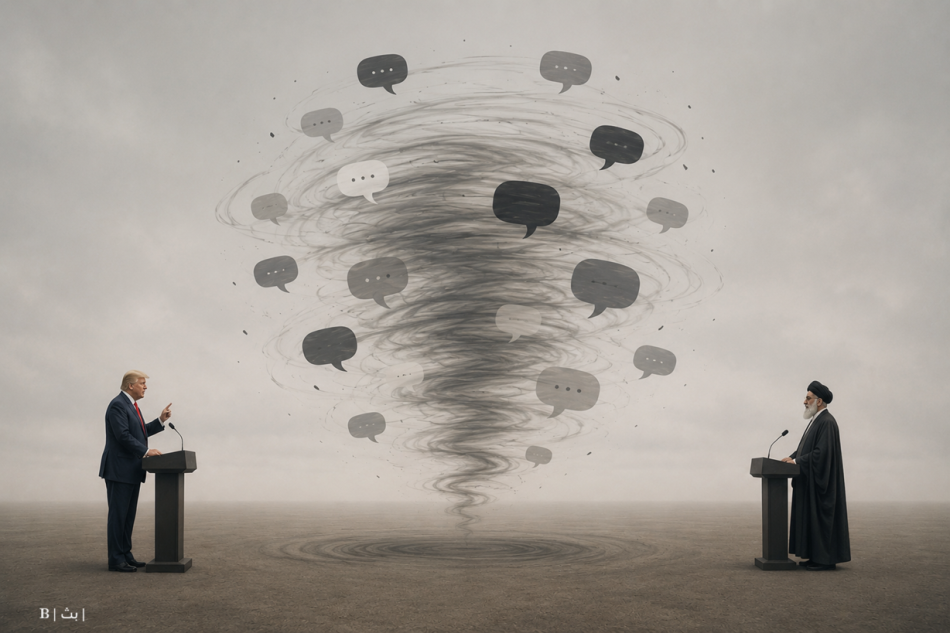
B Analysis
The current scene appears to have entered:
the stage of psychological wording,
not merely political wording.
Both sides seem closer than ever to:
a framework of understanding,
yet each side is trying to emerge from it:
victorious before its own audience.
Trump does not want to appear as a president who:
conceded,
rushed,
or repeated Obama’s experience.
This is why he constantly repeats:
“I will not sign a bad deal.”
Meanwhile,
Iran’s silence today appears striking.
A silence that may indicate:
caution,
reviewing details,
or an attempt to avoid appearing as though it is retreating under pressure.
But what seems clearer is that negotiations have now entered their most dangerous phase:
the phase of words.
In this type of agreement,
the sentence,
the description,
and the arrangement of wording,
may sometimes become more important than the substance of the understanding itself.
And this is precisely where:
the battle of political and media prestige begins.
It is also notable that the American rhetoric has become clearer regarding:
time,
conditions,
and red lines,
while Tehran still appears to prefer:
lowering its media visibility,
and raising the level of negotiation behind closed doors.
The key question is:
Are we truly approaching an agreement?
Or are we entering:
a prolonged management phase of “approaching an agreement”?
The key question now is:
Are we witnessing:
a real agreement?
Or merely:
a prolonged management of tension?
What stands out is that Iran appears to be benefiting from:
Washington’s — and most regional countries’ — desire, with the exception of Israel, to avoid a major explosion.
This may allow Tehran to:
buy time,
prolong negotiations,
and rebuild its military readiness,
while preserving the image of:
“a resilient equal”
before the Iranian public and the world.
At the same time,
Washington appears determined to:
prevent a full-scale war,
protect energy markets,
and close one of the region’s most exhausting fronts.
This may ultimately lead to:
an agreement that reduces escalation,
without fully ending the conflict.
Perhaps:
only postponing its next round