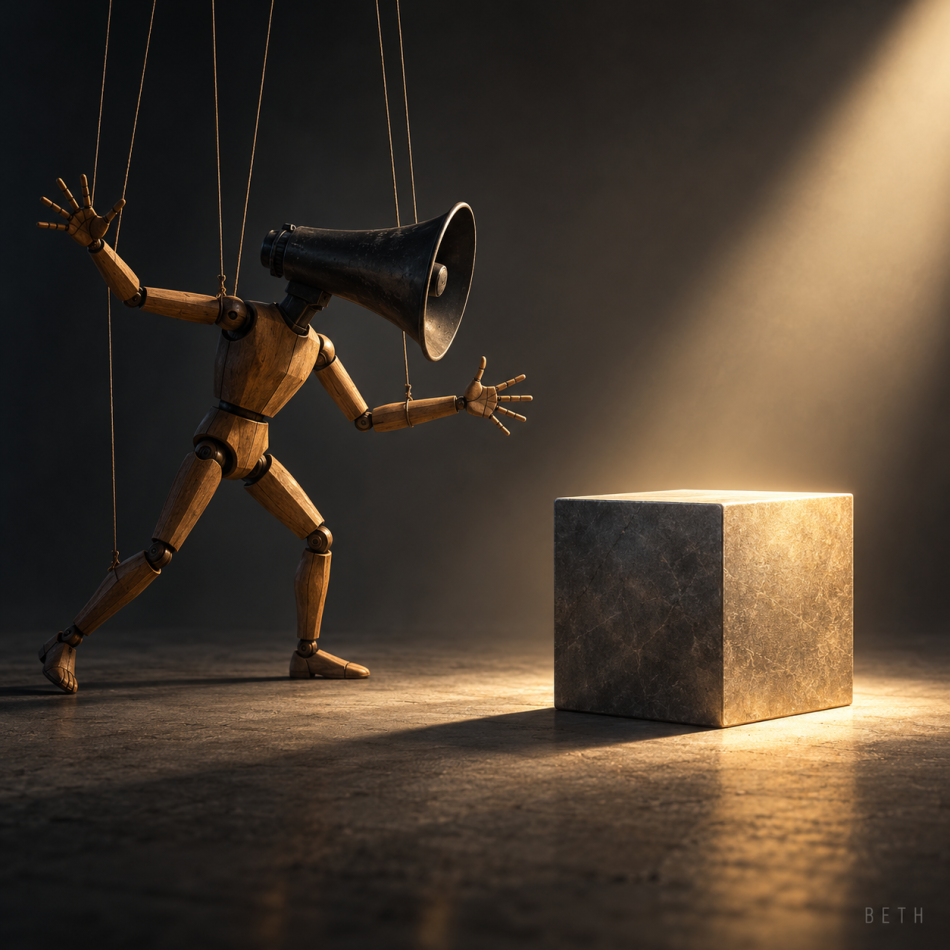



Swing Negotiations
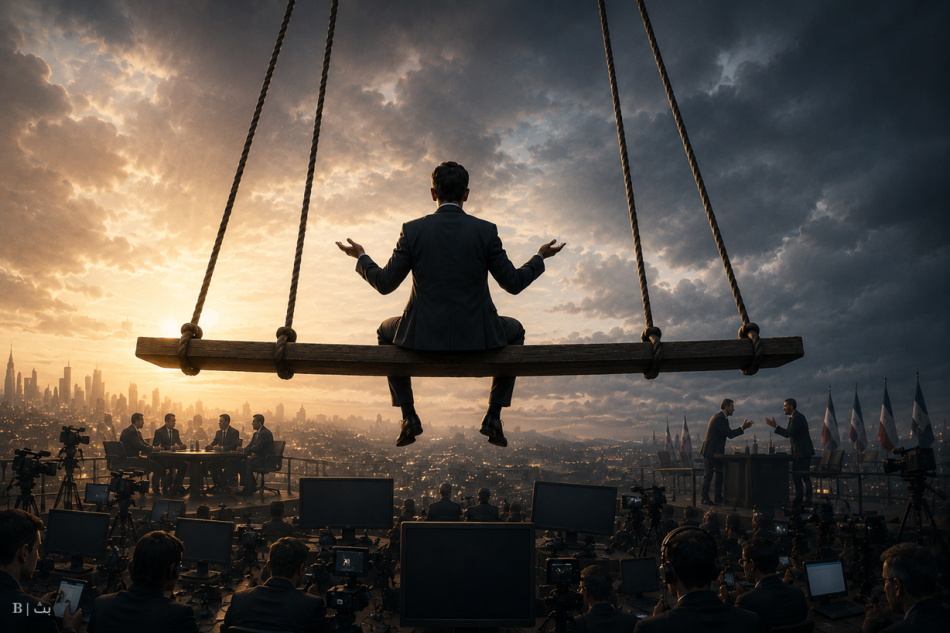
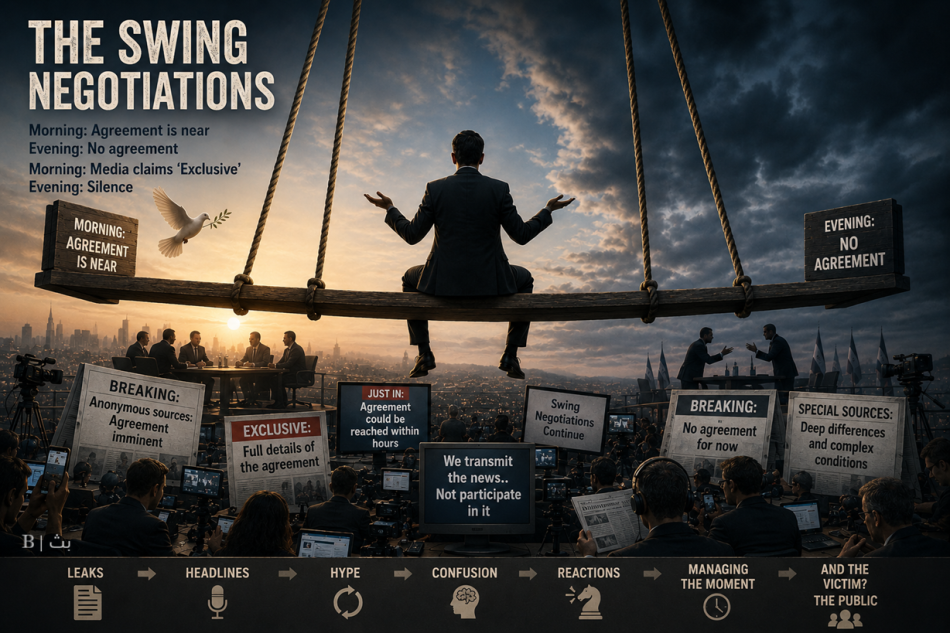
Prepared & Analyzed by | Strategic Media Department – B | بث
Supervised by: Abdullah Alomeirah
For nearly two months,
the scene has been swinging like a never-ending pendulum.
At the start of the day:
“An agreement is close.”
By the end of the day:
“Differences remain deep.”
At the start of the day:
media outlets speak of:
“major exclusives”
and “decisive leaks”
and “highly informed sources.”
By the end of the day,
everyone suddenly falls silent,
as if nothing had happened.
A wheel keeps spinning..
but without air inside it.
It sinks into the ground more than it moves.
Ironically,
some media outlets treat every leak as if it were:
the conquest of Constantinople.
Then a few hours later,
they swallow the headline,
move on to a new “exclusive,”
without asking themselves:
Did they truly know what was happening?
Or were they simply part of the noise of negotiation?
The problem is that much of the media does not participate in shaping the event,
nor does it possess the keys to decision-making rooms.
Yet at times,
it moves with exaggerated confidence,
as though it were sitting inside the negotiating room itself.
The result:
a collective swing in perception.
Public opinion wakes up to:
war.
And goes to sleep with:
peace.
Then wakes up again to:
“the possibility of the agreement collapsing.”
Only for the evening to return carrying:
“positive atmospheres.”
The scene has become as though the whole world is living inside:
a confused news ticker,
driven more by tension than by information.
And here emerges the most dangerous question:
Who really controls the media?
The politician?
The negotiator?
Intelligence agencies?
Algorithms?
Organized leak rooms?
Or journalists chasing exclusives even when meaning itself collapses?
The truth is:
everyone manages everyone else in one way or another.
Politicians use the media:
to pressure,
to probe,
and to test reactions.
The media uses politicians:
to create excitement,
increase viewership,
and manufacture a “continuous event.”
As for public opinion,
it sits in the middle,
like a spectator watching a match without knowing:
who is playing,
where the goal is,
or whether the match has even ended.
But the real loser here is not just one side.
Public opinion loses when it becomes:
an exhausted recipient,
swinging daily between:
fear,
hope,
rumors,
and manipulation.
The media loses when it appears:
confused,
hasty,
and unable to distinguish between:
information,
leaks,
and psychological warfare.
As for the politician who does not understand the impact of media,
he may believe that:
ambiguity,
leaks,
and contradiction,
are merely smart negotiating tools.
While the truth is that excessive use of them can shake:
trust,
credibility,
and the stability of public awareness.
But perhaps the most dangerous part of the scene
is that some parties no longer care about public opinion at all.
What matters is only:
managing the moment,
buying time,
moving markets,
and controlling nerves.
At that point,
media transforms from:
a tool of awareness,
into:
part of the battle of perception management.
And in prolonged crises,
the question is no longer:
Who won?
But rather:
Who managed to preserve their mind amid all this noise?
But can media control the “swing”
instead of becoming part of it?
Yes.
When it stops playing the role of:
the confused rider,
and transforms into:
a leader of perception.
A true media leader is not the one who shouts first:
“Breaking News.”
Nor the one chasing:
leaks,
exclusives,
and excitement.
But the one who possesses the ability to:
filter,
understand,
control the rhythm,
and prevent public opinion from collapsing into psychological chaos.
A professional journalist does not move with every push of the swing.
Instead,
he watches:
who is pushing it,
why,
and where they want it to go.
This is why media is not controlled by:
the fastest transmitter alone.
But by:
the calm mind.
The mind capable of:
separating information from psychological warfare,
separating intentional leaks from truth,
and understanding timing before headlines.
A true media leader does not allow the audience to become:
a daily victim of tension.
Instead,
he builds:
balanced awareness,
a calm rhythm,
and long-term trust.
In major crises,
the most dangerous thing media can do
is become part of the swing itself.
Because when media loses its balance,
people lose with it:
their compass,
their trust,
and their ability to understand.
Mature media,
however,
knows when:
to report,
when to question,
when to remain silent,
and when to tell the public:
“Not everything being said is truth.. and not every noise is an event.”
Politicians’ swings require:
expert media management
calm professionalism
and highly skilled professionals.
Otherwise,
those media outlets will fail to manage the event,
and will succeed only in managing the ridicule directed at them.
BETH (بث B) – All rights reserved