



In One Day.. 77,000 Vehicles Head Toward Makkah
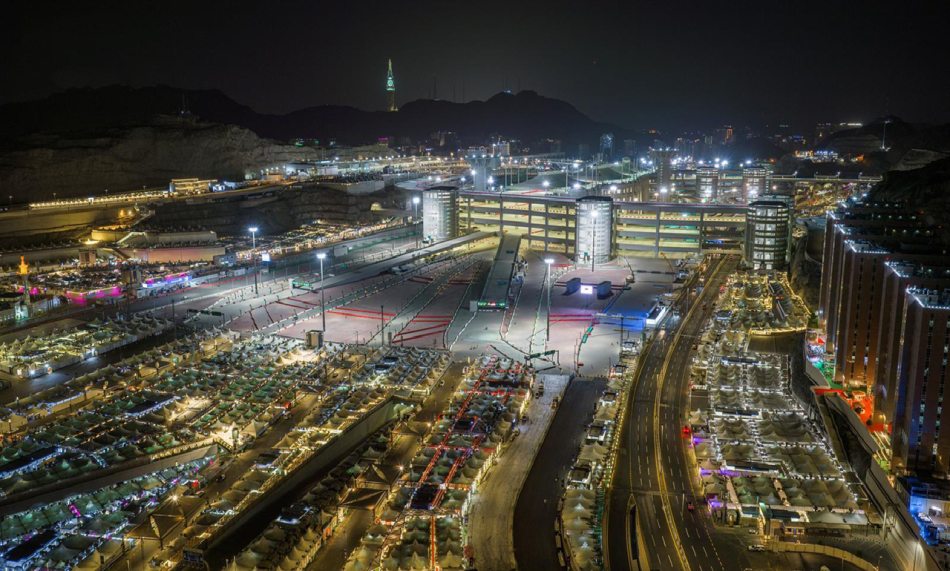
Mina | B | بث
Dhul Hijjah 07, 1447 AH — May 24, 2026
In a clear indicator reflecting the scale of:
services,
integrated infrastructure,
and accumulated expertise in crowd management,
the General Roads Authority recorded the passage of more than 77,000 vehicles through roads leading to Makkah in just one day, within a massive operational system aimed at facilitating pilgrim movement and enhancing transportation efficiency during the 1447 AH Hajj season.
The Brief
Prince Mohammed bin Salman Road recorded the highest traffic flow with more than 23,000 vehicles, followed by:
Al-Lith Road,
and the Taif–Makkah route via Al-Sail Al-Kabeer,
in addition to:
Al-Hijrah Road,
Al-Hada Mountain Road,
and the various Jeddah–Makkah routes.
The figures reflect the massive human and traffic flows heading toward the holy city, particularly as pilgrims prepare to move to Mina tomorrow, Monday the 8th of Dhul Hijjah, in preparation for the Day of Arafat, the 9th of Dhul Hijjah, corresponding to Tuesday, May 26.
Authorities also continue operating an integrated system that includes:
traffic management,
field monitoring,
enhanced safety measures,
and improving traffic flow across major routes.
B Analysis
The figure itself:
77,000 vehicles in a single day,
reveals the enormous logistical complexity managed by Saudi Arabia during Hajj season.
What is taking place is not merely about:
roads,
or traffic signals,
but about managing one of the world’s largest organized human movement operations.
More importantly, these numbers represent:
just one single day.
This means that Saudi Arabia’s road network enters a continuous operational stress test during Hajj under massive and constantly changing pressure, requiring:
modern infrastructure,
smart roads,
real-time traffic analysis,
and advanced capabilities in managing flows and bottlenecks.
The diversity of routes leading to Makkah also reflects the evolution of Saudi traffic-planning philosophy, based on:
distributing movement,
reducing pressure,
and connecting cities, entry points, and holy sites through a flexible and integrated network.
During seasons of this scale,
roads no longer function merely as transportation routes.
They become:
part of a comprehensive security, safety, and operational ecosystem,
working quietly behind the movement of millions of pilgrims heading toward Makkah and the holy sites.