


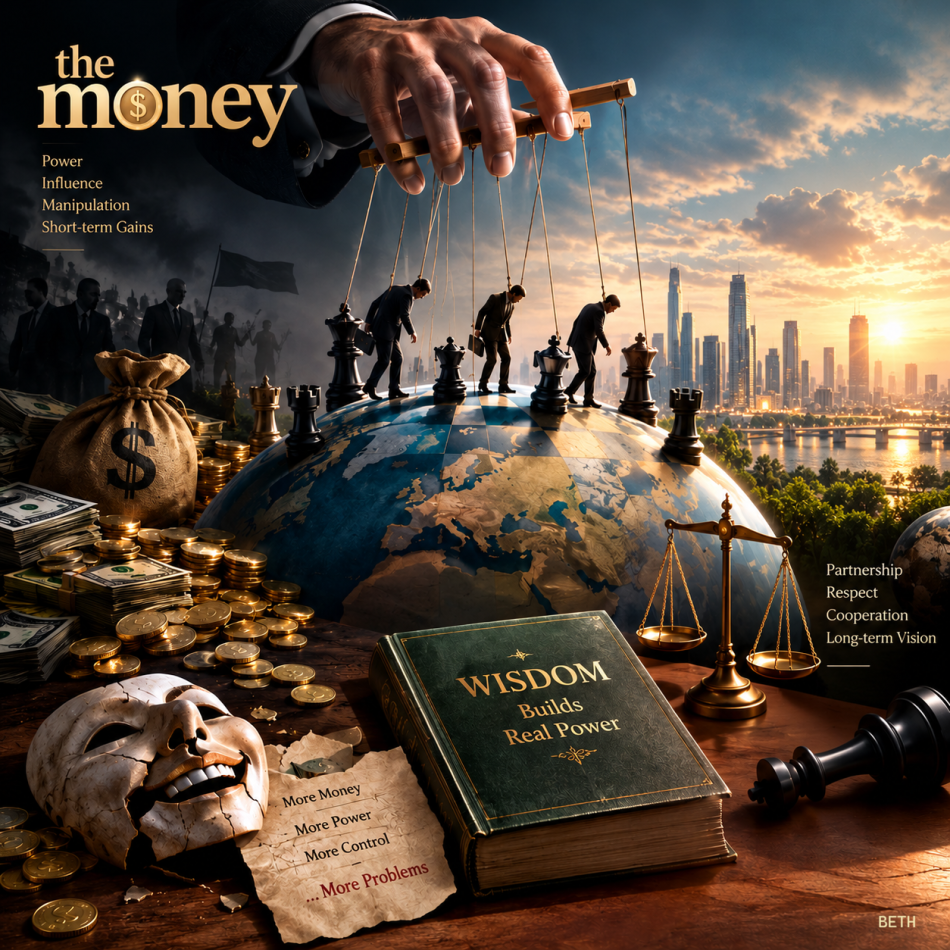
Agencies of Perception.. How Do They Shape Global Media?

Prepared by | Strategic Media Department – B News Agency | B
Supervised by: Abdullah Al-Omairah
In times of major crises
wars do not move alone
armies do not move alone
and even official statements do not move alone.
In eras of massive development and civilizational transformation
projects do not move alone either.
What moves alongside them are:
minds
messages
mental images
and narratives crafted with precision and professionalism.
Modern media is no longer merely:
the transmission of news written in a formal style to satisfy the sender.
It has become:
the manufacturing of perception
the management of awareness
and the shaping of global understanding.
This raises the fundamental question:
Who truly leads the media?
The journalist?
The politician?
The businessman?
Or the mind capable of understanding people before understanding the news?
Media Is No Longer an Innocent Arena
Today’s media does not operate in a vacuum.
It moves within a constant struggle between:
politicians
journalists
business interests
public opinion
and sometimes algorithms.
But in major files especially:
wars
crises
international conflicts
negotiations
international relations
and nation-building strategies
the most dangerous player is not:
the traditional journalist
nor merely the politician standing before the cameras.
It is:
the mind capable of managing perception.
This is why the most important principle becomes:
“The brilliant journalist is a skillful psychologist.”
Because the most dangerous battles in media are not battles of information.
They are battles of:
fear
hope
mental imagery
and directing how the public interprets events.
Global Agencies.. Who Shapes the Narrative?
Here we enter the real depth of the story.
Major news agencies are not merely:
“news transmitters.”
They are:
tools of global influence
systems of perception management
and part of the engineering of international narratives.
Reuters.. The Mind of Markets and Quiet Influence
Reuters is one of the world’s most powerful agencies in:
speed
access
economics
and diplomatic leaks.
Its true strength is not only in breaking news
but in its deep relationship with:
markets
banks
energy
and decision-makers.
Its agenda does not appear openly propagandistic
yet it often operates within:
the institutional Western vision of the world.
Its strength lies not only in professionalism
but also in the economic and political environment that supported its global expansion.
AFP.. The Soft Narrative
Agence France-Presse tends toward:
the humanitarian dimension
rights-based discourse
and French cultural influence.
It may be less economically solid than Reuters
but it is more capable of:
creating symbolic and political narratives.
It often reflects:
the traditional French worldview
built on cultural influence and soft diplomacy.
DPA.. Cold Discipline
The German agency is quieter
yet highly organized and precise.
It is strong in:
European economics
industry
and institutions.
It often reflects:
the German mindset based on:
verification
detail
and stability.
This is why it enjoys significant professional respect
even if it is less globally loud.
TASS.. Media as Part of the State
The Russian agency cannot be separated from:
Russia’s state vision and influence.
It is not merely an agency
but part of:
managing the Russian narrative
and confronting Western narratives.
The issue here is not always “falsehood”
but rather:
the angle of narration
selectivity
and the framing of events.
AP.. The Most Dangerous Through Calmness
Here emerges a completely different school.
Despite what may sometimes appear as a decline in the glamour of traditional American media
AP remains one of the most influential institutions in shaping international narratives.
AP is not merely a news agency
but one of the hidden pillars of American media.
Many of the stories the world reads begin there
even if they later appear under the names of newspapers and television networks.
Its danger does not lie in loudness
but in its ability to make its narrative appear:
natural
obvious
and neutral.
This is where its true power lies.
The most dangerous influence is not the one imposed by force
but the one that makes audiences believe they reached the conclusion on their own.
Bloomberg.. When Capital Shapes the Narrative
Bloomberg is not merely a media institution
but a financial information empire.
It does not read the world politically first
but economically.
This is why global markets may sometimes move
because of a single Bloomberg line.
Its agenda is not directly ideological
but tied to:
protecting the global economic environment
maintaining financial stability
and safeguarding capital.
Its true power came from:
data
professional subscription systems
and deep integration with the world of investment and markets.
Why Are Foreign Agencies Powerful?
The reason is not only:
money
technology
or the number of correspondents.
It is because they understood early that real media means:
Building authority.
These agencies did not merely build newsrooms.
They built:
accumulated trust
networks of influence
and relationships inside:
capitals
wars
stock exchanges
and international institutions.
Western agencies despite their differences
operate within an integrated civilizational and media environment
that strengthens their global presence
and limits the emergence of real competitors across many regions of the world.
The most dangerous distinction however
lies in their ability to present narratives within a calm professional framework
that rarely appears propagandistic.
And that is where real influence exists.
What About Arab Agencies?
This is where the historical crisis begins.
Most Arab agencies were born as official state arms.
Meaning their primary role was:
transmitting the official narrative
rather than building an independent global reference.
This is why their influence often remained:
local
or externally limited.
The fundamental difference is that global agencies ask:
“What is happening?”
While many Arab agencies historically asked:
“What do we want people to hear?”
And that is the difference between:
reference media
and statement-based media.
Why Could B Succeed?
Because the idea itself is fundamentally different.
If B succeeds in maintaining:
professionalism
deep analysis
understanding the mind behind the news
and relative independence
then it will not merely compete for:
journalistic scoops.
It will compete to:
build a new Arab media school
and create a supporting media industry built on advanced technologies and creative thinking.
A school that does not merely transmit
and does not live on reaction.
But rather creates:
understanding
interpretation
and a modern Arab management of perception.
And precisely here
lies the true historical opportunity for B.