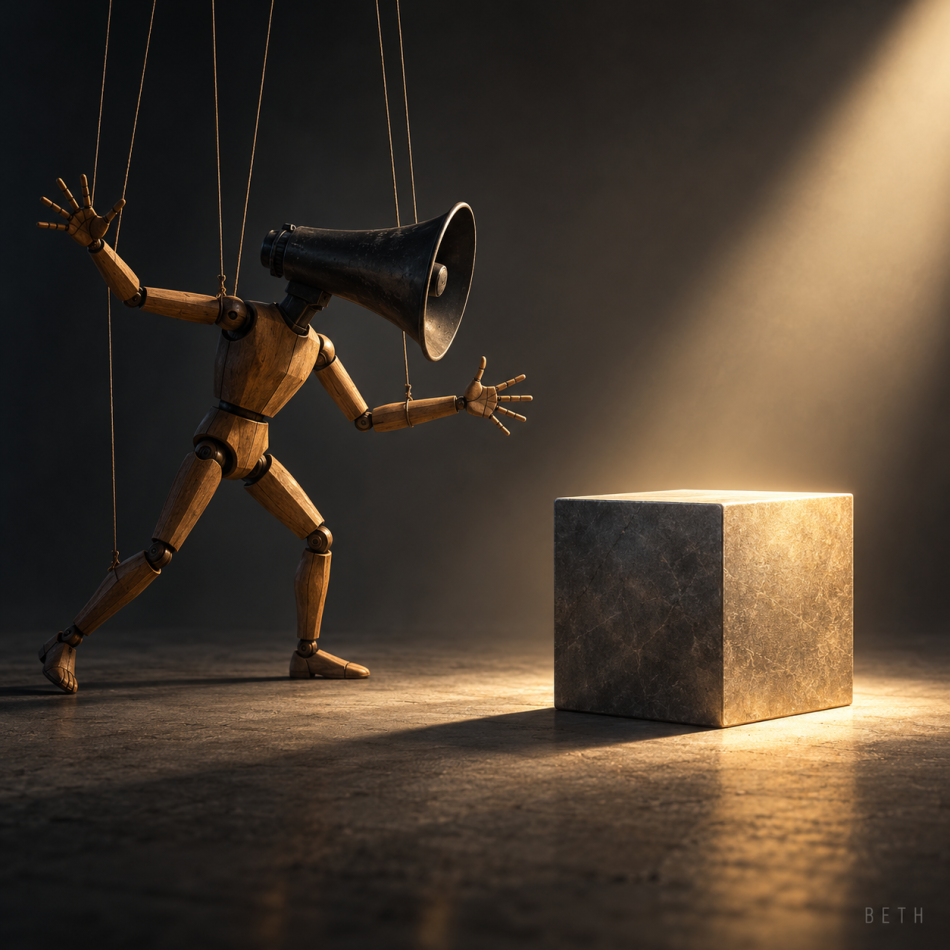



Minds Above the Knot .. How Does Trump Think? How Does Tehran Think? .. And Who Really Controls the Media?
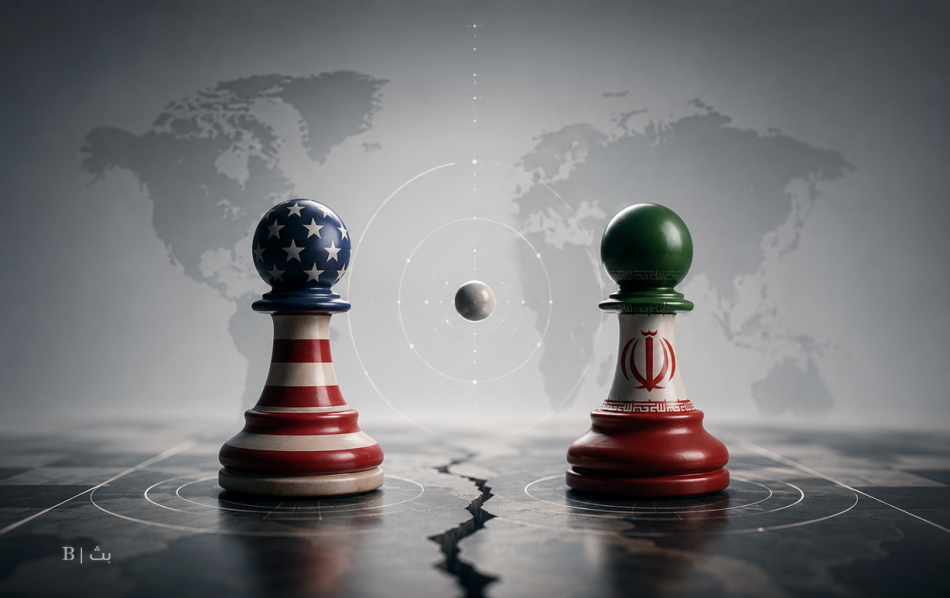
Prepared & Analyzed by | Strategic Media Department – B Agency | B
Supervised by: Abdullah Alomeirah
In this file, reading the draft alone is not enough.
What matters more is reading the minds moving behind it.
The scene is not merely a dispute over:
uranium,
and the Strait of Hormuz,
but a collision between two completely different mindsets in:
thinking,
negotiation,
power management,
and the use of media.
Trump: The Deal-Making Mind Under the Pressure of Power
Trump wants a fast result,
marketable,
clear to the public,
and one that looks like a “victory.”
That is why he pressures through sharp statements regarding uranium,
and links any agreement to preventing Iran from obtaining nuclear capability.
He thinks with the mentality of:
“Dominance through pressure.”
He dislikes gray zones,
and does not like appearing:
hesitant,
or weak.
He constantly needs:
the image of the winner,
the man who “imposed his will.”
Therefore:
he raises the سقف,
repeats threats,
uses media as a psychological pressure weapon,
then leaves the door of the deal open at the final moment.
Economically,
he thinks like a businessman:
“What is the gain? And what is the loss?”
Politically,
he cares about public image as much as the result itself.
Militarily,
he often uses power as a tool of:
deterrence,
display,
and pressure,
more than a desire for a long war of attrition.
That is why he sometimes appears:
sharp,
contradictory,
and loud,
but behind all of that exist:
calculations of influence,
markets,
elections,
and leadership image.
Tehran: The Mind of Survival and Maneuvering
In contrast,
Tehran does not think only in terms of a deal,
but in terms of:
survival,
steadfastness,
and the ability to maneuver.
That is why it attempts to transform:
uranium,
and Hormuz,
into strategic leverage cards,
rather than ordinary technical clauses.
The Iranian mindset here is layered and complex:
The clerical establishment thinks about:
the regime’s legitimacy,
prestige,
and the image of “not breaking.”
The Revolutionary Guard thinks about:
deterrence,
control,
and not losing leverage.
Meanwhile, Iranian diplomacy thinks about:
time,
mediators,
corridors,
and the manufacturing of ambiguity.
Psychologically,
Iran is more prepared to endure:
pressure,
sanctions,
and prolonged attrition.
Therefore:
it does not mind ambiguity,
apparent contradictions,
or extending negotiations.
Sometimes it even believes that:
psychologically exhausting the opponent
is more important than defeating him militarily.
That is why Iranian statements often appear:
vague,
multiple,
and overlapping,
yet they are usually part of:
a long-term perception management strategy.
The Core of the Knot
Trump wants:
an agreement that looks like a decisive victory.
Tehran wants:
an agreement that does not look like surrender.
And from here…
the “knot” is born.
If Trump obtains the uranium,
Iran loses the image of steadfastness.
If uranium remains inside Iran,
Trump loses the title of victory.
If Tehran is granted influence over Hormuz,
it would appear as recognition of Iran’s pressure power.
And if Hormuz is opened without conditions,
Iran loses a strategic deterrence card.
Where Does This Lead?
Most likely, the path will move toward one of three outcomes:
Temporary Agreement
A ceasefire,
opening navigation routes,
freezing escalation,
while postponing the major knots.
Gray Deal
Removing part of the uranium,
or placing it under a monitoring mechanism,
with wording that allows each side to declare “victory.”
Limited Explosion
A calculated escalation or strike,
aimed at reshaping the negotiation balance,
not launching a full-scale war.
The Question: How Does the Media Deal with These Personalities?
It is not enough to simply نقل statements.
Because some statements are not information,
but psychological pressure tools.
And it is not enough to merely count leaks,
because some leaks are not disclosures,
but tests.
Smart media does not only ask:
What did Trump say?
It asks:
Why did he say it now?
To whom?
And what effect is he trying to create?
And it does not only ask:
What did Tehran leak?
It asks:
Is this a leak of position?
A leak of fear?
Or a leak of time?
Who Really Controls the Media?
Media outlets are not controlled by a single actor.
Rather, they move within a permanent struggle between:
the politician,
the journalist,
the businessman,
public opinion,
and sometimes… algorithms.
But in major sensitive files,
especially:
wars,
crises,
negotiations,
and international conflicts,
the most dangerous player is often not:
the traditional journalist,
nor the politician visible before the camera.
But rather:
The mind capable of understanding the human being before the news.
And that is why the most important principle becomes:
“The brilliant journalist is the skillful psychologist.”
Because the most dangerous battles in media are not:
battles of information,
but battles of perception.
The professional politician does not merely send a statement.
He sends:
fear,
hope,
suggestion,
mental imagery,
and a psychological framework that makes the audience interpret the event the way he wants.
Here emerges the role of:
the political psychological analyst,
the message engineer,
and the perception management expert.
In the White House, for example,
statements usually do not emerge as spontaneous words alone,
but after precise calculations:
How will it affect the markets?
How will it affect voters?
How will the opponent interpret it?
How will media outlets capture it?
And what psychological image will it create?
In Iran,
language becomes more symbolic and complex.
There are:
statements from the clerics,
messages from the Revolutionary Guard,
the silence of the Supreme Leader,
and mediator leaks,
all sometimes functioning as parallel psychological tools.
Therefore,
the flood of statements is not always chaos.
Sometimes it is:
“calculated distraction.”
Weak traditional media easily falls into the trap:
It transmits,
repeats,
and chases the next statement,
without understanding:
Who crafted it?
Why?
At what timing?
And for which audience?
And here is born:
“Reaction Media.”
Media that transforms from:
a maker of understanding,
into merely a transmitter of noise.
The real danger is not only the politician manipulating ideas,
but the journalist who does not realize he is being psychologically guided,
while believing he is neutrally conveying the truth.
And therefore…
The true journalist in major crises
is not merely a news transmitter,
nor even a traditional political analyst.
He must become:
a reader of the mind,
body language,
timing,
fear,
greed,
pride,
and the hidden messages inside words.
Because some statements are not made to be understood…
but to create psychological impact.
And exactly there…
deep media begins,
and shallow journalism ends.