

Riyadh.. The Capital of Finance and Business
More than 700 international companies attracted through the Regional Headquarters Program, foreign direct investment inflows into Saudi Arabia reaching SAR 159 billion in a single year, a major financial district, and megaprojects strengthening the Saudi capital's position as a destination for investment and international business management.
Riyadh | BETH
November 9, 2026
Saudi Arabia's capital, Riyadh, is advancing rapidly toward consolidating its position as a regional financial and business hub, driven by the expansion of the Saudi economy, the relocation of regional headquarters of international companies, and the development of a competitive regulatory and investment environment supported by advanced infrastructure.
Riyadh's growth is no longer limited to urban expansion. It represents an economic transformation positioning the city as a center for investment decisions and regional market management, in line with the objectives of Saudi Vision 2030.
More Than 700 International Companies
Saudi Arabia's Regional Headquarters Program had attracted more than 700 international companies by the end of 2025, surpassing its original target of 500 regional headquarters by 2030 ahead of schedule.
Prominent international companies that have selected Riyadh as their regional headquarters include IBM and PepsiCo, alongside major global institutions operating in finance, technology, industry, consulting, and professional services.
This transformation represents a shift from the traditional presence of foreign companies for sales and marketing purposes toward attracting regional management, strategic planning, and decision-making functions, creating opportunities for knowledge transfer and the development of specialized employment.
Why Do International Companies Choose Riyadh?
The Saudi capital combines several investment advantages that reinforce one another.
First: Market Size and Economic Opportunities. Companies gain access to Saudi Arabia's large domestic market and investment opportunities associated with national development projects and the expansion of tourism, technology, manufacturing, energy, and logistics.
Second: Tax Incentives. The Regional Headquarters Program offers incentives including a 0% corporate income tax rate for 30 years on qualifying activities, along with withholding tax exemptions related to those activities, subject to applicable regulations.
Third: Investment Legislation and Protection. Saudi Arabia's updated Investment Law has strengthened protections for domestic and foreign investors, including equal treatment under comparable circumstances, protection of investments and intellectual property, streamlined procedures, and the transfer of funds in accordance with applicable laws.
Fourth: Proximity to Decision-Making Centers. Establishing a presence in Riyadh enables international companies to engage directly with financial and economic institutions, government entities, and major corporations while developing partnerships and projects across various sectors.
Fifth: Infrastructure and Quality of Life. Improvements in transportation, digital services, education, healthcare, and residential facilities have strengthened Riyadh's ability to attract international professionals and their families.
KAFD.. Riyadh's Financial Landmark
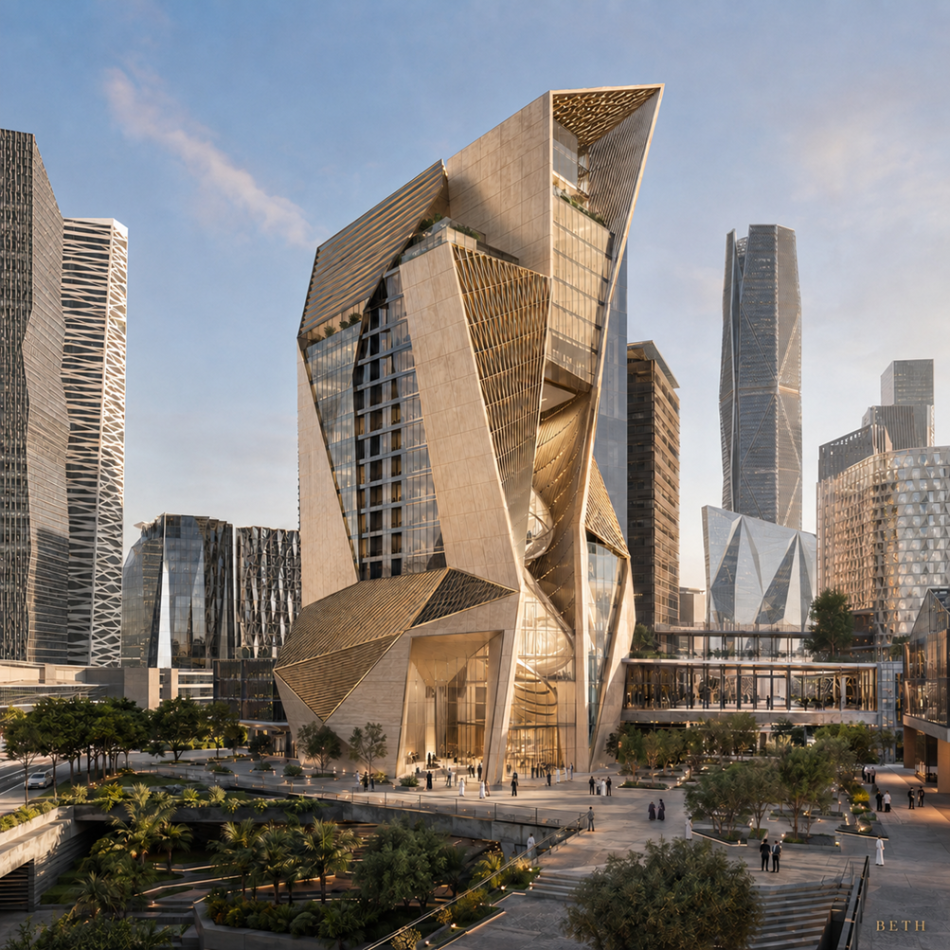
The King Abdullah Financial District (KAFD) is one of the most prominent components of Riyadh's economic transformation.
Covering 1.6 million square meters, the district comprises 95 buildings designed by 25 international architectural firms. It hosts more than 140 companies, including 25 regional headquarters.
KAFD brings together financial institutions, international corporations, and professional and technology services within an integrated business environment supported by modern digital infrastructure and advanced sustainability standards.
Its significance lies in serving as a center for business institutions and partnerships, rather than merely a development of office towers and commercial buildings.
A Financial Market Worth SAR 8.8 Trillion
The presence of the Saudi Exchange (Tadawul) in Riyadh reinforces the capital's position among regional financial centers.
The market capitalization of listed shares reached approximately SAR 8.8 trillion by the end of 2025, while assets under management in Saudi Arabia exceeded SAR 1.2 trillion, reflecting the scale of the investment ecosystem and the expansion of financing and asset management instruments.
In another indicator, Saudi Arabia recorded foreign direct investment inflows of approximately SAR 159 billion in 2025, an increase of 33.5%, while the country's total stock of foreign direct investment exceeded SAR 1 trillion.
These figures reflect the expanding investment base across Saudi Arabia and provide an important economic foundation for the capital's growing financial role.
Infrastructure Supporting Business Growth
The Riyadh Metro, extending 176 kilometers across six lines and 85 stations, has become a major element in improving urban mobility and connecting key areas of the capital, including the King Abdullah Financial District and the airport.
Investment opportunities are also expanding through major projects such as King Salman International Airport, Diriyah, Qiddiya, and New Murabba, among others, which aim to diversify the economy and strengthen hospitality, commerce, entertainment, technology, and service industries.
Riyadh is also preparing to host Expo 2030, which aims to attract 42 million visits over six months, creating extensive opportunities for international investment and partnerships.
BETH Analysis | Why Does Riyadh Deserve the Title of Capital of Finance and Business?
The standing of an economic city is not measured solely by the height of its towers or the number of companies registered within it, but by its ability to attract capital, institutions, and talent, provide a secure and productive business environment, and transform investments into sustainable economic opportunities.
Riyadh today possesses growing strengths to achieve this ambition, combining the scale of the Saudi economy, the presence of the Public Investment Fund, the development of the financial market, legislative reforms, the expansion of international companies, and major national projects.
However, international competition requires continued improvements in the business environment, the availability of office space and specialized talent at competitive costs, and greater efficiency in services and procedures. These factors will be essential to ensuring that regional headquarters become genuine centers of decision-making and investment.
The true value of this transformation lies not merely in the number of companies arriving in Riyadh, but in the volume of business they manage from the city, the investments they generate, and the jobs and knowledge they contribute to the Saudi economy.
This highlights the importance of the next phase: transforming the success of attracting international companies into a sustainable global economic presence.
Riyadh is not merely seeking to become a city that attracts capital, but a center where decisions are made and partnerships are built to reach markets around the world.