



Gulf States Sign Landmark Railway Connectivity Agreement

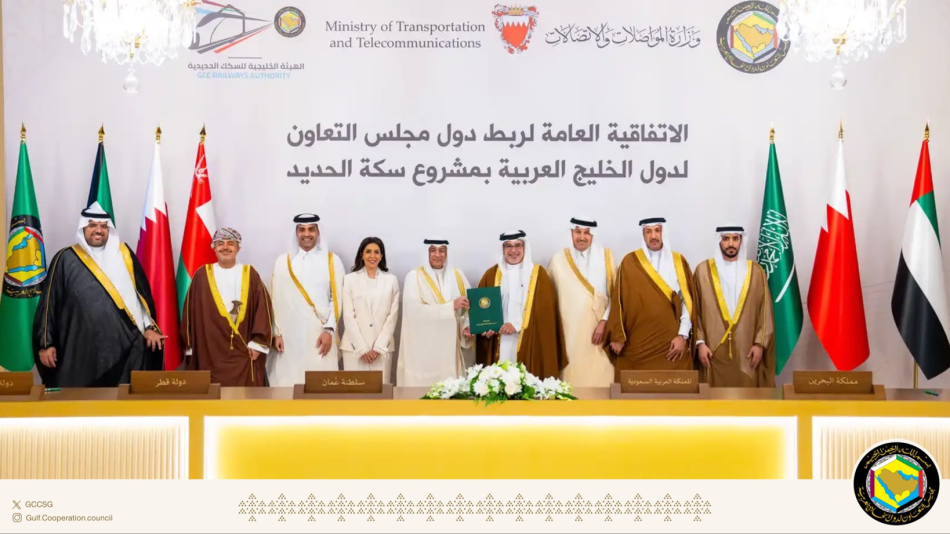
The Gulf Cooperation Council (GCC) states have signed an agreement to implement and operate a railway network connecting all six member countries, at an estimated cost of approximately $16 billion, with full operations targeted for December 2030.
Manama | BETH
November 8, 2026
The six member states of the Gulf Cooperation Council signed the general agreement for the GCC Railway Project on Sunday in Manama, Bahrain, in the presence of Prince Salman bin Hamad Al Khalifa, Bahrain's Crown Prince and Prime Minister, alongside GCC transport ministers and Secretary-General Jassim Mohammed Al-Budaiwi.
The signing marks a strategic step toward establishing an integrated passenger and freight railway network connecting Saudi Arabia, Kuwait, Bahrain, Qatar, the United Arab Emirates, and Oman, strengthening economic and commercial integration while advancing the region's transport and logistics infrastructure.
The GCC Secretary-General stated that the agreement establishes a common framework governing member states' commitments to implementing and operating the project. It also defines coordination mechanisms, monitoring procedures, and implementation schedules to ensure integration with national railway networks.
What Does the Agreement Cover?
The agreement focuses on four main areas:
Implementation and Operations: Commitment to a common action plan and coordinated implementation timetable.
Technical Integration: Standardizing technical specifications, safety requirements, and operational compatibility across member states.
Coordination and Monitoring: Defining the responsibilities of all six countries and addressing implementation challenges.
Economic Connectivity: Facilitating passenger and freight movement while linking markets, ports, and industrial centers.
Project Details
The railway network will extend from Kuwait in the north through Saudi Arabia, connecting Bahrain, Qatar, and the UAE before reaching Oman, forming an integrated regional transport system.
According to the GCC Railways Authority, the core network will cover approximately 1,768 kilometers, with passenger trains designed to operate at speeds of 200 kilometers per hour, while freight trains will travel at speeds ranging from 80 to 120 kilometers per hour.
The project's core infrastructure is estimated to cost between $15.4 billion and $16 billion, according to published estimates. Full operations are targeted for December 2030, with the possibility of launching cross-border services between neighboring countries as their connecting sections are completed.
In May 2026, GCC Railways Authority Director General Mohammed Al-Shabrami announced that overall project progress had exceeded 50%, indicating significant advancement despite differences in implementation stages among member states.
Saudi Arabia: The Central Link in the GCC Railway Network
Saudi Arabia plays a pivotal role in the project due to its geographic position and land connections with most GCC member states. Its railway corridors will form a vital component of the network linking the northern and southern Gulf.
The project is also expected to strengthen connectivity between ports, industrial zones, and logistics hubs, supporting Saudi Arabia's National Transport and Logistics Strategy and the objectives of Saudi Vision 2030.
The planned railway connection between Saudi Arabia and Bahrain through the proposed King Hamad Causeway represents another important component in completing the regional network.
BETH Analysis | An Economic Project with Strategic Dimensions
The agreement goes beyond building railway tracks. It establishes the foundation for a regional land transport corridor that could facilitate the movement of goods and passengers, reduce reliance on road freight, lower transportation costs, and improve supply chain efficiency.
The network also takes on greater strategic importance amid maritime disruptions in the Arabian Gulf and the Strait of Hormuz. Once completed, it will provide an additional transport option for moving goods between GCC countries and connecting their ports and commercial centers, although it will not fully replace maritime shipping.
The primary challenge remains translating the agreement and its implementation schedules into a fully operational cross-border network supported by unified railway operations, customs procedures, and transport services.
The signing therefore marks a transition from years of planning and coordination toward a more advanced stage of collective commitment, bringing the Gulf states closer to completing one of the region's largest economic integration projects.
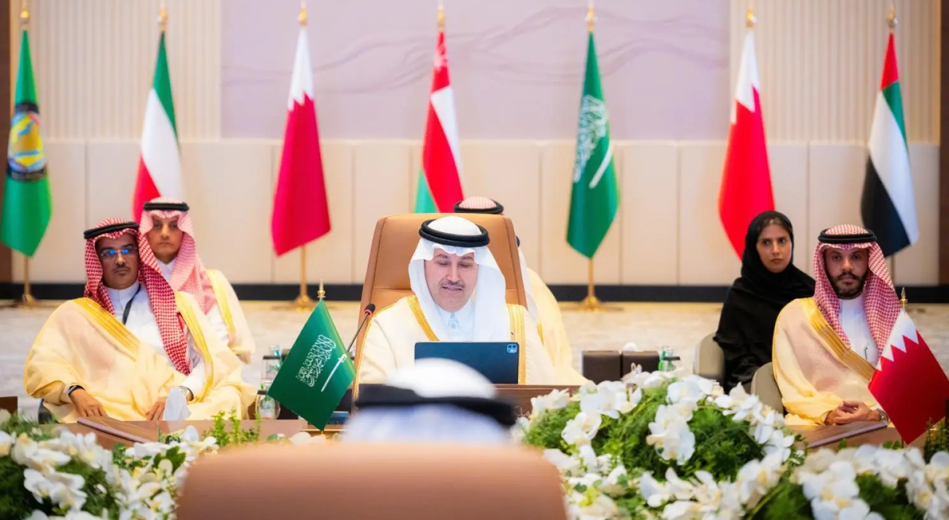
Saudi Minister of Transport and Logistic Services, Eng. Saleh bin Nasser Al-Jasser, participated in signing the general agreement for the GCC railway connectivity project, which will connect the six member states through an integrated railway network, with full operations targeted for December 2030.
Saudi Arabia Affirms the Resilience of Its Supply Chains and Expands Railway Cooperation with Bahrain
The Saudi Minister of Transport affirms, during the GCC meeting in Manama, the Kingdom's ability to secure trade and supply flows despite the current crisis, and signs a memorandum of understanding with Bahrain to enhance railway cooperation.
Saudi Minister of Transport and Logistic Services, Eng. Saleh bin Nasser Al-Jasser, affirmed, while heading the Kingdom's delegation at the meeting of GCC Transport Ministers in Bahrain, that the current crisis has demonstrated the resilience of Saudi supply chains and their ability to face challenges, while the Kingdom continues to support trade flows and secure supplies for neighboring countries.
He explained that the Kingdom possesses advanced logistics infrastructure comprising 29 airports and 13 seaports along its eastern and western coasts, in addition to a road network that ranks first globally in the Road Connectivity Index, enhancing its ability to ensure the smooth flow of goods, merchandise, and services.
Al-Jasser affirmed that Saudi Arabia regards its strategic location as a responsibility toward the region and seeks, under Vision 2030, to consolidate its position as a reliable global logistics hub that supports the stability of regional and international markets.
Al-Jasser and his Bahraini counterpart, Dr. Sheikh Abdulla bin Ahmed Al Khalifa, signed a memorandum of understanding on cooperation in the railway sector, covering the exchange of expertise and technical knowledge, as well as the development and operation of railway transport projects, thereby enhancing passenger and freight movement and trade exchange between the two countries.
BETH Analysis
Saudi initiatives confirm that GCC logistics integration is no longer merely an economic project, but has become a strategic element in strengthening supply security and ensuring trade continuity in the face of regional disruptions.
The Saudi-Bahraini partnership is particularly important as one of the links in the GCC railway network, supporting the diversification of transport routes and enhancing the ability of GCC countries to confront crises.