


Riyadh | New Agricultural Products Plant to Be Established with Annual Capacity of 500,000 Tonnes
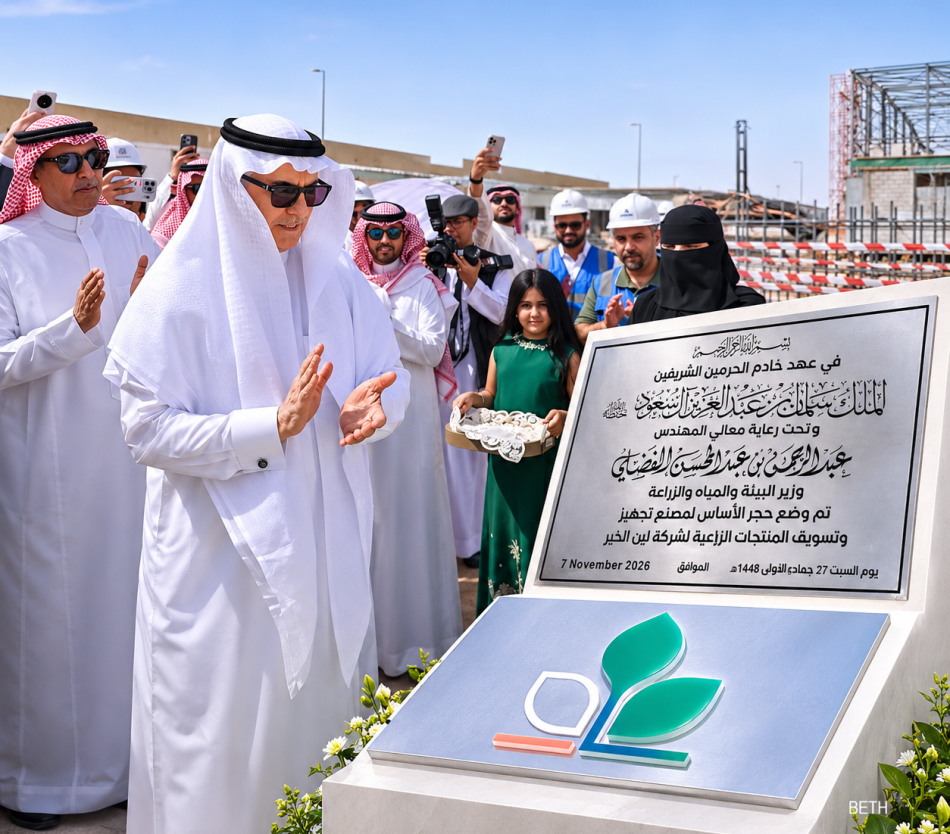
Saudi Minister of Environment, Water and Agriculture lays the foundation stone for Lin Al Khair’s agricultural processing and manufacturing plant, featuring advanced operational technologies aimed at strengthening food supply chains and reducing food waste.
Riyadh | BETH
November 8, 2026
Saudi Minister of Environment, Water and Agriculture, Eng. Abdulrahman Al-Fadley, laid the foundation stone on Sunday for Lin Al Khair’s agricultural products processing, manufacturing, and marketing plant in Riyadh, with an annual production capacity exceeding 500,000 tonnes, as part of efforts to develop the food industry and maximize the benefits of local agricultural production.
The project will be built on a 20,000-square-meter site, with a total operational area of 29,000 square meters across three floors, in addition to a smart warehouse capable of accommodating 7,000 storage pallets.
The plant will feature sorting, packing, packaging, and food processing lines, alongside refrigeration systems, smart storage, automation, and water treatment technologies.
Construction has reached 36% completion, with the project expected to be completed on September 30, 2027.
Diversified Products and Reduced Food Waste
The plant aims to produce sliced fruits, prepared vegetables, salads, juices, and ready-to-eat meals, as well as soups, sauces, and other food products.
It will also allocate part of the locally grown crops for food processing rather than marketing them exclusively as fresh produce, while utilizing organic waste for recycling to help reduce food loss and waste.
The company's Chairman, Saud Mohammed Al Shuraim, emphasized that the project reflects its commitment to integrating agricultural production with food manufacturing and maximizing the economic value of locally grown crops.
BETH Analysis | Greater Value for Local Agricultural Produce
The project's significance lies in expanding the economic benefits of Saudi agricultural production. Rather than limiting crops to their raw form, food processing will enable them to be transformed into a wider range of products with longer marketable shelf lives and greater added value.
The project will also create broader opportunities for farmers, strengthen the resilience of food supply chains, and support investment in modern technologies.
The most significant anticipated impact is transforming increased agricultural production into sustainable economic value, while reducing waste and opening new markets for locally produced food products.