
BETH Eyes | World Press Review
Sunday, November 8, 2026
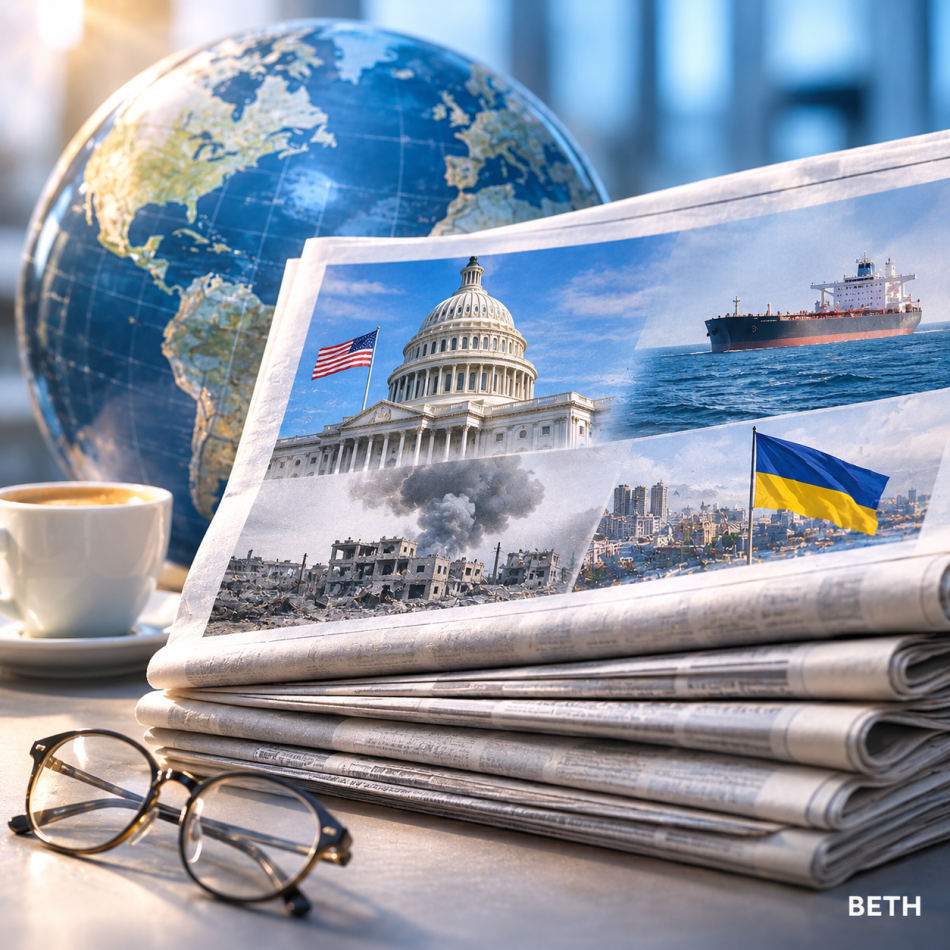
U.S. election results reshape allies’ calculations, while the Strait of Hormuz and Ukraine dominate international attention. Meanwhile, Saudi Arabia features in foreign media coverage of the Hajj Conference and preparations for Riyadh Expo 2030.
Riyadh | BETH
Highlights from the International Press
The Washington Post | Allies Reassess Their Calculations
The newspaper reported growing caution among U.S. allies following the Republicans’ defeat in the congressional elections, noting that the political shift in Washington does not guarantee a return to its previous foreign policy approach. The coverage highlights efforts by European and Asian countries to strengthen their defense capabilities and diversify their economic partnerships.
The Guardian | Hormuz Faces a Diplomatic Test
The newspaper examined a Qatari proposal linking the reopening of the Strait of Hormuz to arrangements for inspections of Iran’s nuclear program. The proposal reflects an attempt to move beyond addressing the maritime crisis separately toward a broader understanding, without necessarily indicating that an agreement has been reached.
The Guardian | Ukraine Negotiates Under Attack
The newspaper highlighted the escalation of Russian strikes against Ukrainian energy facilities ahead of the Abu Dhabi talks, citing President Volodymyr Zelenskyy’s accusation that Moscow is using the attacks to improve its negotiating position.
Euronews | After the U.S. Elections
European coverage focused on the possibility of changes in Washington’s policies toward Iran and Ukraine following the congressional elections, as well as concerns over renewed escalation in the region, alongside preparations for the Abu Dhabi talks.
The Guardian | Bomb Threats Disrupt European Aviation
The newspaper reported a wave of bomb threats involving civilian aircraft, which led to the diversion of dozens of flights and disrupted air traffic across several European countries. The incidents raised concerns about coordinated sabotage operations targeting essential services, although no explosives were found and responsibility has not been established for any particular state or group.
The Times of Israel | Eisenkot Tasked with Forming a Government
Israeli President Isaac Herzog announced his decision to select opposition leader Gadi Eisenkot to form a new government, after he received recommendations from 67 members of the Knesset, compared with 46 for Benjamin Netanyahu, following elections that failed to give any political bloc an independent majority.
Eisenkot faces a difficult task in forming a governing coalition within 28 days, amid disagreements among opposition parties over cooperation with Arab parties and the possibility of continued political deadlock or another round of elections.
Saudi Arabia in the World Press
Pakistani Press | Hajj Conference Brings Together More Than 150 Countries
International coverage from Pakistan highlighted the opening of the sixth Hajj Conference and Exhibition in Jeddah, with the participation of more than 520 organizations, focusing on the technologies, services, and partnerships being developed by Saudi Arabia to serve pilgrims.
Indonesia’s ANTARA | Developing Pilgrim Services
The Indonesian news agency focused on specialized workshops at the Hajj Conference, particularly the development of workforce skills and practical solutions in operations, healthcare, hospitality, and logistics, reflecting the interest of countries sending pilgrims in Saudi Arabia’s preparations.
Malaysia’s Bernama | Riyadh Expo 2030
The Malaysian news agency covered the signing of the United States’ participation agreement for Riyadh Expo 2030, describing it as a step that strengthens international participation and advances preparations toward the stage of designing national pavilions, programs, and experiences to be presented by participating countries.
BETH Analysis | A World Reordering Its Priorities
International media coverage reveals three simultaneous trends: Washington’s allies are seeking greater independence in their decision-making, wars continue to influence negotiating calculations, and Saudi Arabia is gaining prominence in coverage related to development, international cooperation, and services.
Notably, Saudi Arabia’s international media presence is no longer limited to politics and energy, but increasingly extends to sharing its organizational expertise and hosting major international events.
The question remains: Are major powers moving toward settlements that restore stability, or will the world continue reshaping its alliances under the influence of ongoing crises?