
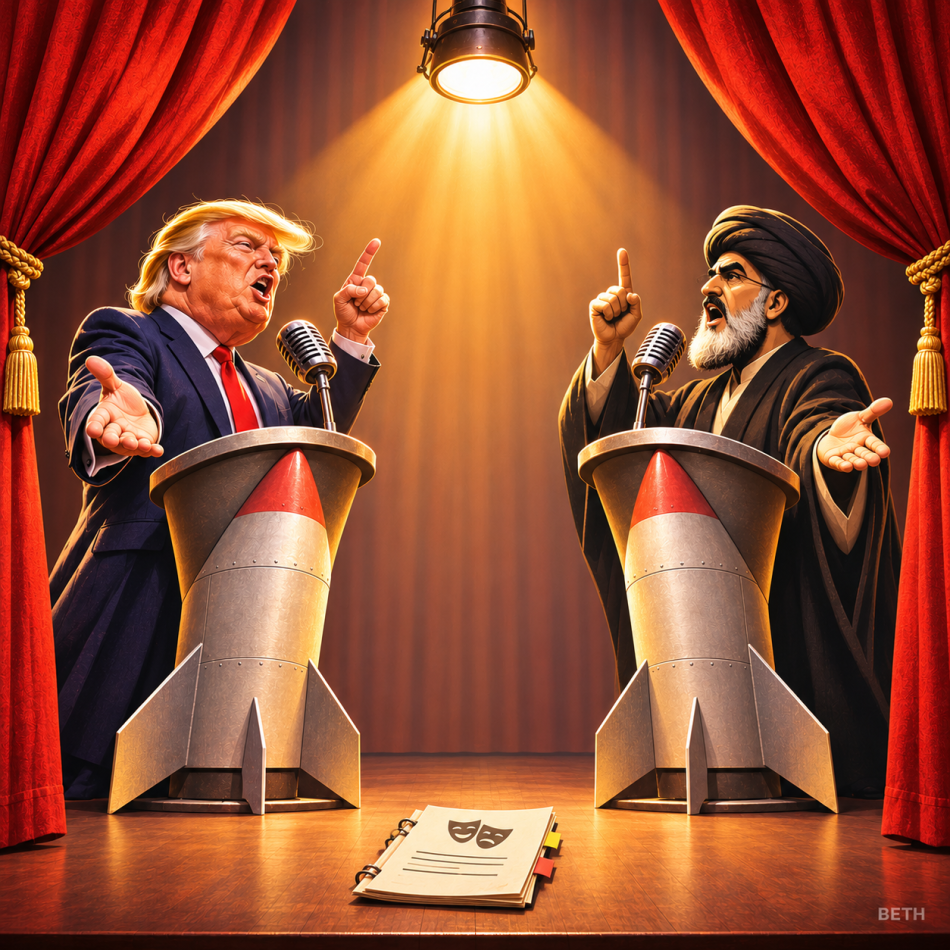


“Iron Gate” | Washington Expands Its Blockade of Iran
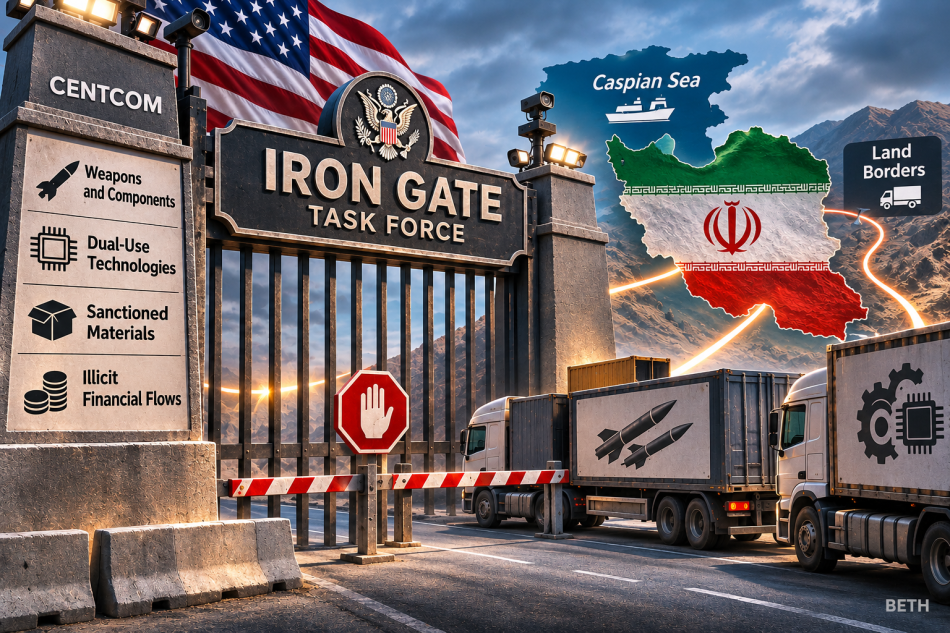
U.S. Central Command announces the formation of a task force to disrupt Iranian supply routes across land borders and the Caspian Sea, complementing the existing naval blockade in a move targeting military capabilities and funding sources, and opening a new phase of economic and security confrontation.
Riyadh | BETH
November 7, 2026
Prepared and Analyzed by | Strategic Media Department – BETH News Agency
The United States announced on Saturday the formation of a new task force named “Iron Gate”, targeting Iranian supply networks across land borders and the Caspian Sea, marking a significant expansion of the naval blockade strategy imposed on Iran for several months.
The announcement came at the direction of U.S. Central Command (CENTCOM) Commander Admiral Brad Cooper, who stated that the new mission aims to reduce Tehran’s ability to finance its military activities, rebuild weapons manufacturing facilities, and replace lost equipment and ammunition.
What Is the Mission of “Iron Gate”?
The mission is managed by a team of approximately 20 military and civilian personnel based at U.S. Central Command headquarters in Tampa, Florida.
The team is not a field combat force. Rather, it coordinates with relevant U.S. government agencies to identify and disrupt Iranian supply networks, including the transfer of advanced weapons, dual-use civilian and military technologies, sanctioned materials, and financial flows that Washington classifies as illicit.
The mission relies on intelligence, financial, and regulatory coordination rather than direct military deployment along Iran’s borders.
Washington has not yet disclosed details of its implementation mechanisms or the countries that may cooperate with the task force.
Why Land Borders and the Caspian Sea?
The U.S. naval blockade focuses on Iranian ports along the Arabian Gulf and the Gulf of Oman, while land borders and the Caspian Sea provide alternative routes for trade and the transportation of equipment and industrial materials.
The Caspian Sea is particularly significant because it connects Iran with Russia and Central Asian countries, making it a potential gateway for obtaining equipment and technology beyond the direct reach of the naval blockade.
Through the new task force, Washington seeks to restrict these routes, particularly those associated with rebuilding Iran’s military capabilities.
A Blockade Worth Billions of Dollars
U.S. Central Command says the naval blockade has prevented Iran from exporting oil worth more than $25 billion over recent months.
The figure represents a U.S. estimate of the value of exports Washington says it has disrupted, rather than an independently verified financial total.
The United States maintains that restrictions on vessel movements to and from Iranian ports remain in place, with exemptions for humanitarian assistance.
Is the War Expanding?
The announcement comes as diplomatic efforts to seek a settlement to the U.S.–Iran war continue alongside military preparations and economic pressure.
The establishment of “Iron Gate” does not constitute the announcement of a comprehensive military blockade of Iran’s land borders. However, it introduces an additional mechanism for monitoring and disrupting supply networks.
Expanding these measures could raise concerns among Iran’s neighboring countries, particularly if they affect legitimate trade routes or require direct cooperation from regional governments.
BETH Analysis | From Blocking Exports to Preventing Recovery
The significance of “Iron Gate” lies in a shift in U.S. strategy from restricting Iran’s sources of revenue to attempting to undermine Tehran’s ability to replace its wartime losses.
While the naval blockade primarily targets trade and exports, the new task force focuses on materials, technologies, and networks that could enable Iran to rebuild its military industries.
Washington is therefore seeking to combine reduced financial resources with the long-term weakening of Iran’s industrial and military capabilities.
However, the success of this strategy depends on cooperation from the countries concerned, the accuracy of intelligence, and the ability to distinguish legitimate trade from prohibited supply networks.
Expanding the blockade may also increase the cost of continuing the war for Iran, but it does not, by itself, guarantee a change in Tehran’s negotiating position.
The strategic question is whether Washington is using “Iron Gate” to raise the cost of war and push Tehran toward a settlement, or preparing for a confrontation aimed at gradually exhausting Iran’s capabilities.
The decision does not necessarily open a new military front, but it broadens the confrontation to supply routes that could determine Iran’s ability to sustain its operations and recover.