


Washington Orders Lebanese Consul to Leave Over Remarks on Marine Barracks Bombing
Reports indicate that the Lebanese consul in Detroit has been declared persona non grata and given until Sunday to leave the United States, following the resurfacing of statements attributed to him concerning the 1983 Beirut bombing, raising questions about the implications for U.S.–Lebanese relations.
Riyadh | BETH
November 7, 2026
Media reports indicate that the U.S. Department of State has informed Lebanon that its consul general in Detroit, Ibrahim Sharara, has been declared persona non grata and ordered to leave the United States no later than Sunday, November 8, over past statements attributed to him concerning the bombing of the U.S. Marine barracks in Beirut.
The move followed an investigative report published on November 2 that resurfaced social media posts attributed to Sharara in 2021, in which he praised what he described as the “heroic resistance” that ended the U.S. military presence in Lebanon with a single strike.
The reports also refer to another post in which Sharara drew a connection between the Beirut Marine barracks bombing and the U.S. military presence at the Al-Tanf base in Syria.
It remains unclear whether Sharara has issued an official clarification regarding the authenticity or context of the posts attributed to him.
Why Did the Remarks Provoke Anger in Washington?
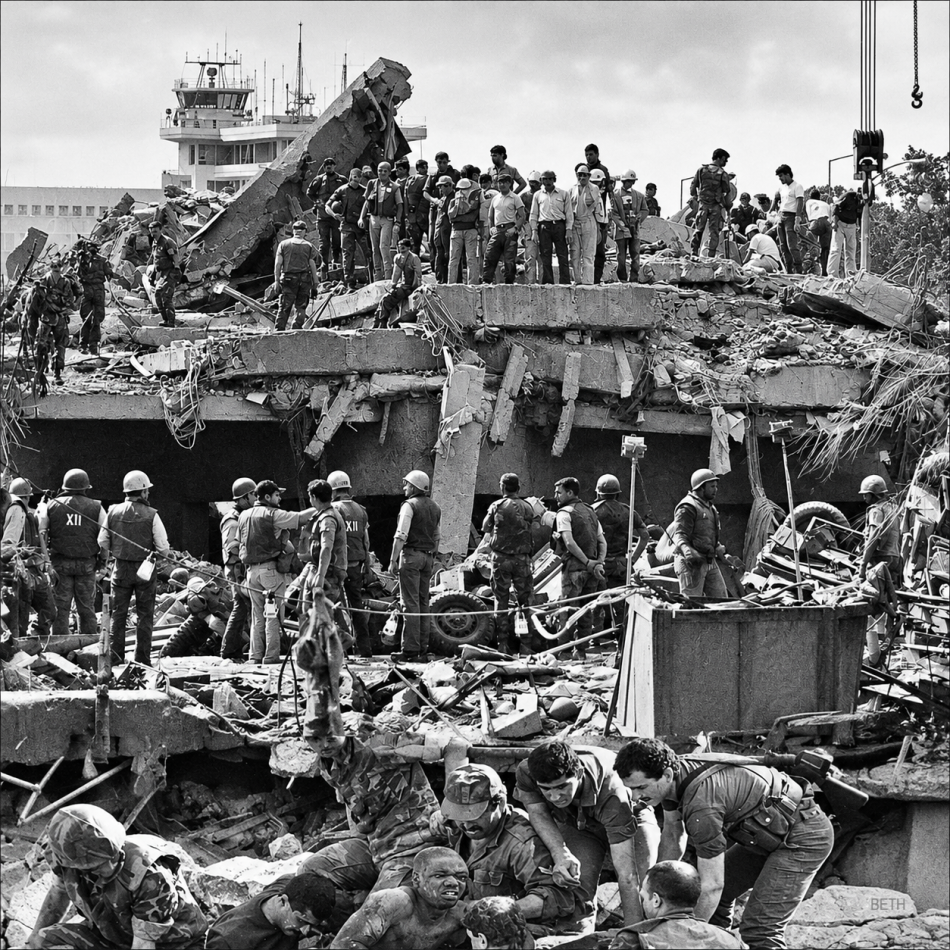
The controversy dates back to October 23, 1983, when a suicide bombing targeted the U.S. Marine barracks in Beirut, killing 241 American service members. A simultaneous attack on French forces killed 58 personnel.
The United States holds Hezbollah responsible for the attack, which remains one of the most significant events in the history of the American military presence in Lebanon.
The controversy resurfaced following Sharara’s participation in an Arab American community event in Michigan, attended by Democratic candidates, just days before the congressional elections.
What Does the Decision Mean Diplomatically?
Declaring a diplomat persona non grata is a formal measure that allows a host country to reject the diplomat’s continued presence and may result in the withdrawal of diplomatic accreditation and a requirement to leave the country.
Such a measure does not necessarily mean severing diplomatic relations or closing the consulate, but it represents a direct objection to an official representative of the country concerned.
Relations With Lebanon
The controversy comes at a time when U.S.–Lebanese relations intersect with sensitive security and political issues, particularly Hezbollah’s role, border security, and support for Lebanese state institutions.
If implemented, the measure could add a diplomatic dispute to these issues without necessarily signaling a broader shift in Washington’s policy toward Beirut.
Lebanon’s official response will be important in determining whether the matter ends with the consul’s replacement or develops into a wider political dispute.
BETH Analysis | An Old Statement, a New Crisis
The case illustrates how past political statements can develop into a diplomatic crisis when attributed to an official representative of a state.
The dispute concerns not only freedom of expression but also the limits of diplomatic responsibility, particularly when the remarks relate to an attack that killed hundreds of American service members.
The timing of the renewed controversy, coinciding with the U.S. elections, also raises questions about the intersection of domestic political debate and diplomatic relations.
The test now lies not merely in the consul’s departure, but in Washington and Beirut’s ability to contain the dispute and prevent it from affecting other areas of bilateral cooperation.
Background | Unresolved Historical Questions and Security Calculations
The U.S. decision concerning the Lebanese consul has brought the 1983 Beirut Marine barracks bombing back into focus. The attack remains deeply embedded in American political memory and has, for decades, raised questions about the regional conflict and the complex interplay of interests among competing forces in Lebanon.
Some historical analyses have gone beyond established accounts of the attack to examine the possibility of overlapping interests or undisclosed understandings between opposing parties. These remain research questions that, in themselves, are insufficient to establish covert involvement in the bombing or alter the responsibility attributed to those involved.
From a broader strategic perspective, a separate question emerges concerning the security of Lebanon and Israel: Does weakening a neighboring state enhance security, or does it create a vacuum that armed groups, increasingly difficult to control, can exploit?
Weakening Lebanese state institutions, regardless of who is responsible, could undermine the state’s ability to exercise its sovereignty and allow other forces to expand their influence, making border stability more difficult to maintain.
The ability to weaken a state does not mean the ability to control the forces that may emerge as a consequence of its weakness.