
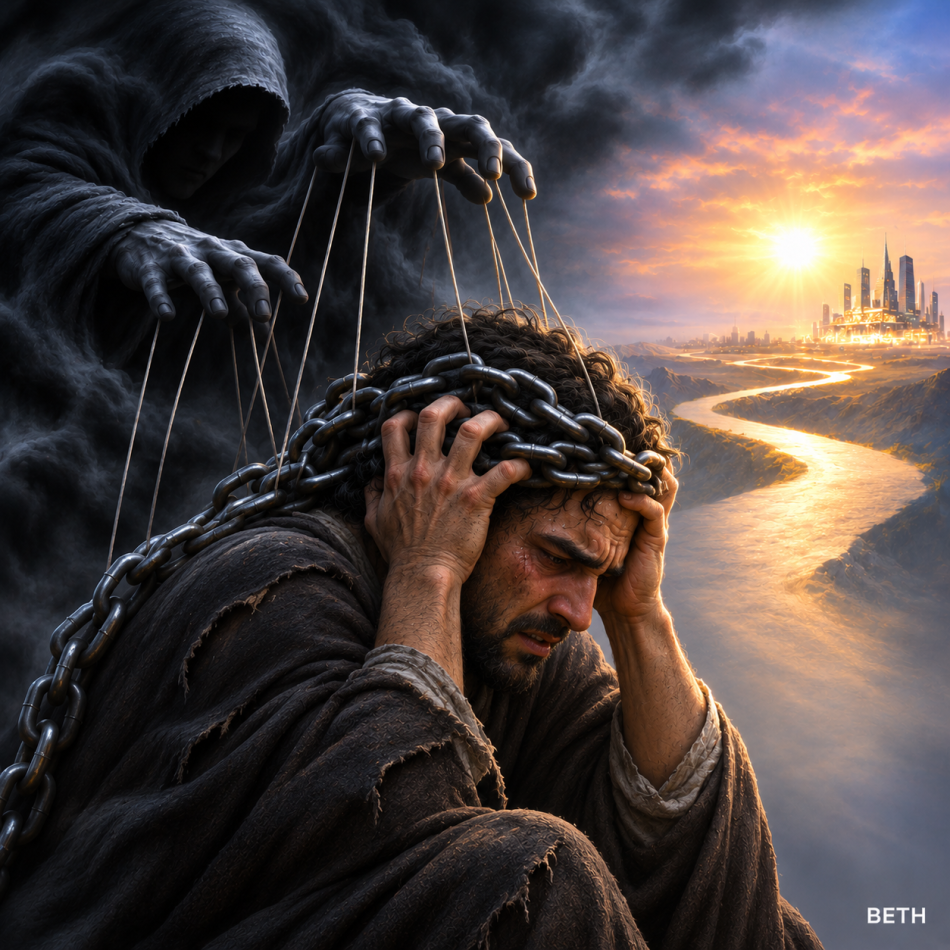


Trump and Iran: Did the Truth Slip Out?
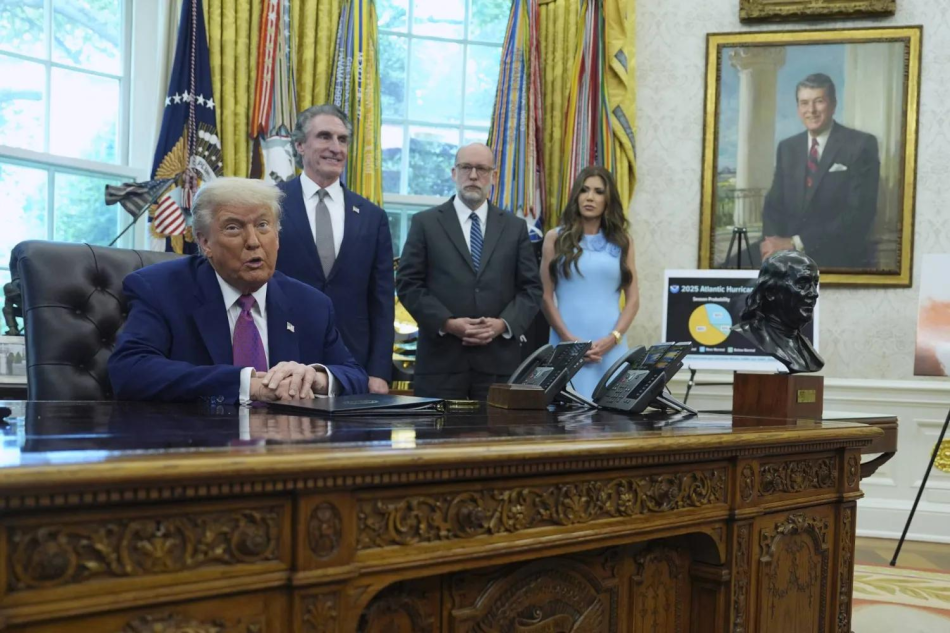
“They do nothing without our approval.” A statement by the US president opens the door to interpretations extending beyond the nuclear issue to the nature of relations between Washington and Tehran and the limits of American influence in the Middle East. Did Trump reveal something he did not intend to say, or did he simply use an ill-chosen phrase?
Riyadh | BETH
November 6, 2026
A statement by US President Donald Trump, in which he said that Iran “does nothing without our approval,” raises questions extending beyond nuclear negotiations to the true nature of relations between Washington and Tehran, and whether the remark reflects the balance of power or carries deeper political implications.
The statement is authentic. Trump made it on Thursday in the Oval Office, responding to a question about proposals concerning the future of Iran’s nuclear program, while affirming that Tehran would not possess a nuclear weapon.
But the more important question is not whether the statement is authentic, but what it could mean and how it might be understood by the audience.
Did He Say More Than He Intended?
Politicians do not usually speak without considering interests and the messages they wish to convey, particularly when the politician is the President of the United States and is discussing a country with which his nation is at war.
Nevertheless, a politician may use a phrase that goes beyond his immediate intention or reveals something about his view of the relationship with the other side.
Trump did not say that Iran could not develop its nuclear program without Washington’s approval. Instead, he used a broad expression: “They do nothing without our approval.”
Although the context of the question identifies the nuclear issue, the unrestricted wording opens the door to other interpretations.
Interpretation One | Washington Imposes Its Conditions
The interpretation closest to the context of the statement is that Trump intended to emphasize that the United States has the ability to prevent Iran from taking nuclear steps it does not approve of.
This is consistent with his remarks about the possibility of carrying out additional military strikes or reaching an agreement ensuring that Tehran does not acquire a nuclear weapon.
Under this interpretation, Trump is not speaking of Iran’s political subordination, but rather of imposing American limits on its nuclear program.
Interpretation Two | Does Iran Act Militarily with US Approval?
The audience may arrive at a more serious interpretation: that Iran does not make military decisions, launch missiles, or expand its regional confrontations except within limits permitted by Washington.
If this interpretation were correct, the question would concern the nature of the war itself and the extent of the independence of Iranian military decision-making.
But there is a significant difference between the United States being able to deter certain Iranian actions and the United States granting prior approval for those actions.
The former concerns military superiority and the balance of power, while the latter presupposes the existence of understandings or secret arrangements that require independent evidence.
The statement therefore raises the question but does not provide the answer.
Interpretation Three | Is Iran an Instrument in Arrangements for Influence?
The broader interpretation opens the door to examining American policy toward the Middle East.
Could some Iranian actions, despite Iran’s declared hostility toward the United States, have served American interests in the region by influencing regional balances or prompting countries to rearrange their security priorities?
In principle, one country may benefit from the actions of an adversary without having directed those actions or agreed upon them.
Here, three different matters must be distinguished: Washington benefiting from an Iranian move, anticipating it and responding to it, or having approved or directed it in advance.
These represent different levels of knowledge, influence, and control.
The claim that Iran is an American instrument, however, is a far more serious assumption, as it requires proof of a relationship involving direction or coordination that goes beyond a mere convergence of interests.
Trump’s statement alone is not sufficient to establish this, but it opens a legitimate debate about how major powers manage regional conflicts and whether certain crises provide them with additional influence.
Interpretation Four | An Ill-Chosen Phrase
Another possibility remains equally important: Trump may have used an overly broad expression during spontaneous remarks without intending all the meanings that could be drawn from it.
The US president is known for using decisive and direct language, particularly when discussing military superiority or negotiations.
He may simply have intended to demonstrate that Washington has the final say in accepting any nuclear agreement.
In that case, interpreting the phrase as evidence of a secret relationship with Tehran would be a conclusion extending beyond what the statement itself supports.
Interpretation Five | American Strategic Intelligence and the Trap of Iranian Moves
Iran may act independently, yet unknowingly move in a direction whose contours Washington has already mapped out.
The United States does not necessarily need to control Iranian decision-making directly. It may be enough to understand how Tehran thinks, anticipate its reactions, and then steer it toward choices that serve American interests, while Iran believes it is acting of its own free will.
From this perspective, a broader interpretation emerges regarding the origins of certain flashpoints in the Middle East: Does Washington deliberately draw its adversaries into confrontations that provide justifications for military intervention and for strengthening its regional presence and influence?
Here lies the paradox: Iran may make its own decisions, while the United States may already have mapped out the path to which those decisions will lead.
Why Did He Say This After the Elections?
The statement came after the congressional elections in which Republicans lost control of both chambers, and amid the continuing US-Iran war without a final settlement.
Trump faces a new political phase in which Democrats will have greater ability to scrutinize his administration when the new Congress takes office in January 2027.
His forceful remarks could be interpreted as an attempt to demonstrate that the election results have not diminished the administration’s ability to make foreign policy decisions.
However, the timing of the statement does not establish that it was a reaction to the electoral defeat, as it also came amid diplomatic contacts concerning the nuclear issue and American deliberations over new military options.
Did the Media Get It Wrong?
When Trump’s statement is reported under the headline “Iran Does Nothing Without America’s Approval,” the audience may understand that Washington controls all Iranian decisions, including military actions.
It is true that the statement was made in the context of discussions about the nuclear program, but Trump used a general expression whose direct implications extend beyond the limits of the question he was asked.
This raises a professional question: Did the media go too far in shortening the statement, or did Trump himself choose wording that opens the door to broader interpretations?
Journalism is responsible for conveying context, but it is not responsible for the ambiguity that a politician’s words may contain.
BETH Analysis | What Does the Statement Actually Reveal?
The significance of Trump’s statement lies not only in its immediate meaning, but also in the questions it raises about the nature of relations between Washington and Tehran and the limits of American influence in the Middle East.
The US president may have intended to emphasize his ability to impose nuclear conditions, express his country’s military and political superiority, or send a message that Washington controls developments that do not publicly appear to be under its control.
There is also a deeper possibility: Iran may act of its own free will, yet follow paths that the United States has anticipated and perhaps encouraged it to take, turning the consequences of Iranian decisions into American strategic gains.
Conversely, the phrase may contain no political secret at all, but simply be a spontaneous expression in which Trump exaggerated his ability to influence Tehran.
This is where the significance of the statement lies: it allows for more than one interpretation, and its political implications cannot be confined to the nuclear context alone, just as none of these interpretations can be regarded as an established fact.
The distinction between these interpretations is not merely linguistic; it concerns who makes decisions, who influences them, and who benefits from their consequences.
The question remains: Did Trump intend to demonstrate American power, or did he inadvertently reveal something about the way conflicts in the Middle East are managed?
Prepared and Analyzed by | Strategic Media Department – BETH News Agency