
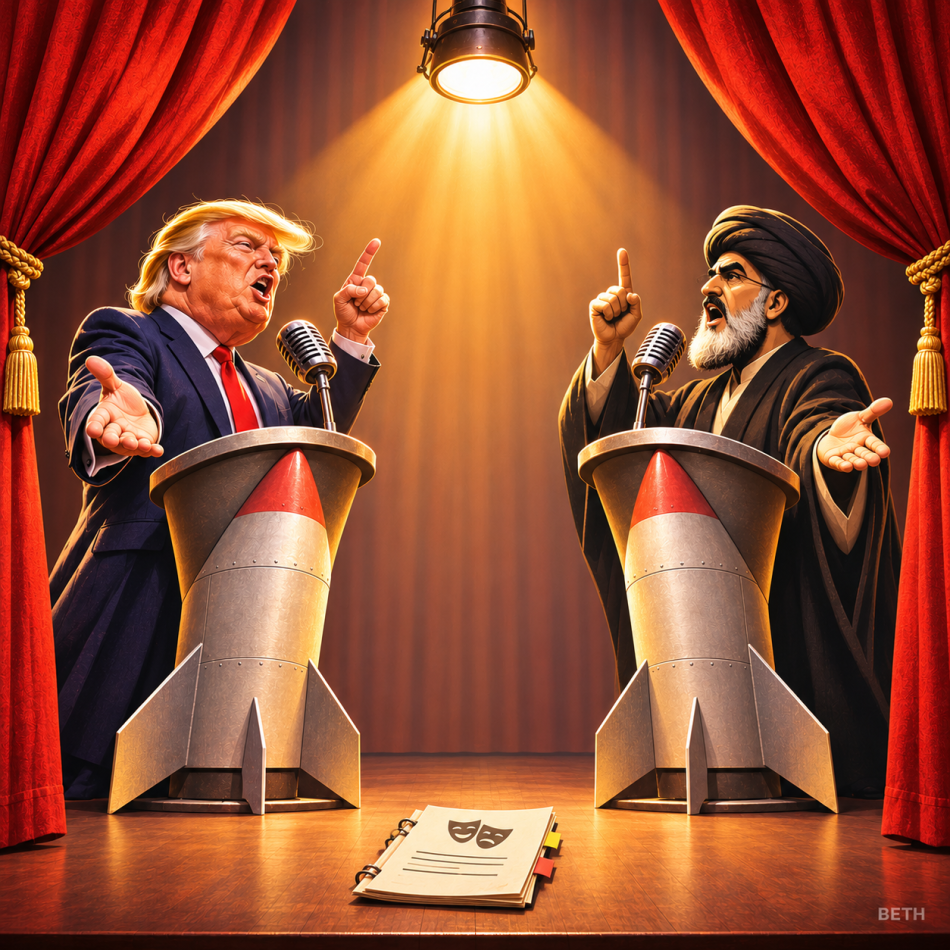

Could an Arab-American Muslim Become President of the United States?
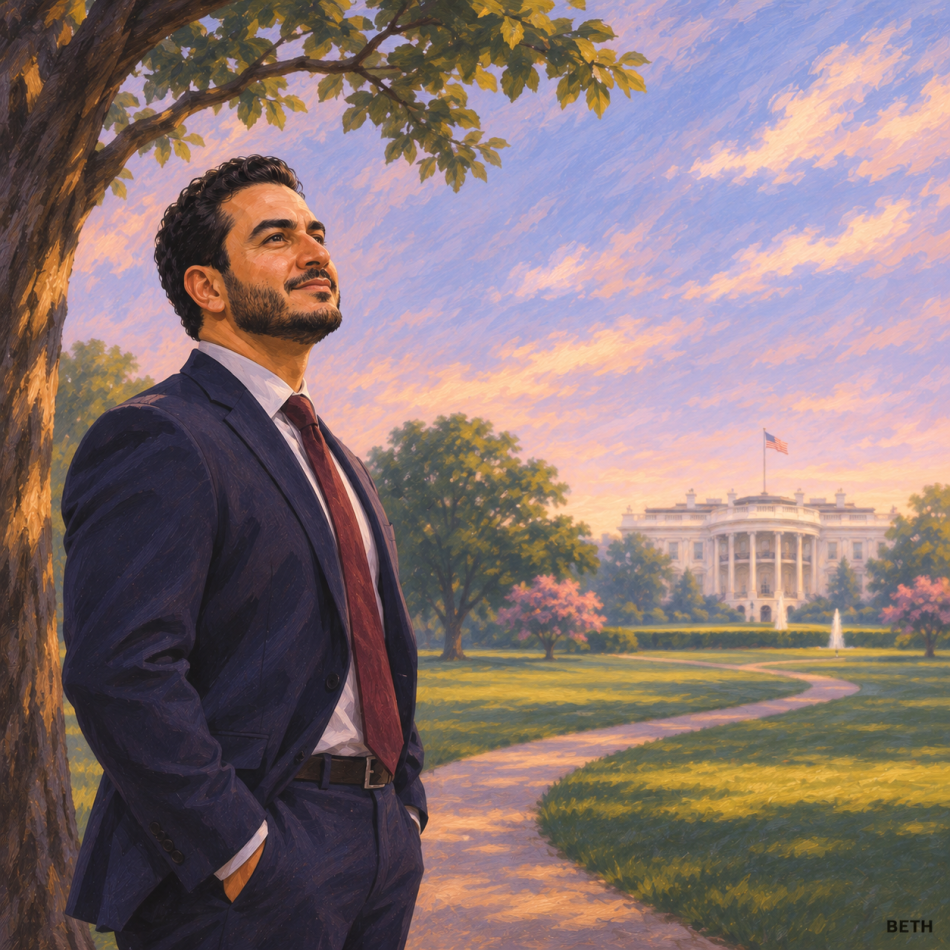
Abdul El-Sayed makes history with his Senate victory in Michigan, raising questions ahead of the November 7, 2028, presidential election: Could Obama's political journey be repeated? What if El-Sayed became president of the United States, and how might American relations with Egypt, the Arabian Gulf states, and Israel change?
RIYADH | BETH
November 4, 2026
Prepared and Analyzed by | Strategic Media Department – BETH News Agency
Two years before the next US presidential election, Abdulrahman Mohamed El-Sayed, widely known as Abdul El-Sayed, is emerging as a prominent political figure. The American Muslim physician and Democratic politician of Egyptian descent has won Michigan's Senate seat, becoming the first Muslim elected to the US Senate.
Born in the United States in 1984 to a family of Egyptian origin, El-Sayed established his career in medicine and public health before entering politics and emerging as one of the rising figures in the Democratic Party's progressive wing.
The forward-looking question is: What if Abdul El-Sayed entered the White House in January 2029?
Who Helped Bring Him to the Forefront?
El-Sayed's rise was not the result of a unified decision within the Democratic Party. He received support from prominent progressive figures, including Bernie Sanders, Alexandria Ocasio-Cortez, and Chris Van Hollen, alongside grassroots and labor organizations.
At the same time, he faced opposition from Democratic leaders who supported his rival in the primary election, as well as criticism from pro-Israel advocacy groups over his positions on US military assistance.
El-Sayed therefore advanced through competition within the party, benefiting from his political message on economic justice, healthcare, and limiting the influence of money in politics.
However, his success in Michigan does not automatically place him in the presidential race. Such a move would require building a broader national base and winning the confidence of different segments of American voters.
Hakeem Jeffries and Abdul El-Sayed | Two Parties Within One?
Hakeem Jeffries, the Democratic leader in the House of Representatives, an African American Christian, represents the party's institutional establishment, while Abdul El-Sayed, a Muslim of Egyptian descent, represents a more progressive movement that is increasingly critical of traditional US policies.
The differences between them are particularly evident in their positions toward Israel. Jeffries supports maintaining the US-Israeli alliance and military assistance while advocating a two-state solution. El-Sayed, meanwhile, calls for restricting US military funding and subjecting it to stricter conditions.
BETH Analysis | The greatest obstacle to Abdul El-Sayed's potential presidential ambitions may not be his religion or Arab heritage, but his ability to secure the support of the Democratic establishment, of which Jeffries is one of the most prominent leaders.
Can the Democratic Party unite its competing factions behind a single presidential agenda, or will disagreements over Israel and foreign policy become a major test of party unity ahead of the 2028 presidential election?
Another Obama?
There are striking similarities. Barack Obama, an American born to a Kenyan father and an American mother, and El-Sayed, an American of Egyptian descent, both rose politically through the Democratic Party and the US Senate.
Yet the more significant comparison concerns their policies rather than their origins.
Obama's presidency witnessed the Arab Spring uprisings and the 2011 military intervention in Libya, which was followed by widespread instability. Obama later acknowledged that the failure to adequately plan for the aftermath of the intervention was among the greatest mistakes of his presidency.
El-Sayed, meanwhile, has publicly opposed the war with Iran and objected to funding foreign militaries, including the Israeli military.
This raises an important possibility: Could El-Sayed revive elements of Obama's Middle East policies, but through a more progressive approach and under different regional circumstances?
Egypt | An American President with Egyptian Roots
El-Sayed's potential arrival at the White House could create a striking political paradox for Egypt: an American of Egyptian descent would lead a country that enabled him to reach its highest office through electoral competition.
His experience could become a subject of debate within Egyptian society, particularly among younger generations, concerning political participation, the peaceful transfer of power, and opportunities for emerging leaders.
This is where Cairo could face a politically sensitive situation: the very figure whose Egyptian roots and cultural connections might benefit Egypt could simultaneously inspire domestic comparisons concerning governance and political opportunities.
At the level of official relations, however, any attempt to reduce US military assistance could encounter the strategic importance of Egypt, its role in regional security and the Suez Canal, and its peace treaty with Israel.
Cairo could therefore find itself dealing with an American president of Egyptian heritage whose policies do not necessarily align with the priorities of the Egyptian government.
Israel | Testing a Historic Alliance
If Abdul El-Sayed reached the presidency while maintaining his current positions, US-Israeli relations could enter a period of disagreement over military assistance, the war in Gaza, and Palestinian rights.
He might seek to make American support subject to stricter political and human rights conditions rather than continuing military assistance under traditional arrangements.
However, the US-Israeli alliance extends across Congress and American security, economic, and political institutions, making a fundamental transformation more difficult than changing the terms of certain aspects of the relationship.
The most significant change might therefore concern the nature and limits of American support, rather than the termination of the alliance itself.
The Arabian Gulf | Could Obama's Policies Return?
Abdul El-Sayed's potential arrival at the White House could mark a return to some of the Obama administration's approaches toward the region, although in a more progressive form concerning military intervention and security relations.
El-Sayed opposes the war with Iran and the funding of foreign militaries. These positions suggest that he might prioritize diplomacy with Tehran and reconsider certain aspects of military cooperation with the Arabian Gulf states.
Such an approach could revive disputes that emerged during the Obama presidency over the Iranian nuclear agreement, regional security, and Washington's positions on political transformations in Arab countries.
However, this possibility could diminish if President Donald Trump succeeds, before the end of his term, in bringing the war with Iran to a decisive conclusion and fundamentally altering the regional balance of power. Such an outcome could restrict Tehran's room for maneuver and confront any future US administration with a new strategic reality in which the conditions for negotiations and the limits of political settlements differ from those of the Obama era.
American interests in energy, trade, investment, and maritime security, together with longstanding defense relationships with the Gulf states, would also place limits on any fundamental shift.
BETH Analysis | Abdul El-Sayed might not abandon the US-Gulf partnership, but could seek to restructure it around continued economic and security cooperation, stricter political conditions, and greater reliance on negotiations with Iran rather than military confrontation.
This raises another question: Would such a policy represent a reassessment of the mistakes of the Obama era, or a return to its regional disagreements through different means?
Could the Arab Spring Return in a New Form?
If Abdul El-Sayed entered the White House influenced by Obama's approach, American policy might once again give greater prominence to political reform and human rights in relations with Arab governments, alongside a review of certain alliances and military assistance arrangements.
However, the region El-Sayed would encounter would not be the Middle East of 2011. Wars, economic transformations, and political experiences have reshaped the priorities of governments and societies, while the costs of instability have become increasingly apparent.
Instead of witnessing another Arab Spring in its previous form, the region might face more selective political pressure, with human rights, foreign assistance, and diplomatic relations used to influence the decisions of certain governments.
This does not mean that the Obama administration created the uprisings of 2011. Those events emerged from domestic conditions, although Washington's positions and subsequent interventions influenced the course of certain crises.
The fundamental difference is that a new American administration would deal with governments and societies shaped by different political and security experiences, as well as regional power balances potentially transformed by the war with Iran.
BETH Analysis | The most sensitive strategic possibility is not necessarily the return of the Arab Spring, but the reemergence of differences between Washington's political priorities and the stability priorities of its regional partners.
BETH Analysis | Does the President Change, or Does America Change?
If Abdul El-Sayed became president in 2029, it would represent a historic political milestone, with a Muslim of Arab descent reaching the highest office in the United States.
The US Constitution does not require the president to belong to a particular racial or religious group. It requires natural-born US citizenship, along with constitutional age and residency qualifications.
But reaching the White House is one thing; changing American policy is another.
A president does not govern independently of Congress, national security and economic institutions, and international alliances, all of which provide American policy with a degree of continuity beyond changes in administration.
El-Sayed might attempt to revive elements of Obama's policies, particularly negotiations with Iran, linking military cooperation to political and human rights considerations, and reshaping relations with Israel and Arab governments.
Yet his ability to do so would depend on the balance of power inherited from the Trump administration and on American interests that might compel him to maintain policies he currently opposes.
His Egyptian ancestry and Islamic faith could give his presidency historic symbolism, but they would not necessarily determine his decisions toward Egypt, the Arabian Gulf, or Israel.
This brings our hypothetical scenario to its central question:
If Abdul El-Sayed became president, would he emerge as a new version of Obama, reviving some of the disputes of the past, or would global and Middle Eastern transformations compel him to pursue different policies?
Before the next US presidential election, unexpected developments within the United States or elsewhere in the world could reshape the political landscape, overturn the balance of power, and invalidate every prediction.
One question remains: Could El-Sayed repair the damage attributed to the policies of Obama and Trump? Would a new political healer emerge to correct the mistakes of them all? Or might the next one make matters even worse?
Not everyone who enters the White House carries a prescription for recovery, and some remedies may prove more damaging than the problems they were intended to cure.