

Day 235: The Mecca Defense Alliance Takes Action
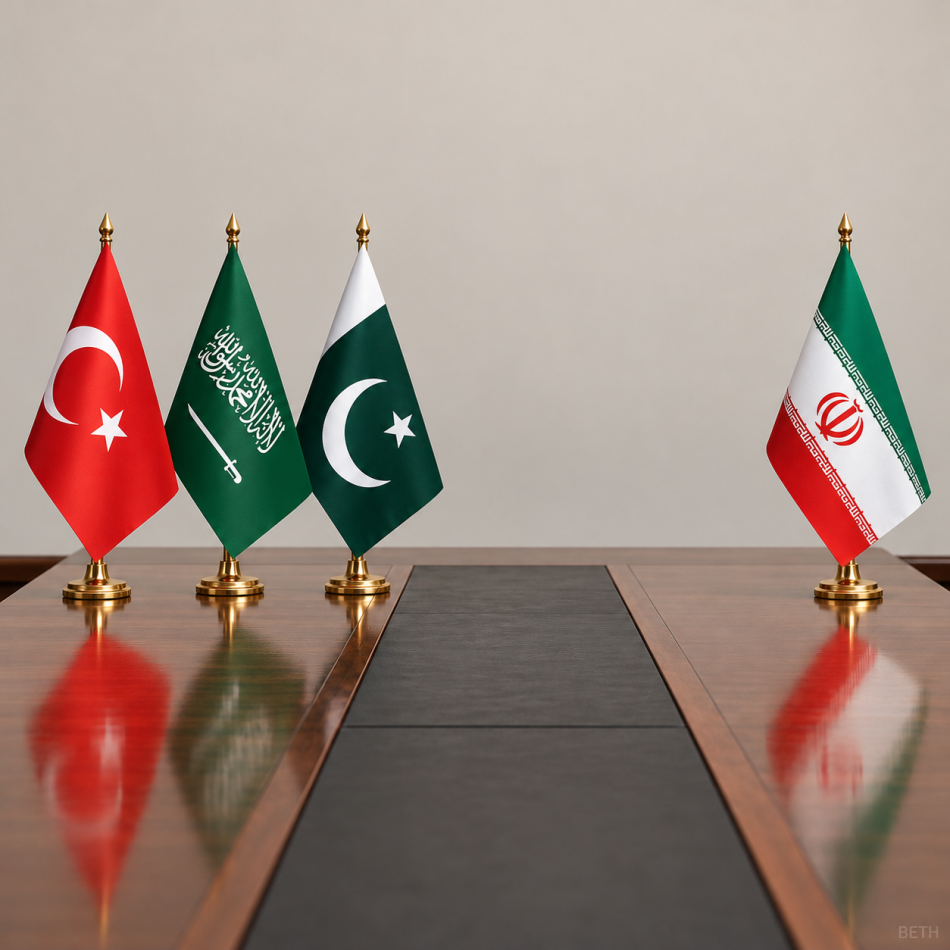
Prince Khalid bin Salman leads the Saudi delegation in meetings between the Mecca Defense Alliance countries and Iran to reduce escalation; Trump threatens new strikes, while the Houthis continue their attacks on Saudi Arabia amid disagreements over the Strait of Hormuz and the U.S. blockade.
October 26, 2026
Prepared and Analyzed by | Strategic Media Department – BETH News Agency
The U.S.–Iran war entered its 235th day amid a significant regional diplomatic initiative, represented by a meeting between representatives of the Mecca Joint Defense Agreement countries and Iranian officials in Tehran, against the backdrop of continuing U.S. military threats and Houthi attacks on Saudi Arabia.
Prince Khalid bin Salman, Saudi Arabia's Minister of Defense, is leading the Kingdom's delegation, alongside Field Marshal Asim Munir, Chief of Army Staff of Pakistan, and Ibrahim Kalın, head of Turkish intelligence.
Representatives of the agreement's member states are expected to meet Iranian President Masoud Pezeshkian and Mohsen Rezaei, Secretary-General of the Supreme National Security Council.
Why the Mecca Defense Alliance Specifically?
The participation of the three countries carries particular significance, driven by four interconnected considerations:
First: A defense alliance, not separate mediators. Saudi Arabia, Türkiye, and Pakistan are not acting as three independent diplomatic channels, but as parties to a joint defense agreement under which an attack on one member is considered an attack on all. This gives their message to Tehran a different weight, particularly following Houthi attacks on Saudi Arabia.
Second: Combining deterrence with negotiation. The choice of a Saudi defense minister, a Pakistani military commander, and a Turkish intelligence chief, rather than three foreign ministers, carries clear political and security significance. It suggests that military capabilities and the risks of an expanding war are central considerations surrounding the meeting. This interpretation is based on the nature and seniority of the delegations, rather than undisclosed details of the discussions.
Third: A regional track parallel to U.S.–Iran negotiations. Pakistan maintains channels of communication with Tehran and Washington, Türkiye possesses significant security and political influence, while Saudi Arabia has a direct interest in stopping attacks and protecting Gulf security and energy supplies. Reports today also link the initiative to an earlier Pakistani diplomatic effort, reinforcing the interpretation that this is a joint initiative rather than a unilateral Iranian one.
Fourth: Preventing a wider regional confrontation. Continuing Houthi attacks on Saudi Arabia, alongside American threats against Iran, raise the possibility that the joint defense agreement could face a direct military test. This highlights the importance of preventive diplomatic action to contain escalation before the fronts of confrontation expand.
In short, the three countries are moving toward Tehran with shared deterrence capabilities and security interests, seeking to test the possibility of de-escalation before mutual threats turn into a wider regional confrontation.
Trump Threatens
In Washington, President Donald Trump presented Iran with a choice between reaching an agreement and facing new military strikes, after ruling out an attack on Sunday without abandoning the military option.
Disagreements over the nuclear program, the U.S. blockade, and the Strait of Hormuz persist, despite the continued exchange of messages through intermediaries.
Tehran maintains its willingness to negotiate but links the reopening of the strait to the lifting of the blockade on its ports, a proposal Washington has not accepted.
Testing Intentions
Tehran now faces a test that goes beyond declaring its openness to negotiations: Will it accept security arrangements that limit attacks and guarantee freedom of navigation, or will it seek to gain more time without changing its positions?
Meanwhile, the Mecca Defense Alliance countries have an opportunity to link de-escalation to practical commitments while maintaining their deterrence capabilities.
The political assessment suggests that the outcome of the Tehran meeting may influence Washington's calculations, but it will not, on its own, determine the course of the war.
The central question on Day 235 remains: Will the Mecca Defense Alliance succeed in turning threats into security understandings, or will negotiations become another stop before a more intense round of military confrontation?