

Day 227: Hormuz Drives Escalation
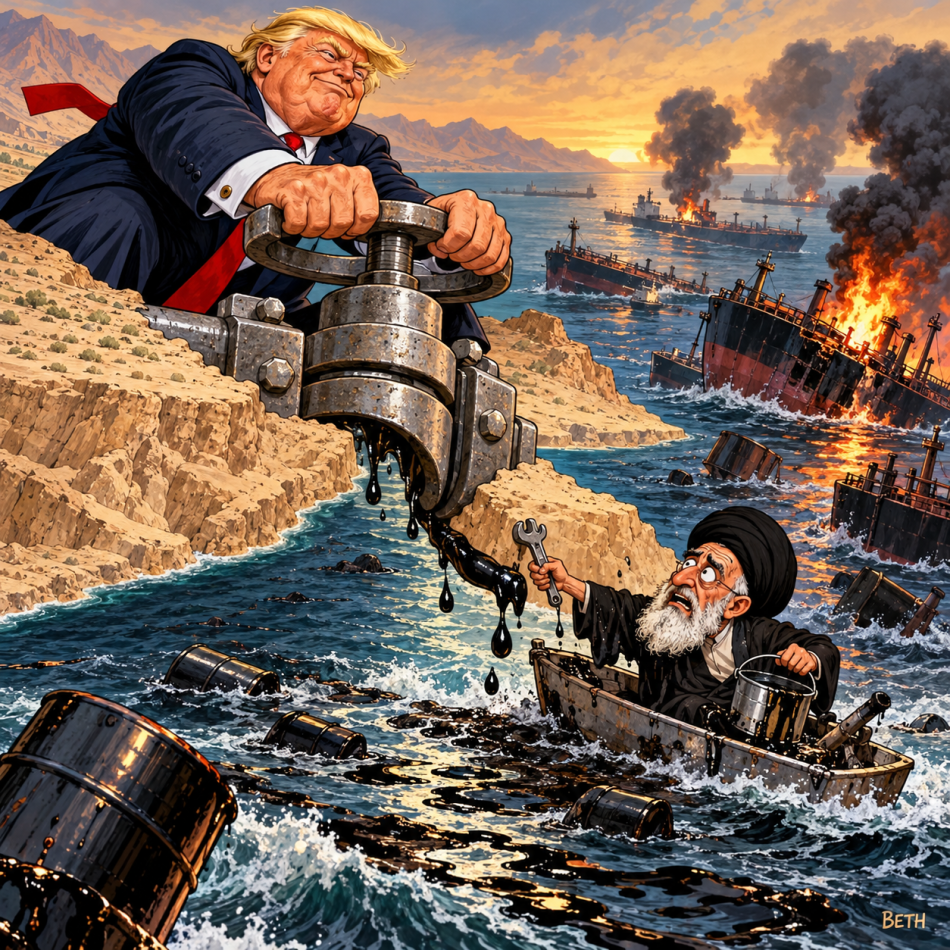
New tankers catch fire in the Strait of Hormuz and the Gulf of Oman, while Iran appoints a defense minister who threatens a massive response to any US strike. Meanwhile, the economic and maritime confrontation continues as efforts to reach a settlement remain stalled.
October 18, 2026
Prepared and Analyzed by | Strategic Media Department – BETH News Agency
The US-Iran war entered its 227th day amid growing threats to international shipping, following reports that three tankers caught fire in the Strait of Hormuz and the Gulf of Oman. Meanwhile, mutual threats reached a new level with the appointment of an Iranian defense minister and Washington's warnings of strikes against heavily fortified nuclear facilities.
These developments reflect a dual test: the United States' ability to maintain its economic and naval blockade, and Iran's ability to use maritime routes to increase the cost of the war without triggering a broader military confrontation.
Military and Political Developments
Hormuz: Three Tankers Catch Fire
Maritime reports indicated that three tankers caught fire in the Strait of Hormuz and the Gulf of Oman, while Iran's Islamic Revolutionary Guard Corps announced that a large oil tanker had been struck by a naval mine.
Iran Appoints New Defense Minister
Iran's parliament approved the appointment of Mehrdad Akhlaghi Ketabchi as defense minister, a veteran official in defense industries and missile technology.
The new minister threatened a massive Iranian response if the United States used the "Mother of All Bombs" against Iranian facilities, emphasizing efforts to strengthen military capabilities and defense industries.
Trump Maintains the Blockade
US President Donald Trump reaffirmed the effectiveness of the naval blockade imposed on Iran, after threatening to target the "Pickaxe Mountain" facility linked to Iran's nuclear program, while ruling out the use of nuclear weapons or the deployment of US ground troops.
Negotiations Remain Stalled
No new breakthrough has been announced in US-Iranian contacts. The disagreement continues to center on the sequence of issues to be addressed. Washington insists on resolving the nuclear issue, while Tehran links the reopening of the Strait of Hormuz to conditions concerning the blockade, sanctions, and security arrangements.
Energy and US Calculations
Washington continues to seek ways to contain rising fuel prices, including allowing Russian energy products to flow into global markets.
US Secretary of State Marco Rubio announced a period of up to 60 days to assess the economic impact of easing certain restrictions on Russian exports.
This move reveals the connection between the war with Iran and US calculations regarding Russia, Ukraine, and global energy markets.
Strategic Assessment
The day's developments reveal three main trends:
Militarily: Washington and Tehran continue exchanging threats, but maritime escalation has become the most significant factor affecting international trade.
Economically: The United States is relying on restricting Iran's financial resources, while disruptions to shipping continue to pose risks to energy prices.
Politically: Reaching a settlement is becoming increasingly difficult as the two sides disagree over its terms and the sequence of implementation, particularly with US elections approaching.
BETH Assessment
The war is entering a phase in which the cost of continuing the conflict is rising, while the conditions for ending it remain unclear.
The United States possesses extensive military and economic capabilities, but continued risks in the Strait of Hormuz impose growing costs internationally.
Iran, meanwhile, is using its geographical position and maritime threats to strengthen its negotiating leverage despite the blockade imposed on it.
The central strategic question remains: Will the maritime confrontation become a factor pushing both sides toward a settlement, or will it trigger a new wave of military strikes?