



Saudi Arabia Sends Brain Cells into Space

A first-of-its-kind Saudi scientific mission in the Middle East sends human cells to the International Space Station to study changes associated with Alzheimer’s disease and multiple sclerosis, as part of a three-phase research program that could open new avenues for drug development.
Riyadh | BETH – October 15, 2026
Saudi Arabia, represented by the Saudi Space Agency and King Abdullah University of Science and Technology (KAUST), has launched human biological samples to the International Space Station in a scientific mission aimed at using microgravity to better understand neurological diseases and support the development of future treatments.
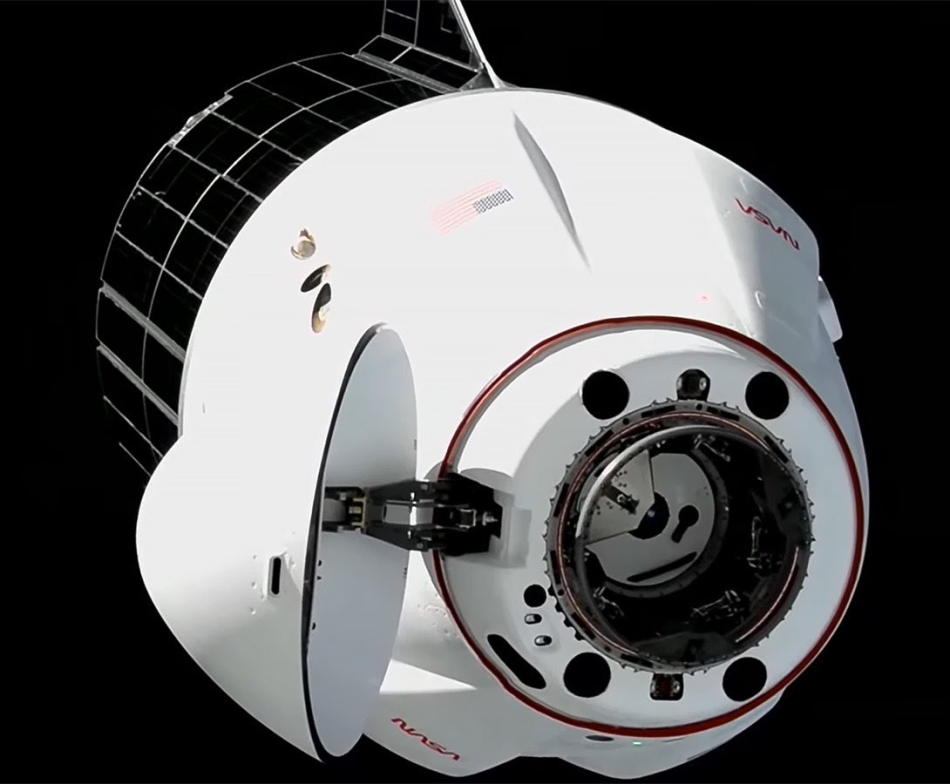
The samples were launched as part of the BioGravity-1 mission, aboard SpaceX’s CRS-35 flight, with support from NASA and within the framework of international research cooperation.
The mission includes two experiments developed by KAUST, designated SSA-1 and SSA-2, to investigate the behavior of human brain cells in an environment that differs from normal conditions on Earth.
Why Space?
The significance of the experiment lies in the ability of microgravity to induce cellular changes resembling certain processes associated with aging and disease. Some of these changes can occur more rapidly, allowing scientists to study them over shorter periods.
The first mission uses reference samples from healthy donors to establish scientific baseline data for comparison, paving the way for subsequent experiments involving cells associated with Alzheimer’s disease and multiple sclerosis, including investigations into their potential responses to treatments.
From KAUST Laboratories
The KAUST research team prepared initial cell samples, which were transferred to the National Stem Cell Foundation in California, where they were used to generate different types of brain cells and miniature laboratory models that replicate certain characteristics of brain tissue.
The project involves Professor Imed Gallouzi, the principal investigator, and Rayyanah Barnawi, the first Saudi female astronaut, who oversees microgravity research at the Saudi Space Agency and is pursuing her doctoral studies at KAUST.
The program is being carried out in cooperation with international partners, including NASA, Axiom Space, and the National Stem Cell Foundation.
BETH Analysis | Space as a Medical Laboratory
The significance of this mission extends beyond marking another Saudi achievement in space. It brings space science into the field of medical applications, connecting advanced research with human healthcare needs.
The fundamental distinction is that scientists are not searching for a ready-made cure in space. Instead, they are using its unique conditions to understand cellular changes that are difficult to observe at the same pace on Earth.
The real achievement lies in building Saudi scientific capabilities to design and conduct space-based medical experiments, generating knowledge that could eventually contribute to future drug development.