


Iran: The Crisis Extends Beyond the Economy
Pensioners’ protests and thousands of doctors leaving medical practice reveal a widening social crisis, amid tighter U.S. sanctions, shrinking regional options for Tehran, and growing international attention to executions.
October 15, 2026
Prepared and Analyzed by | Strategic Media Department – BETH News Agency
Iran is facing simultaneous pressures that extend beyond the effects of war and sanctions into its social and professional structures. Mounting protests over living conditions and the declining ability of specialized sectors to retain qualified professionals are unfolding as Iran’s leadership faces increasingly limited options in responding to Washington’s demands.
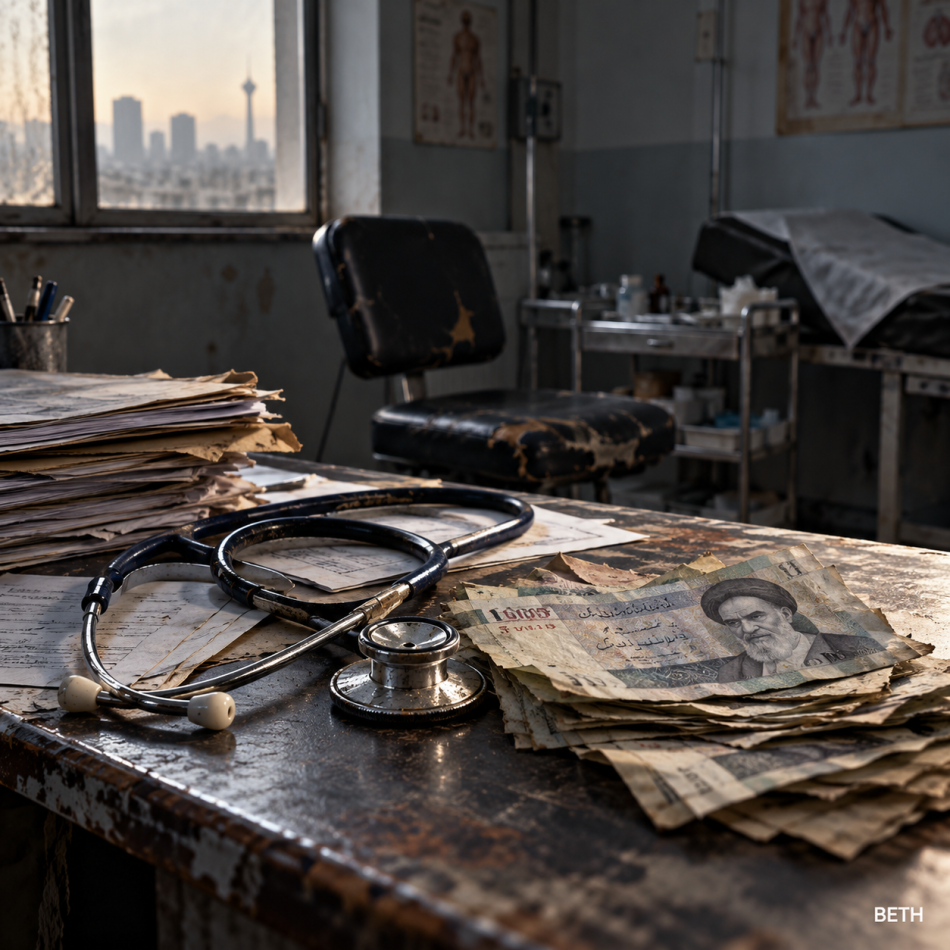
Iranian reports indicate that approximately 35% of general practitioners are no longer actively practicing medicine, representing more than 50,000 doctors, amid rising clinic operating costs and declining professional earnings. Some have reportedly turned to transportation and service jobs to secure alternative sources of income.
These developments coincided with pensioners’ protests in Isfahan, Shush, and Rasht on October 11, driven by the declining real value of pensions and rising living and healthcare costs.
Labor market figures cited in the reports indicate that approximately 13.55 million out of 24.82 million workers are employed in the informal sector, accounting for nearly 54.6% of total employment and reflecting the prevalence of less secure jobs.
External Pressures and Internal Divisions
These economic and social developments coincide with continuing U.S.-Iranian disagreements over Tehran’s nuclear program, particularly demands to reduce uranium enrichment levels and its stockpile of highly enriched uranium.
Tehran also faces additional challenges arising from military operations in Yemen and intensified measures to protect maritime routes.
Domestically, earlier remarks by former Iranian Foreign Minister Mohammad Javad Zarif have reignited debate over the treatment of social and diplomatic issues as security matters. Zarif criticized the tendency to view neighboring countries as threats rather than opportunities for economic cooperation.
On human rights, reports highlighted the participation of UN Special Rapporteur Gina Romero in the anti-execution campaign known as “No to Execution Tuesdays,” signaling growing international attention to protests inside Iranian prisons.
BETH Analysis | Eroding Capacity for Recovery
The strategic significance of these developments lies not in the existence of Iran’s economic crisis, which has been evident for years, but in its growing impact on professional sectors traditionally considered more economically secure, particularly doctors.
The loss of specialized professionals differs from declining production or rising prices. Rebuilding medical expertise requires years, even if economic conditions improve.
Tehran therefore faces a dual challenge: financial resources under increasing strain and institutions struggling to retain qualified personnel and sustain essential services, at a time when external confrontation demands lasting economic and social resilience.
The central question is no longer how much pressure Iran can withstand, but whether it can restore the effectiveness of its institutions once those pressures begin to ease.